We use our own and third-party cookies in order to offer our services, display videos, obtain statistics and offer personalized advertising. You can accept all cookies by clicking "Accept". If you want to refuse all or some of them, click "Cookie settings". For more information, please read our cookies policy.

Cookie settings
×

Cookie settings

We use our own and third-party cookies in order to offer our services, display videos, obtain statistics and offer personalized advertising.

Technical Cookies
These cookies allow the user to navigate the website and use the different options and services offered. InSpain.org uses its own and third-party technical cookies. Our website needs some technical cookies to work properly. These cookies cannot be disabled.
Analytical cookies
These cookies allow the tracking and the analysis of the behavior of website visitors. The gathered information is used for measuring the website activity and to develop statistics to further improve the website. InSpain.org uses third-party analytical cookies.
Behavioural advertising cookies
These cookies collect information about your browsing habits in order to make advertising relevant to you and your interests. InSpain.org uses its own and third-party behavioural advertising cookies.

For more information, please read our cookies policy.

Home / Provinces of Spain / Cuenca / Cuenca / Attractions in Cuenca / Cuenca Hanging Houses /

Cuenca Hanging Houses

Artistic Introduction

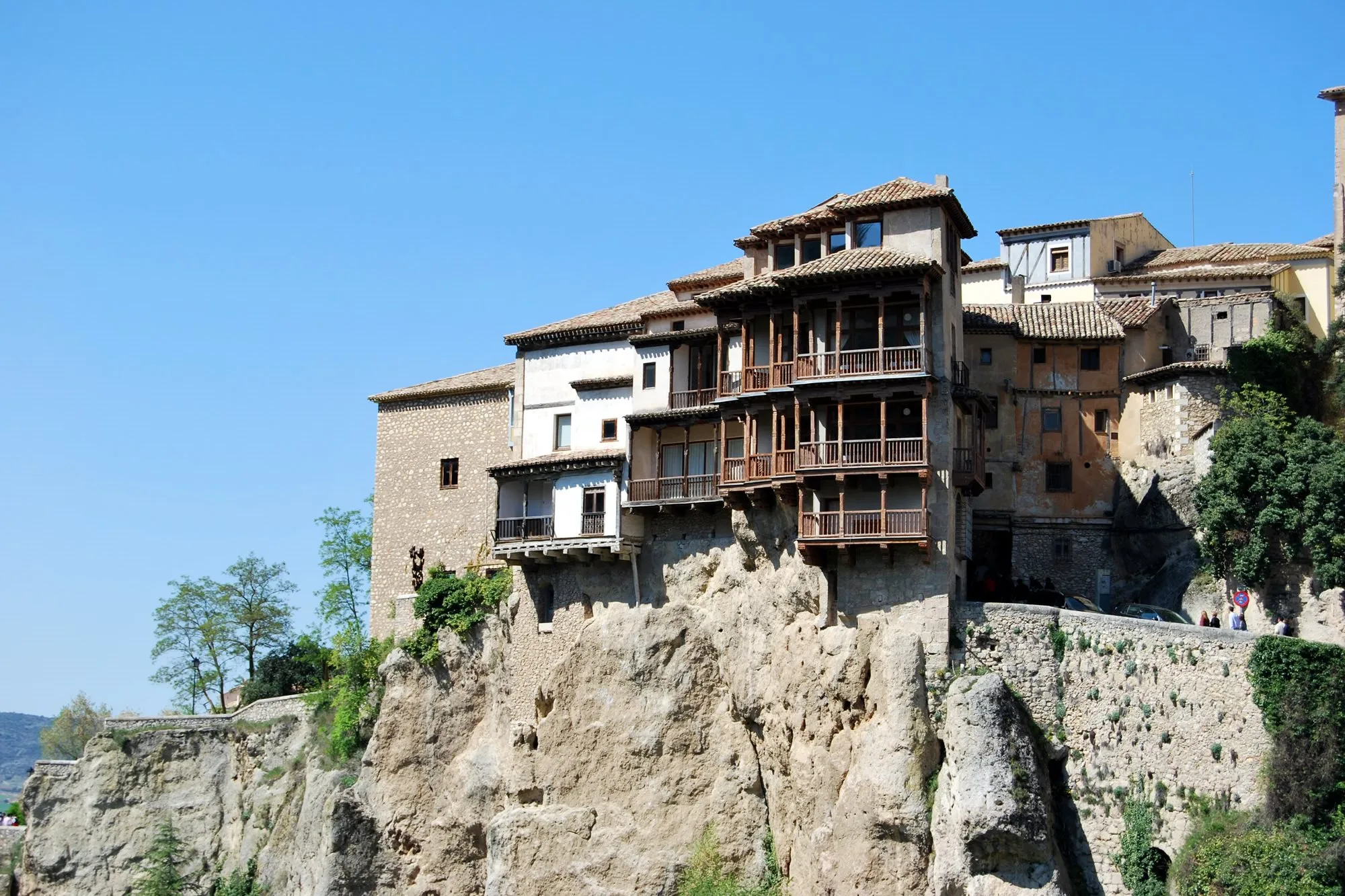
Nobody knows how these houses appeared, why they were built and how they were built. They are not regular buildings. They are buildings that could be included in the group of popular Gothic buildings. Their exterior is Renaissance and they have been rebuilt using, in most of the cases, materials such as masonry, wood and plaster cast. They have balconies and projections attached to the building. Inside, we can see beautiful murals and lattices as well as Mudejar coffered ceilings.

The Museum of Abstract Art of Cuenca, created by Fernando Zóbel in 1966 and located in the Hanging Houses, shows a permanent collection of 110 paintings and sculptures of Contemporary Spanish artists such as Millares, Tápies, Chillida, Rueda, Torner and Saura, and artists from the 50´ s, 80´ s and 90´s. Moreover, it also includes the selection of the collection of Contemporary Spanish art of the Juan March Foundation.

The current aspect of the building belongs to the rebuilding of 1950 and the enlargement of 1978, in which a Renaissance façade belonging to the old palace of Villarejo de la Peñuela was incorporated to the ashlar façade of the square.

Plan your visit

Address and telephone

  • Calle Obispo Valero. 16001 Cuenca
  • +34 969 232 119

Opening times

  • You can see the exterior of the monument from the bridge of San Pablo.
  • You can visit the Museum of Abstract Art of Cuenca and the restaurant that are inside the monument.

If you see any mistakes or want to add anything to this information, please contact us.
Location

Attractions in Cuenca

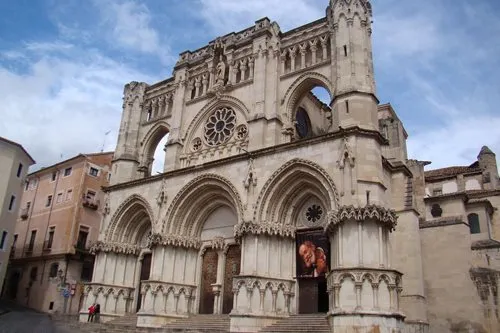
The Cathedral of Santa María la Mayor de Cuenca began construction during the reign of Alfonso VIII, specifically around the year 1196. Built on what was once an Arab mosque and due to the need for a temple in the city, this Gothic building was erected....

Book your hotel

Booking.com