Cookie settings
We use our own and third-party cookies in order to offer our services, display videos, obtain statistics and offer personalized advertising.
For more information, please read our cookies policy.
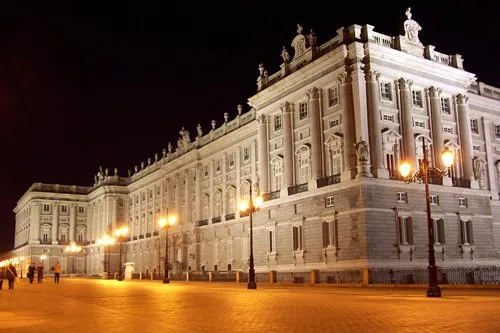
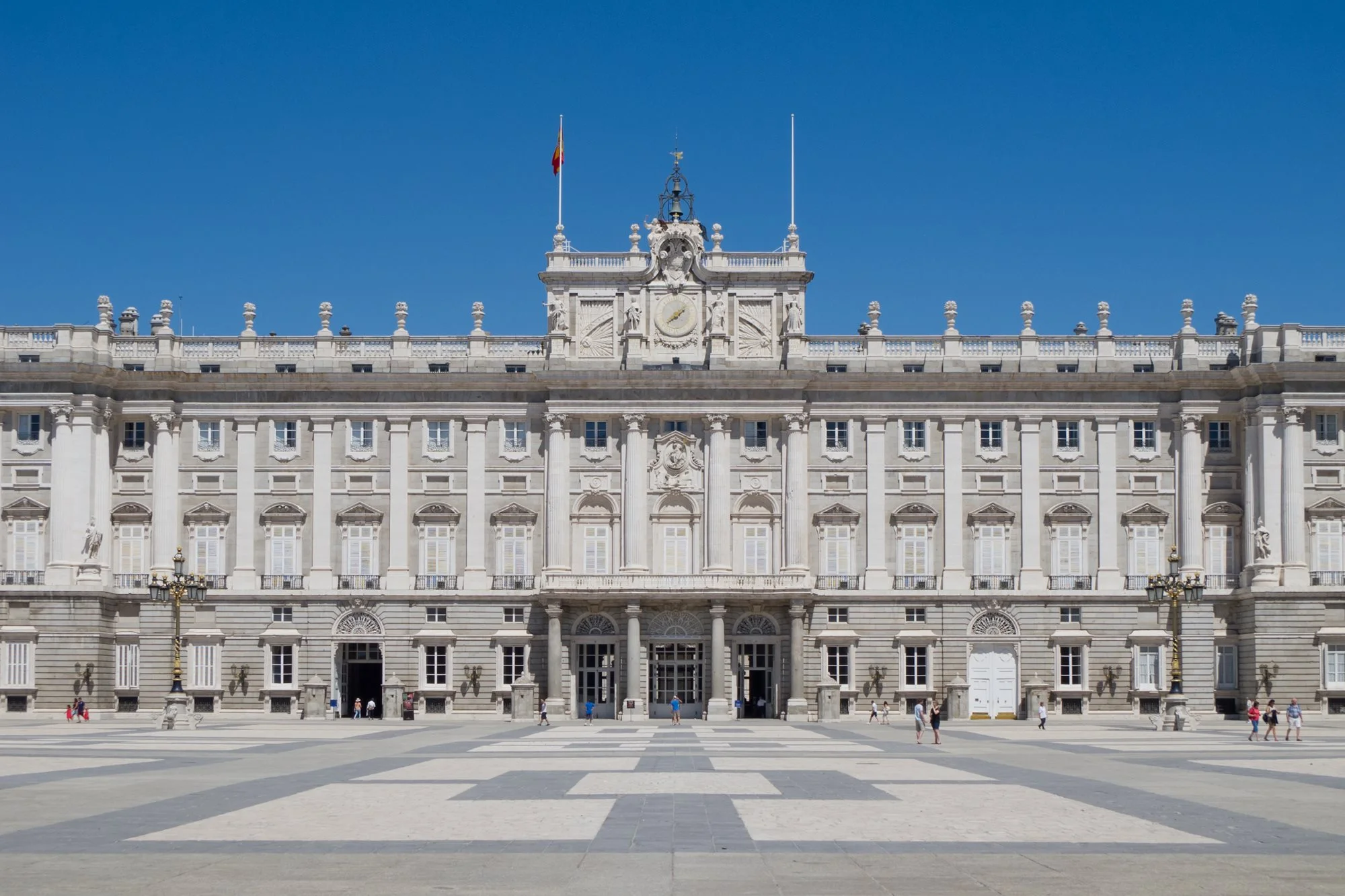
The Royal Palace is a Neoclassic building from the XVIII Century. The construction started in 1737. The Italians Felipe Juvara, Juan Bautista Sachetti and Francisco Sabatini figure among its main architects. It has a total surface of 13 Hectares.
The floor of the building follows a rectangular central courtyard structure based on Sachetti´ s design. Its façade follows the design used by Bernini in the Louvre. The Palace is formed by two bodies: the lower one is constituted by a baseboard and the upper one is constituted by Ionic columns that support a cornice and a wide balustrade. It was planned to put the Kings´ statues that decorate the Plaza de Oriente on the upper cornice, but they were too heavy, so they were placed on the pedestals nowadays distributed in different places of Madrid.
Materials such as white stone from Colmenar and granite from Guadarrama are used. During Fernando VI´ s reign, the construction experienced its major impulse, but it was not habitable to Carlos III until 1764.
There is a great staircase inside that was designed by Sabatini, with marble stairs of 5 meters long each of them, and an excellent museum that includes pieces of artists such as Goya, el Greco, Rubens, Velázquez, Caravaggio or Lucas Jordán. In its majestic rooms decorated with frescoes of painters such as Giaquinto, Tiépolo Bayeu or Mengs you can see the most beautiful examples of decorative arts and furniture. The Salon del Trono (Throne Room) is famous due to its rococo red tapestry, with sculptures that come from the old Alcázar and the 4 lions that escort each throne, placed under a beautiful canopy. The Sala de las columnas (Hall of the Columns) is placed on the opposite side of the staircase, and the sculpture of Carlos V dominates the room. Other important rooms are the Salas Gasparini (Gasparini Rooms), decorated in a Chinese rococo style; the Salón de los Espejos (Hall of Mirrors) in a Neoclassic style and where the gilded, white and blue stucco predominate; and the Capilla Real (Royal Chapel), located inside the centre of the North side of the main floor and that was built by Sachetti and Ventura Rodriguez between 1749 and 1757. The Capilla Real has a central floor and a semicircular dome.
We should not forget the important collections of tapestries from the Renaissance, musical instruments, porcelains, dishes, clocks, medals and gold or silver work; the Royal Pharmacy, with interesting receipts for the Royal Family and the Royal Armoury, with a wide range of arms and armours that belonged the emperor.
Fernando García Mercadel created the Palace gardens known as the Campo del Moro (The Moor´ s Field) in the slope that descends to the river Manzanares. It was used by the Moors to camp the troops that besieged the city in the Middle Ages. To the North, you can find the Sabatini gardens, that occupy the place where previously were the stables.
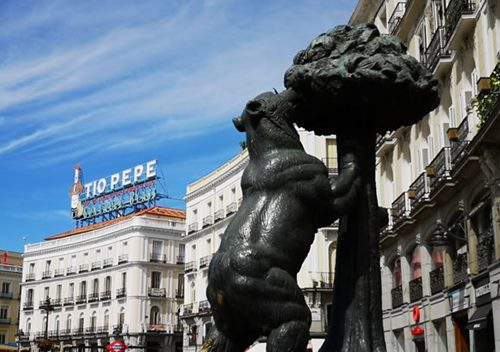
If you're visiting Madrid do not miss an essential tour through its most emblematic places.
This guided tour will takes to you to stroll historical and enchanting Madrid sights such as the Paseo del Retiro, the Barrio de las Letras, the Puerta del Sol and Plaza Mayor.
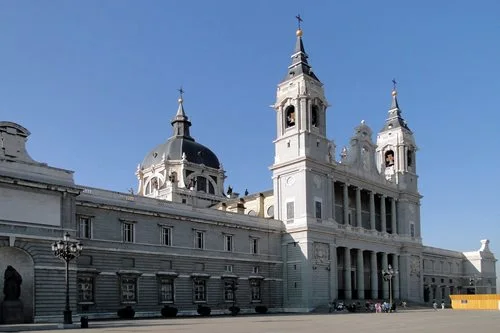
Without forgetting the Plaza de Oriente, where the Royal Palace and the Almudena Cathedral are located.
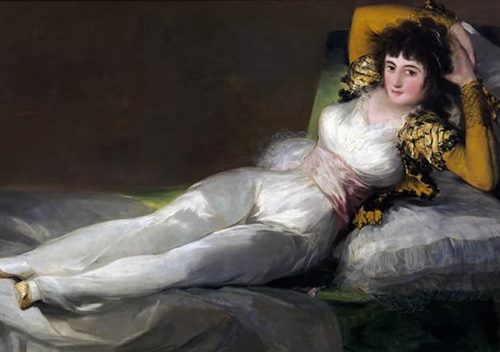
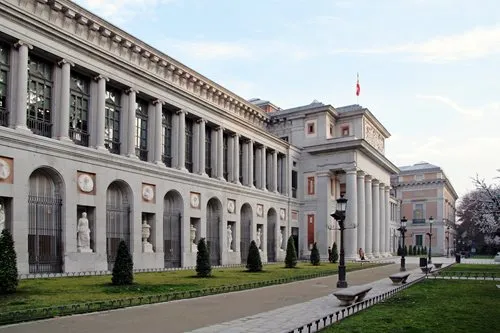
Make the most of your visit to the Prado National Museum. By booking your ticket with an audio guide here, you'll enjoy skip-the-line access to the museum and an app that provides all the details about masterpieces by renowned artists like Goya and Velázquez, as well as great European painters like Rubens.
A perfect option to explore at your own pace one of the largest and most visited art galleries in the world.
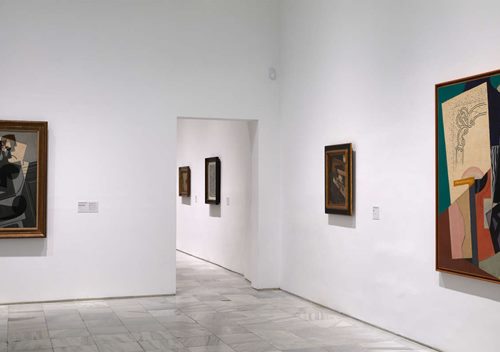
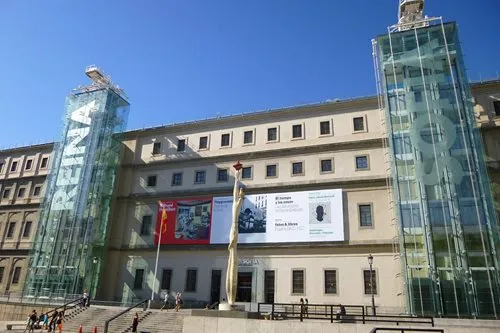
Discover one of Spain's most visited contemporary art museums, the Reina Sofía Museum in Madrid.
Book your ticket with a multilingual audioguide and be captivated by the stories behind masterpieces like Guernica by Pablo Picasso or The Face of the Great Masturbator by Salvador Dalí.
This plan is perfect for exploring the museum at your own pace without missing a single detail.
Address and telephone
Opening times
Prices
If you see any mistakes or want to add anything to this information, please contact us.
If you're visiting Madrid do not miss an essential tour through its most emblematic places.
This guided tour will takes to you to stroll historical and enchanting Madrid sights such as the Paseo del Retiro, the Barrio de las Letras, the Puerta del Sol and Plaza Mayor.
Without forgetting the Plaza de Oriente, where the Royal Palace and the Almudena Cathedral are located.
Make the most of your visit to the Prado National Museum. By booking your ticket with an audio guide here, you'll enjoy skip-the-line access to the museum and an app that provides all the details about masterpieces by renowned artists like Goya and Velázquez, as well as great European painters like Rubens.
A perfect option to explore at your own pace one of the largest and most visited art galleries in the world.
Discover one of Spain's most visited contemporary art museums, the Reina Sofía Museum in Madrid.
Book your ticket with a multilingual audioguide and be captivated by the stories behind masterpieces like Guernica by Pablo Picasso or The Face of the Great Masturbator by Salvador Dalí.
This plan is perfect for exploring the museum at your own pace without missing a single detail.

Would you like to stroll through the heart of Madrid and taste the best tapas? This is your tour.
By booking, you’ll receive a link to download an exclusive, multilingual app. With it, you’ll explore iconic spots like Plaza Mayor, Mercado de San Miguel, and Puerta del Sol.
Discover renowned venues where you can savor the finest Spanish and Madrid-style tapas, from timeless classics to bold innovations. Immerse yourself in the culinary culture of this vibrant city and its people. You’ll even learn fascinating stories and fun facts about each selected bar.
Don’t miss out on this experience!
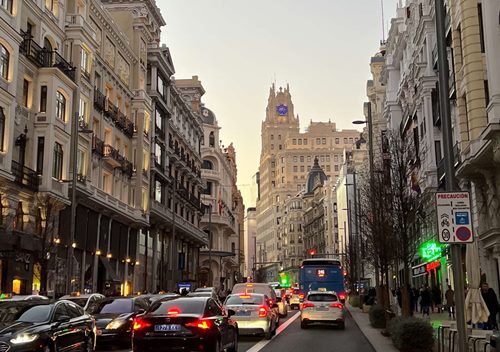
Discover Madrid through its movies with this incredible tour—an original way to explore the city's heritage and culture. You'll learn about Madrid's origins while strolling through film locations and watching their sequences.
Your journey will start at the Royal Palace, passing through the Austrias neighborhood, Plaza Mayor, Sol, and Callao. Along the way, the guide will reveal fascinating anecdotes about Madrid in cinema.
The tour ends on Gran Vía, a backdrop for iconic films, where you'll enjoy a cocktail at the legendary Chicote. Don't just hear about it—experience it yourself!