Cookie settings
We use our own and third-party cookies in order to offer our services, display videos, obtain statistics and offer personalized advertising.
For more information, please read our cookies policy.
Gaudí was asked to continue the construction of the cathedral in 1883, after Francesco de Paula del Villar gave up the project due to its differences with the foundation of the temple. Gaudí spent almost all his professional life in this project until he tragically died after being run over by a tramcar, when he was 74 years old. He left the Neogothic floor and gave it his own personality.
Most of the aspects of his architecture were defined when the building made progress, so that was why its presence in the building site was indispensable. As the façade of the Birth advances his style becomes more fantastic. There is glass from Murano in its peak; moreover, there are several decorative elements in the towers that some people consider they come from the Art Nouveau. He only completely finished the Saint Joseph´ s chapel, the crypt, the external apse and the façade of the Birth.
The four towers are culminated by crosses oriented to the four cardinal points, where the sculpture and the colour are joined with the word in order to get an organic union, alive, of the nature with the target of praising God made man. When Gaudí died, the construction continued and was based on the scale models and designs made by the master. The rest of the façade was completed in 1935.
The West façade, the Passion, was built between 1953 and 1976. The sculptor Subirachs was asked to decorate this area. The construction of this great building continues today.
The temple shows the global conception of the architecture, where plastic, natural forms, symbolism and colour create a unique and genuine mosaic. The building has a Latin cross plan with 5 naves and a transept of 3 naves. The outer cloister links the three façades: Passion, Glory and Birth, with each one of the four bell towers.
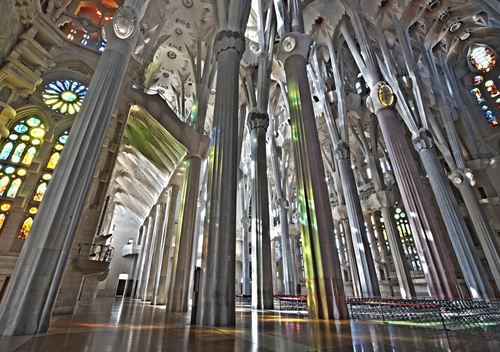
The Sagrada Familia is an architectural Gaudi’s Modernism jewel and the most emblematic building in Barcelona.
Here you are the choice of visiting it in the best moment of the day and in small group up to 6 people. You could access to this Basilica at the less fluency of sightseers time and an official guide explain you all its details and curiosities in exclusive for your group. The guide will be at your disposal for attending any question whatever you want to do.
Don’t worry about the tickets. You only have to reserve your visit and the tour company will run of all including the start time confirmation.
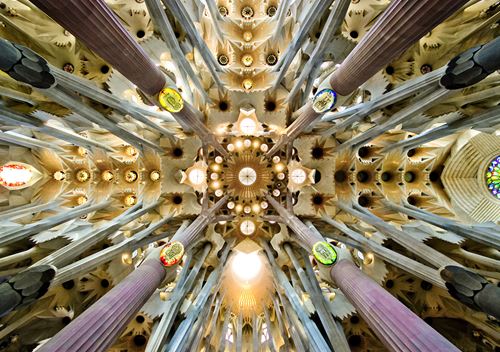
This guided tour will show you La Sagrada Familia of Barcelona. You'll have fast track without waiting queues.
We will talk about the history, outside and inside decoration and its oustanding colums, vaults and rich details.
Besides, in the Sagrada Familia's Museum we will learn about its designer, Antoni Gaudí. At the end of the tour, you'll have free time inside the monument to enjoy it on your own.
This guided tour will show you La Sagrada Familia of Barcelona. You'll have fast track without waiting queues.
We will talk about the history, outside and inside decoration and its oustanding colums, vaults and rich details.
Besides, in the Sagrada Familia's Museum we will learn about its designer, Antoni Gaudí. At the end of the tour, you'll have free time inside the monument to enjoy it on your own.
Address and telephone
Opening times
Prices
If you see any mistakes or want to add anything to this information, please contact us.
The Sagrada Familia is an architectural Gaudi’s Modernism jewel and the most emblematic building in Barcelona.
Here you are the choice of visiting it in the best moment of the day and in small group up to 6 people. You could access to this Basilica at the less fluency of sightseers time and an official guide explain you all its details and curiosities in exclusive for your group. The guide will be at your disposal for attending any question whatever you want to do.
Don’t worry about the tickets. You only have to reserve your visit and the tour company will run of all including the start time confirmation.
This guided tour will show you La Sagrada Familia of Barcelona. You'll have fast track without waiting queues.
We will talk about the history, outside and inside decoration and its oustanding colums, vaults and rich details.
Besides, in the Sagrada Familia's Museum we will learn about its designer, Antoni Gaudí. At the end of the tour, you'll have free time inside the monument to enjoy it on your own.
This guided tour will show you La Sagrada Familia of Barcelona. You'll have fast track without waiting queues.
We will talk about the history, outside and inside decoration and its oustanding colums, vaults and rich details.
Besides, in the Sagrada Familia's Museum we will learn about its designer, Antoni Gaudí. At the end of the tour, you'll have free time inside the monument to enjoy it on your own.
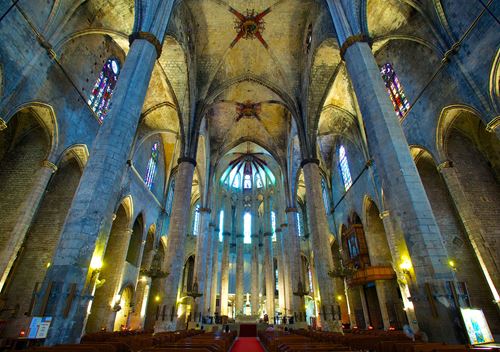
This literary tour will let you relive the stories of this exciting novel through its different locations; places that after almost 700 years we will revisit from a different perspective whilst admiring the Gothic Quarter of Barcelona. This is a unique opportunity to learn more about the characters and about one of the most emblematic monuments of Barcelona, Santa Maria del Mar, the apogee of Catalan Gothic art.
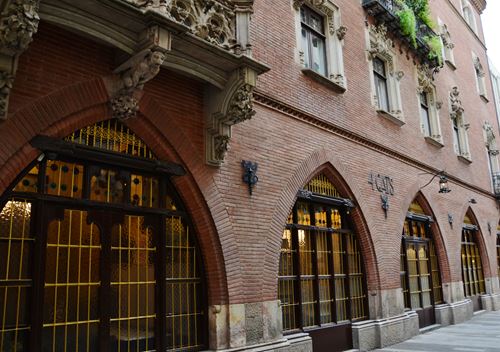
You can read any book, but just with few it's possible to live and breathe them. We present this walking tour as a unique opportunity to wander around the amazing Barcelona depicted in "The Shadow of the Wind", a novel that has captivated thousands of readers all around the world. From letters to words, from imagination to reality.
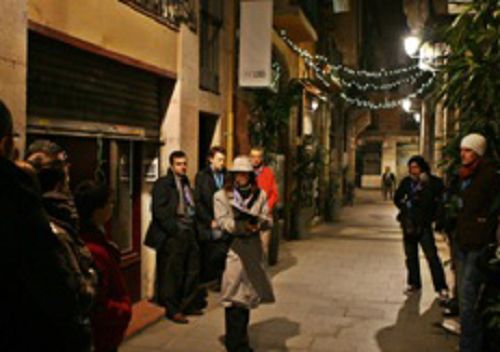
What do the streets of Barcelona hide when night falls? Which stories marked our ancestor’s lives forever? Let yourself become absorbed by the paranormal mysteries of Barcelona with the explanations of an experienced guide.
The Ghost Walking Tour is a night visit around Sant Pere, Santa Caterina and la Ribera quarters, based on the book “Fantasmes de Barcelona” written by Sylvia Lagarda-Mata.
The tour tells the mysterious and hair-raising stories that have been taking place in those areas for decades.
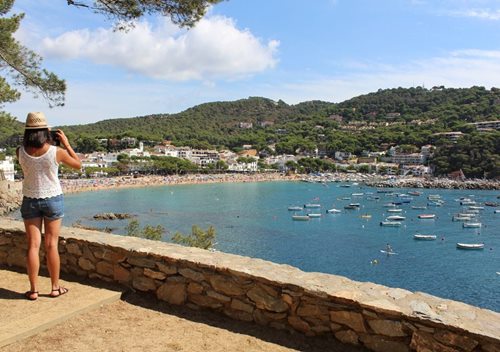
Would you like to spend a day visiting typical towns of the Costa Brava? Book now this day trip from Barcelona and you will discover enchanting places: the typical fishing village of Calella de Palafrugell, and Llafranc as well. You will visit the medieval city of Pals.
This will be an amazing tour in a comfortable bus with free Wi-Fi.
Enjoy your holidays in Catalonia. No matter how short your stay in Barcelona, make a getaway to the Costa Brava.
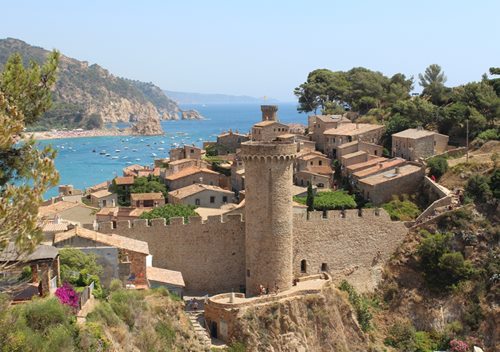
If you’re on holidays in Barcelona and you’d like to make a getaway, book now this Half Day tour to the Costa Brava. This is an 8-hours-excursion to visit along with a professional guide the emblematical and touristic villages of Lloret de Mar and Tossa de Mar. You’ll fall in love of its enchanting cliffs, landscapes and monuments.
Afterwards, this trip includes the tickets of boat to Tossa de Mar and visit to other essential sites, such as the Vila Romana dels Amettlers.
You’ll go on board of a comfortable bus with free Wi-Fi and multilingual audioguide.
The Sagrada Familia is an architectural Gaudi’s Modernism jewel and the most emblematic building in Barcelona.
Here you are the choice of visiting it in the best moment of the day and in small group up to 6 people. You could access to this Basilica at the less fluency of sightseers time and an official guide explain you all its details and curiosities in exclusive for your group. The guide will be at your disposal for attending any question whatever you want to do.
Don’t worry about the tickets. You only have to reserve your visit and the tour company will run of all including the start time confirmation.
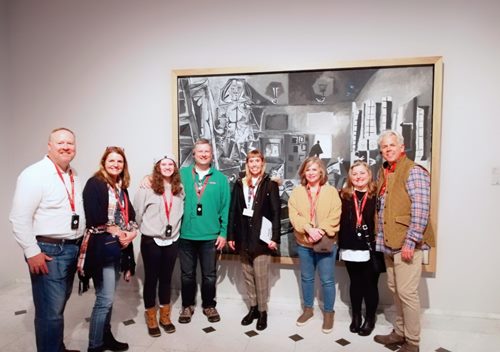
Enter and discover the biggest Picasso’s artworks collection in its Museum of Barcelona. Do it with this small group tour by an Art expert guide.
Moreover, the skip-the-line ticket is guaranteed. Don’t worry about nothing. You only have to book your and enjoy of contemplate the paintings of the main Spanish Cubism artist along with an expert.
Only in English!
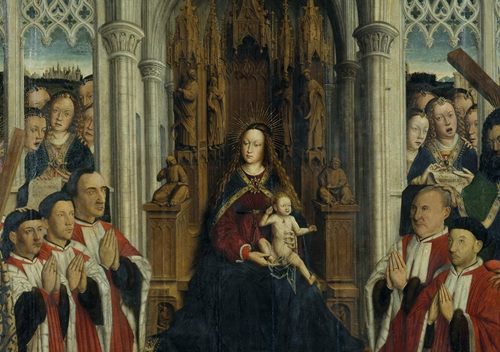
Delve into Catalan art with this private tour at the National Art Museum of Catalonia.
You will begin in the museum's stunning hall, where an introduction will be given. You will explore the Romanesque art galleries, admiring the impressive medieval mural paintings preserved here. Next, you’ll move on to Gothic art, discovering its intricate altarpieces. The journey continues through modern art with works by Gaudí, Miró, and Casas.
Additionally, the guide will share anecdotes and details to help you gain a deeper understanding of the history of Catalan art. The tour will also be tailored to your specific interests.
Don’t miss this visit if you are an art lover, set in the privileged location of Montjuïc in Barcelona.
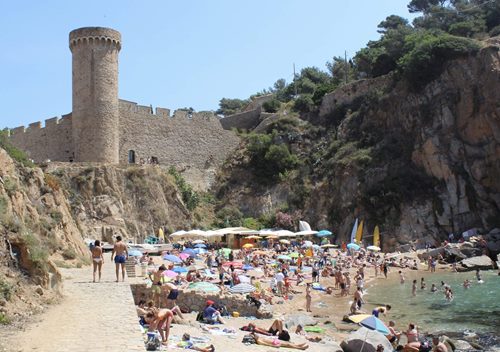
Explore the essence of the Costa Brava on a full-day excursion to Tossa de Mar, one of the most emblematic towns along the Catalan coast. Enjoy a guided walk through the historic Vila Vella, with spectacular views from the lighthouse and a stroll through its medieval streets and fishermen’s quarter.
After the guided tour, make the most of your free time to swim at its beaches—Playa Grande, Mar Menuda, or Cala d’es Codolar—discover local shops, or taste Mediterranean cuisine.
A perfect getaway to experience nature, history, and the sea all in one day. Book now and let the Costa Brava surprise you.
This guided tour will show you La Sagrada Familia of Barcelona. You'll have fast track without waiting queues.
We will talk about the history, outside and inside decoration and its oustanding colums, vaults and rich details.
Besides, in the Sagrada Familia's Museum we will learn about its designer, Antoni Gaudí. At the end of the tour, you'll have free time inside the monument to enjoy it on your own.
This literary tour will let you relive the stories of this exciting novel through its different locations; places that after almost 700 years we will revisit from a different perspective whilst admiring the Gothic Quarter of Barcelona. This is a unique opportunity to learn more about the characters and about one of the most emblematic monuments of Barcelona, Santa Maria del Mar, the apogee of Catalan Gothic art.
You can read any book, but just with few it's possible to live and breathe them. We present this walking tour as a unique opportunity to wander around the amazing Barcelona depicted in "The Shadow of the Wind", a novel that has captivated thousands of readers all around the world. From letters to words, from imagination to reality.
What do the streets of Barcelona hide when night falls? Which stories marked our ancestor’s lives forever? Let yourself become absorbed by the paranormal mysteries of Barcelona with the explanations of an experienced guide.
The Ghost Walking Tour is a night visit around Sant Pere, Santa Caterina and la Ribera quarters, based on the book “Fantasmes de Barcelona” written by Sylvia Lagarda-Mata.
The tour tells the mysterious and hair-raising stories that have been taking place in those areas for decades.
Would you like to spend a day visiting typical towns of the Costa Brava? Book now this day trip from Barcelona and you will discover enchanting places: the typical fishing village of Calella de Palafrugell, and Llafranc as well. You will visit the medieval city of Pals.
This will be an amazing tour in a comfortable bus with free Wi-Fi.
Enjoy your holidays in Catalonia. No matter how short your stay in Barcelona, make a getaway to the Costa Brava.
If you’re on holidays in Barcelona and you’d like to make a getaway, book now this Half Day tour to the Costa Brava. This is an 8-hours-excursion to visit along with a professional guide the emblematical and touristic villages of Lloret de Mar and Tossa de Mar. You’ll fall in love of its enchanting cliffs, landscapes and monuments.
Afterwards, this trip includes the tickets of boat to Tossa de Mar and visit to other essential sites, such as the Vila Romana dels Amettlers.
You’ll go on board of a comfortable bus with free Wi-Fi and multilingual audioguide.
The Sagrada Familia is an architectural Gaudi’s Modernism jewel and the most emblematic building in Barcelona.
Here you are the choice of visiting it in the best moment of the day and in small group up to 6 people. You could access to this Basilica at the less fluency of sightseers time and an official guide explain you all its details and curiosities in exclusive for your group. The guide will be at your disposal for attending any question whatever you want to do.
Don’t worry about the tickets. You only have to reserve your visit and the tour company will run of all including the start time confirmation.
Enter and discover the biggest Picasso’s artworks collection in its Museum of Barcelona. Do it with this small group tour by an Art expert guide.
Moreover, the skip-the-line ticket is guaranteed. Don’t worry about nothing. You only have to book your and enjoy of contemplate the paintings of the main Spanish Cubism artist along with an expert.
Only in English!
Delve into Catalan art with this private tour at the National Art Museum of Catalonia.
You will begin in the museum's stunning hall, where an introduction will be given. You will explore the Romanesque art galleries, admiring the impressive medieval mural paintings preserved here. Next, you’ll move on to Gothic art, discovering its intricate altarpieces. The journey continues through modern art with works by Gaudí, Miró, and Casas.
Additionally, the guide will share anecdotes and details to help you gain a deeper understanding of the history of Catalan art. The tour will also be tailored to your specific interests.
Don’t miss this visit if you are an art lover, set in the privileged location of Montjuïc in Barcelona.
Explore the essence of the Costa Brava on a full-day excursion to Tossa de Mar, one of the most emblematic towns along the Catalan coast. Enjoy a guided walk through the historic Vila Vella, with spectacular views from the lighthouse and a stroll through its medieval streets and fishermen’s quarter.
After the guided tour, make the most of your free time to swim at its beaches—Playa Grande, Mar Menuda, or Cala d’es Codolar—discover local shops, or taste Mediterranean cuisine.
A perfect getaway to experience nature, history, and the sea all in one day. Book now and let the Costa Brava surprise you.
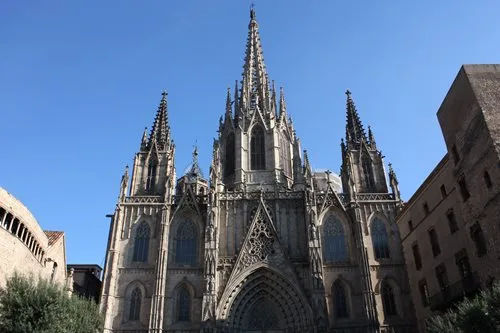
It is one of the most meaningful monuments of the Catalonian Gothic Architecture. It was built on the side of an existing Paleochristian Basilica. Firstly, it was built in a Romanesque style, but finally, it became a Gothic Cathedral. The count of Berenguer started the reconstruction of this new cathedral that was consecrated in 1058.
It has three naves with the same height, apse with ambulatory, transept and nine chapels between the buttresses distributed along the perimeter giving more light and amplitude to the complex. The main façade is the most current work in the Cathedral from the end of the XIX Century and beginning of the XX Century. The two octagonal towers that stand in the ends of the transept come from the XIV Century. The Cathedral has a dome which is 70 meters high. The Puerta de San Ivo (Door of Saint Ivo) has a Romanesque design.
There are many beautiful Gothic and Baroque altarpieces in some of the chapels: the altarpiece of St. Martin and St. Ambrosio by Joan Mates should be highlighted due to it is considered to be a masterpiece in the Cathedral. In the area of the Evangelio (Gospel) we can see the valuable Baroque altarpieces of St. Severo, and the Virgen del Rosario and St. Marcos. The choir occupies the centre of the temple, and it was started in 1390 by the sculptors Jordi and Pere Johan. At the beginning of the XVI Century, it was enriched with Bartolomé Ordoñez´ s sculptures.
The Chapter House is a masterpiece of the Gothic style. Through a Romanesque façade you access to a rectangular cloister that has a simple ogive vault in its gallery. This gallery links with the Romanesque chapel of Santa Lucia. The Puerta de la Piedad (Door of Mercy) belongs to the Gothic style from Barcelona and it is a Miguel Lochner´ s work of art. Next to the sacristy of the cathedral, from the XIV Century, the valuable treasure of the cathedral is located.
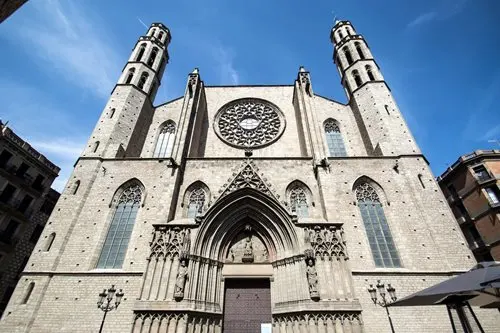
It is the most emblematic and purest example of the Catalonian Gothic style. Since the XIII Century, the relevance of the district of La Rivera as meeting point of merchants and shipowners made necessary the construction of a great church replacing the former parish church of Las Arenas.
It has three facades: the main one in the square of Santa María, the second one in Santa María Street, and the last one in the Paseo del Born. All of them show the essence of the Catalonian Gothic style: octagonal towers, the presence of naked surfaces and solid buttresses.
The main facade is decorated with sculptures of St Pedro and St Pablo, with an unsurpassable rose window in a flamboyant Gothic style from the XV Century. In the façade of Santa María Street, the gargoyles of the buttresses, the stained glass windows back and, especially, its monumental dimensions should be highlighted.
Inside, it continues being an example of the Catalonian Gothic style due to its wide range of elements and its sober decoration. It has three high naves that are separated by high columns. In order to harmonize the complex, the side naves are half higher than the central nave and the total width of the complex fits in with the height of the side naves. Its rich decoration was destroyed after the riots of 1936, although several headstones related to the sea world have arrived to our days.
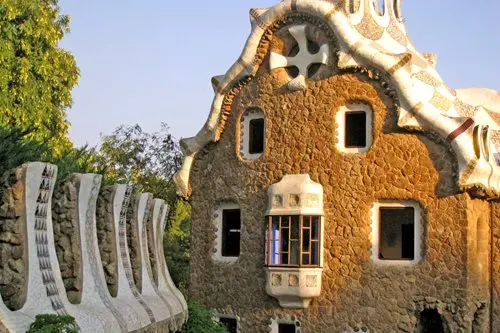
It is part of the different works that Gaudí made for the businessman, politician and member of a prestigious family of the Catalonian High Bourgeoisie Mr Eusebio Güell. The Güell Park was his most ambitious and original work, based on the City- garden model.
Gaudí planned to create a community centre to be used as a place where the habitants of the 60 houses could meet.
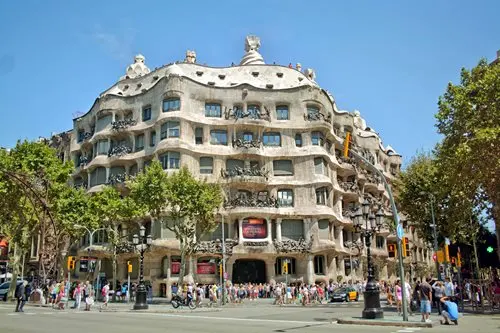
The building was built for the Milá family between 1906 and 1910 and was Gaudí´ s last important civil monument before starting with the construction of the Sagrada Familia.
It looks more like a real sculpture than a building. Due to its innovative nature, the building may be consider as a Gaudí´ s typical work of art in which the geometric lines are only straight lines that create curved effects. The façade is an impressive wave- like stone, where forged iron is also present in its balconies.