Cookie settings
We use our own and third-party cookies in order to offer our services, display videos, obtain statistics and offer personalized advertising.
For more information, please read our cookies policy.
In 712, the city of Seville is conquered by the Muslims and receives the name of Isbiliya. It had an important cultural richness during that time thanks to the Arab legacy. Under the Arab rule, a period of splendour starts in Seville, with a great economic and cultural boom. After the decadence of the caliphate, Seville becomes the capital city of the Almohad Empire.
Later, between the end of the XI Century and until the middle of the XII Century, the Almoravids (North- African Muslims from the Bereber family) arrived to the city. It was a flourishing period of time for business and architecture.
In 1163, Seville became the capital city of the Almohad Empire in al- Andalus until Fernando II´ s conquest in 1248. During Alfonso X´ s reign, the city reaches an important splendour that continues during the next centuries thanks to the Discovering of America. In 1503, the Casa de Contratación (the House of trade) in Seville is created in order to promote and regulate trade and navigation with the New World.
Some important changes in Politics and Society take place in the Peninsular Kingdoms from 1492 to 1504 (between the discovering of America and Isabel the Catholic´ s death). Seville, during the XVI Century, is one of the most prosperous, lively and populated cities worldwide.
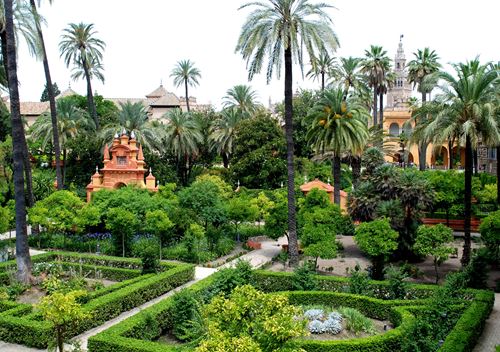
Hasn't you visited the Alcazar of Seville yet? Do not miss then this guided visit. An amazing palace complex, of Islamic origin, which the later historical styles has been added: from Mudejar to Baroque.
This is a fantastic sight that has been scene of great film productions, such as the 5th Season of "Game of Thrones".
An essential monument to visit!
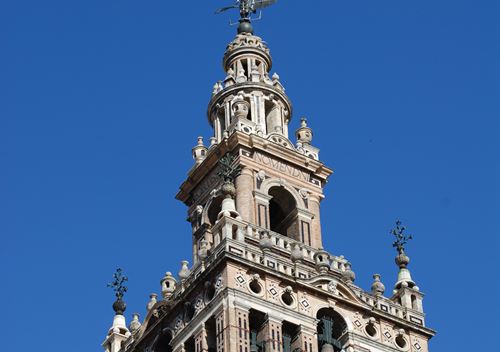
This guided tour shows the highlights of Seville: The Cathedral, the Giralda and the Alcazar Royal Palace, with official guide included.
The easiest way to discover Seville.
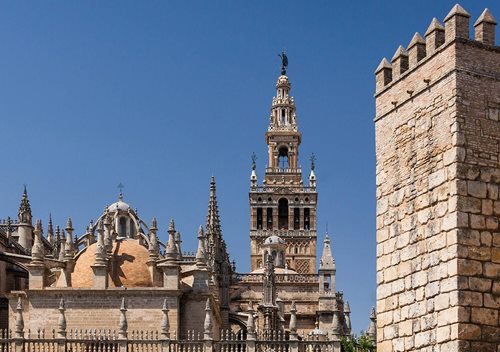
If you want to explore the most emblematic and monumental part of Seville, as well as its history, a perfect visit is to the Cathedral and Royal Alcázar.
You will discover, along with a guide, the different cultures that have passed through this city: Islamic, Jewish, and Christian.
Moreover, this guided tour includes admission to the monuments at an unbeatable price.
Address and telephone
Opening times
Prices
If you see any mistakes or want to add anything to this information, please contact us.
Hasn't you visited the Alcazar of Seville yet? Do not miss then this guided visit. An amazing palace complex, of Islamic origin, which the later historical styles has been added: from Mudejar to Baroque.
This is a fantastic sight that has been scene of great film productions, such as the 5th Season of "Game of Thrones".
An essential monument to visit!
This guided tour shows the highlights of Seville: The Cathedral, the Giralda and the Alcazar Royal Palace, with official guide included.
The easiest way to discover Seville.
If you want to explore the most emblematic and monumental part of Seville, as well as its history, a perfect visit is to the Cathedral and Royal Alcázar.
You will discover, along with a guide, the different cultures that have passed through this city: Islamic, Jewish, and Christian.
Moreover, this guided tour includes admission to the monuments at an unbeatable price.
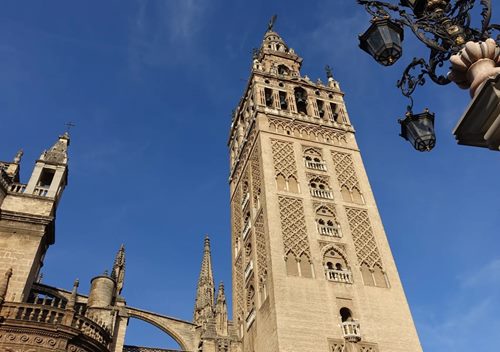
Book this experience and explore at your own pace one of Seville’s most iconic landmarks: the Cathedral and the Giralda, a UNESCO World Heritage Site.
With your official ticket and audioguide, you’ll discover artistic treasures like the stunning main altarpiece and Columbus’s tomb. Climb to the top of the Giralda for breathtaking views of the city.
An essential visit that blends history, art, and unforgettable panoramas in the heart of Seville.
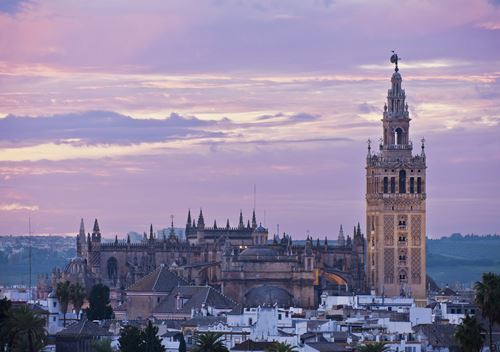
Seville Cathedral is a must-see when visiting the capital of Seville. Its monumental and historical heritage is of immeasurable value. It is the resting place of some Christian kings and Christopher Columbus. It is known as the "Magna Hispalensis" for being the largest in the world in terms of area.
And of course, artistically, it is a true gem, also housing an incredible collection of pictorial and sculptural works inside.
Join this guided tour of Seville Cathedral, without worrying about admission tickets.
A unique opportunity at a surprising price.
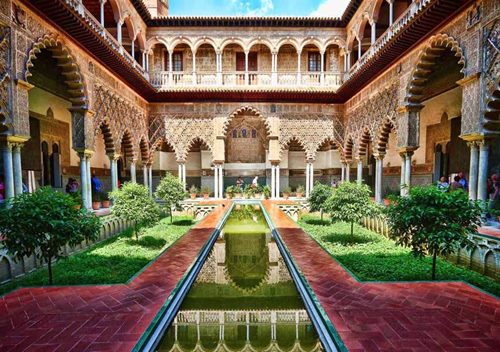
The Royal Alcazar of Seville is one of the most important monuments and essential for understanding the history of the capital of Seville. It began as an Almohad palace complex and today continues to serve as a residence for the Royal Family during their visits to Seville. It also hosts events and film shoots.
This spectacular monument combines Islamic and Christian art and is excellently preserved.
On our guided tour, you will discover its entire history while admiring the beautiful decoration of its walls, ceilings, and baseboards.
You will learn about a small part of the history of the Spanish kings and the protagonists of great events that took place here. You will fall in love with its exotic patios and gardens, which feature a wide variety of flora and fauna; we will also see peacocks during the visit.
Such is the importance of this alcazar that it has been a UNESCO World Heritage Site since 1987 and is one of the most visited monuments in Spain.
In short, a monument you cannot miss during your stay in Seville.
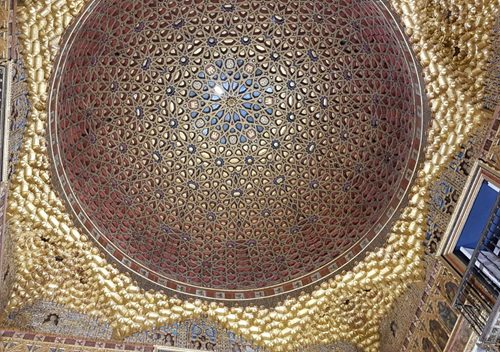
A complete tour of Seville includes visiting its Cathedral and its Real Alcázar. These two unique and key monuments are essential to understanding the history of the Hispalis capital and the legacy of the different cultures that passed through it.
You won't have to wait in line, and you will be accompanied at all times by an official guide who will reveal all the secrets of these two World Heritage jewels.
Tickets are included.
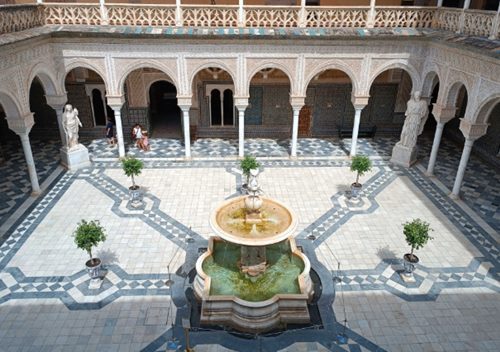
Discover one of the most enchanting palaces in the heart of Seville – the Casa de Pilatos. This stunning 15th-century building blends Mudéjar and Renaissance styles with the true essence of Seville, beautifully reflected in its central courtyard. Inside, it houses valuable artworks and historical manuscripts.
Explore every corner of the Casa de Pilatos with this guided tour led by an expert.
The entrance ticket is included in the booking price.
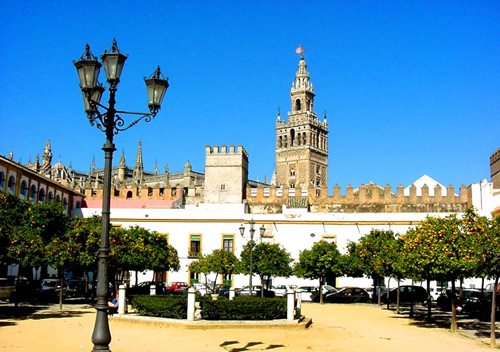
Discover Medieval Seville on this guided tour. Explore the historic heart of the city, where the medieval past of Seville comes to life.
With your guide, you’ll walk around the Cathedral, the Royal Alcázar, and through the narrow streets of the Santa Cruz quarter and the old Jewish neighborhood.
An essential tour to truly experience Seville.
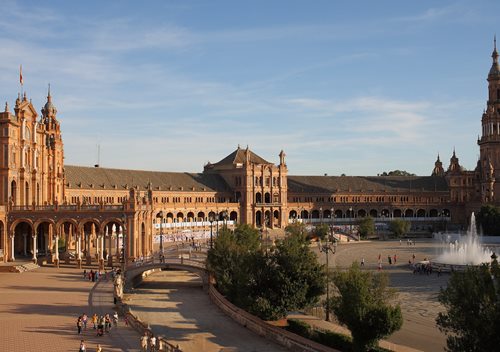
Discover the Movie Magic of Seville with this guided tour. In the romantic and charming María Luisa Park, you’ll explore some of its most special spots, including Plaza de América and the breathtaking Plaza de España.
The latter served as a filming location for iconic movies such as Lawrence of Arabia and Star Wars: Episode II – Attack of the Clones.
Don’t miss this cinematic tour through Seville!
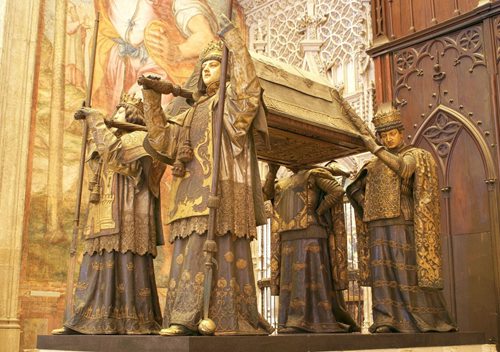
During your stay in Seville, this Monumental Visit: Inside the Cathedral is a must. A guided tour through the interior of one of the city’s most iconic monuments, declared a UNESCO World Heritage Site and recognized as a Site of Outstanding Universal Value.
Accompanied by a professional guide, you’ll explore every corner of this magnificent cathedral — its impressive chapels, courtyards, and priceless works of art.
Includes admission to both the Cathedral and the Giralda.
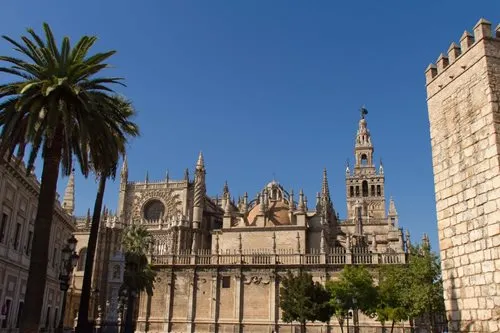
This Cathedral was built to cover the land previously occupied by an Almohad Mosque in the XII Century.
From this Mosque, only its minaret, the Giralda, has arrived to our days.
The Construction started in 1401 and took almost a century. It is a Gothic temple in which architects tried to mix austerity with severity. It was converted to the Christian religion, after Fernando III´ s conquest in 1248.
During its construction, it passed through, Mudejar, Gothic, Renaissance, Barroque and Neoclassic Periods.
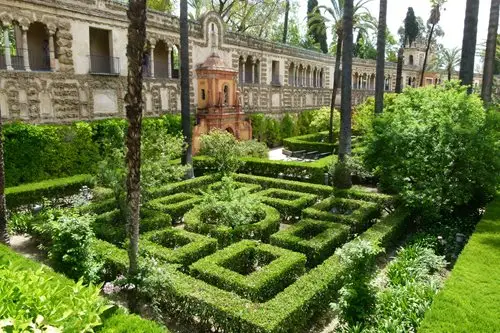
The Alcazar is a monumental complex that comes from the Muslim period. It consists of a series of palaces from different times and styles that is why they are called Royal Alcazars. Its gardens, halls, courtyards, orchards and rooms decorated with glazed tile from Seville are important.
Its rooms are related to kings such as Al-Mutamid, Fernando III of Castilla, Alfonso X, Pedro I el Cruel or the Catholic Kings. It was the temporary residence of the Kings of Spain.
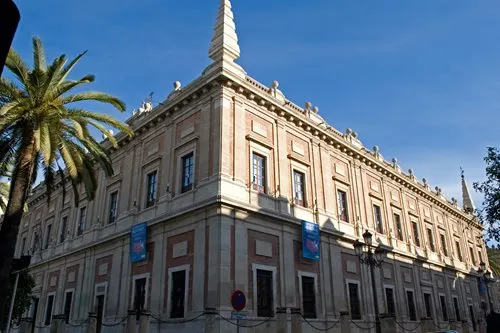
It is located in the Casa de la Lonja de Sevilla, a place chosen by Carlos III in 1785 in order to locate the Archivo de Indias. It is born with the aim of centralizing in only one place the documents related to the Spanish colonies that until then were in different archives: Simancas, Cádiz and Seville.
It is a square floor building, with two floors and a large central courtyard with a marvellous decoration. In the XVII the second floor and the Cruz del Juramento (Oarth Cross) were built. Nowadays, it is the main existing archive related to the activity of Spain in America and the Philippines, containing information about the Political History and the Social History, the Economic History and the mentalities, History of Church and Art History or the geography of those territories.
The archive keeps pieces of incalculable historical value such as autographs of the main characters of the Discovering, Colon´ s diary, plans of the main American cities, etc.
The redesign of the main staircase by Lucas Cintara based on marble sheets should be highlighted.
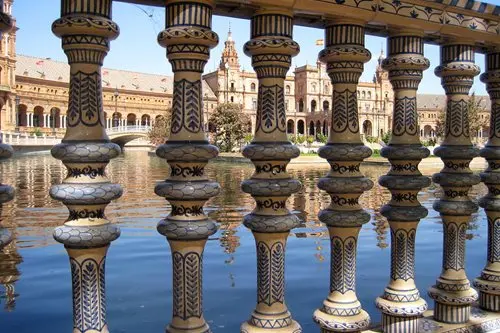
This square was built due to the Spanish-American Exposition in 1929. It was inaugurated by His Majesty the King Alfonso XIII.
It has a Renaissance style mixed with typical elements of the city. It is a semicircular square (200 meters of diameter) decorated with exposed brick, marble and ceramics that give a Renaissance and Barroque touch to its towers.
A series of benches and ornaments based on glazed tiles create a space referring to the 48 Spanish provinces. Maps of the provinces, mosaics about historical moments and the coat of arms of the capital city of the province are represented in these spaces.
The square is surrounded by a channel crossed by 4 bridges that represent the 4 old Spanish kingdoms. The Plaza de España symbolizes the hug that Spain gives to the old colonies and it is oriented to the river symbolizing the way to America.
Today, this square consists of Government buildings such the delegation of the Central Government of Andalusia.