Cookie settings
We use our own and third-party cookies in order to offer our services, display videos, obtain statistics and offer personalized advertising.
For more information, please read our cookies policy.
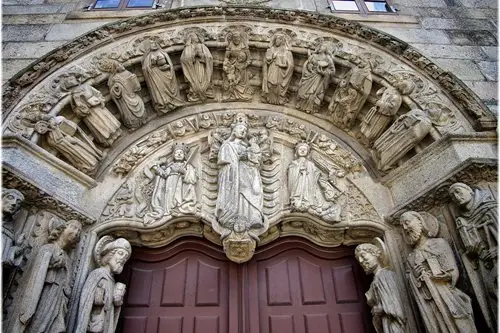
The Iberian Peninsula presented a deep political and cultural complexity (Feudalism, Church control and monastic orders) during the Middle Ages. In the South, the Muslim state of Al-Andalus was situated. In the North the small Christian Kingdoms took advantage of the Muslim weakness that starts in 1002 with Almanzor´ s death in order to motivate the Reconquest. Despite of the Christian advance, the coexistence of the two cultures was the dominant factor and one of the elements that enriched our Romanesque.
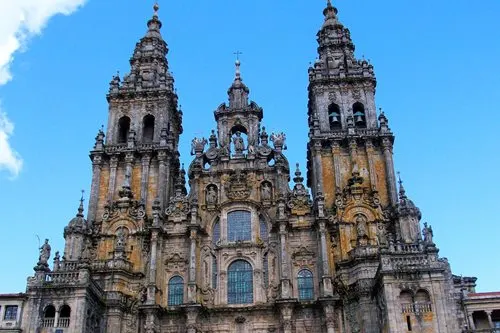
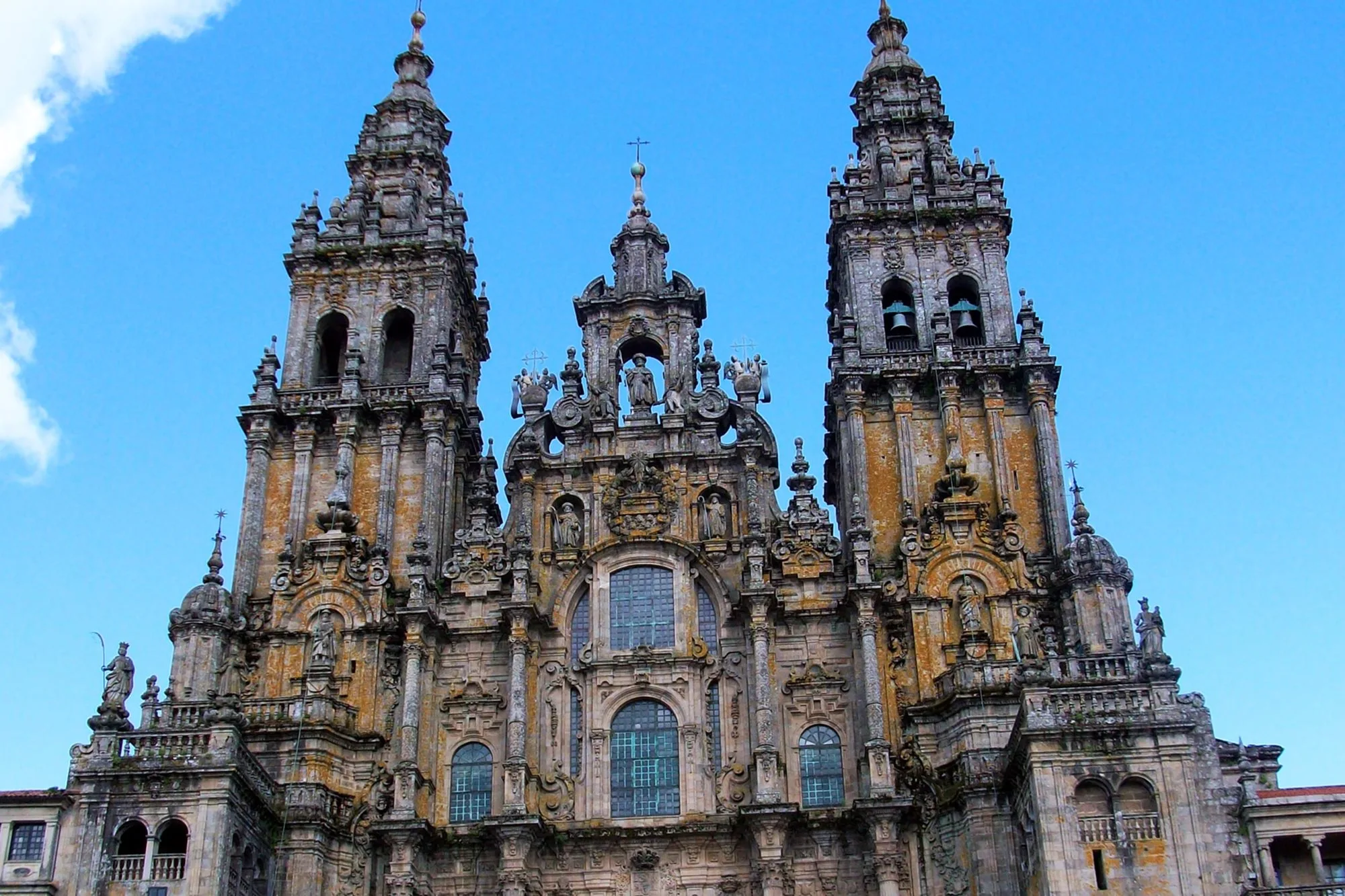
The history of the city of Santiago revolves around the discovering of the apostle James the Great´ sepulchre. The King Alfonso II the Chaste and the bishop Teodomiro de Iria Flavia turned the place into an important focus of Christianity, together with Rome and Jerusalem. The continuous Arab and Nomadic expeditions, leaded by Almanzor, completely destroy the old church built by Alfonso III the Great. Almanzor appropriated the bells of said cathedral and took them to Córdoba together with the prisoners. He was defeated by Fernando III, so that the cathedral was returned in exchange form Islamic prisoners. In 1075, the construction of the current cathedral started in a Romanesque style and it was finished in 1211. It was rebuilt by Alfonso V with the Bishop Diego Gelmírez, closed to the Cluny´ s order, he carried out the biggest part of the construction between 1122 and 1128.
Along the XI and XII Centuries, the Way of St. James became a pilgrimage route that motivates trade and culture. The Christian Kings favoured the pilgrimage founding churches, hospices, bridges, etc.
Address and telephone
Opening times
Prices
Free entry.
If you see any mistakes or want to add anything to this information, please contact us.

Book your hotel