Cookie settings
We use our own and third-party cookies in order to offer our services, display videos, obtain statistics and offer personalized advertising.
For more information, please read our cookies policy.
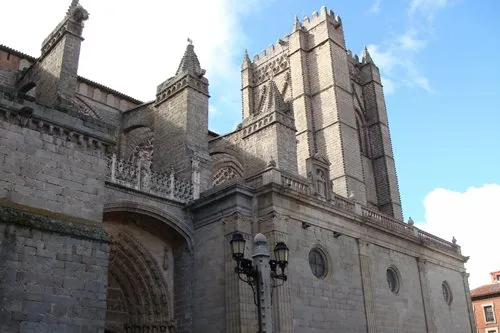
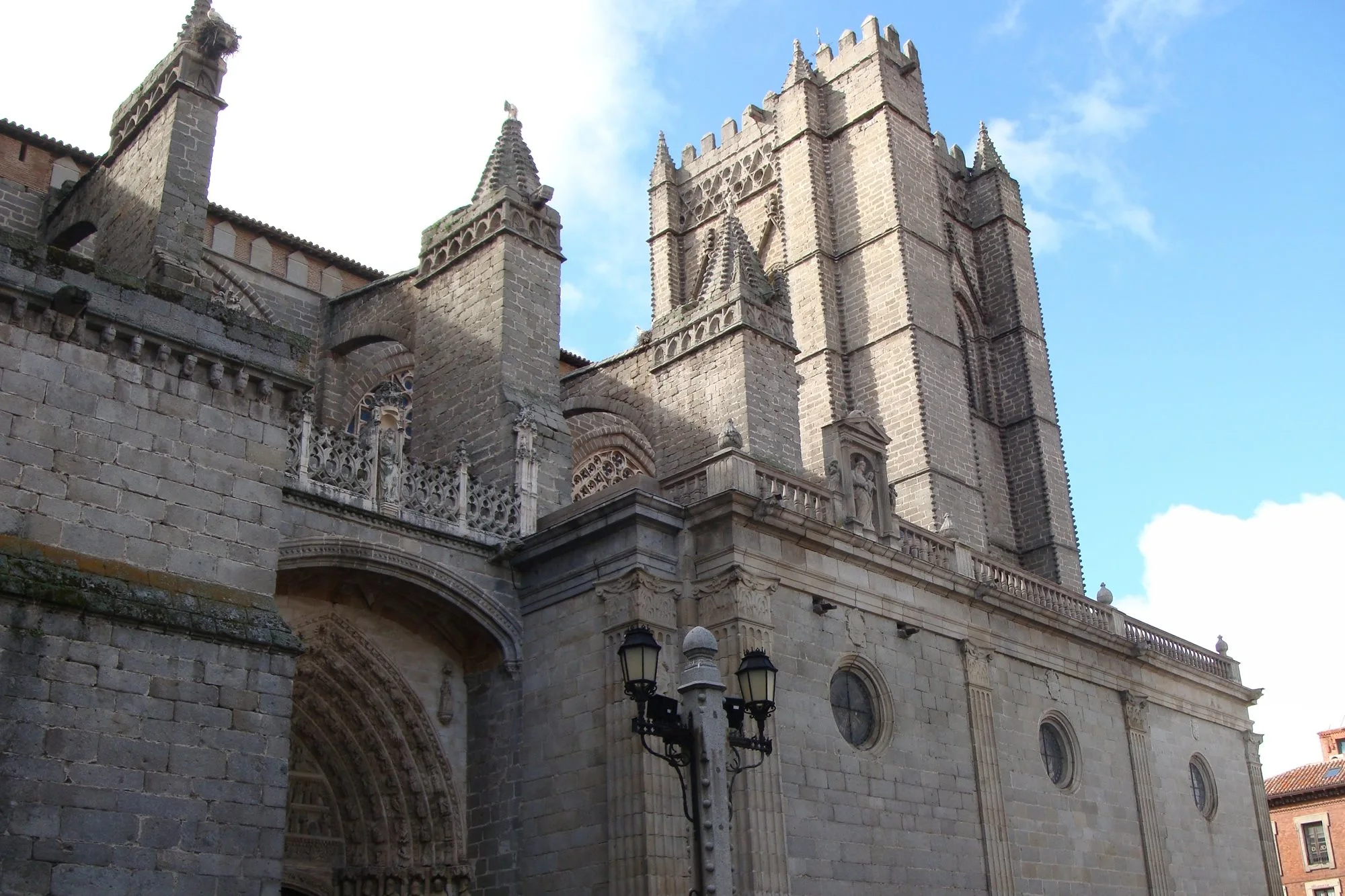
It is one of the first Gothic cathedrals built in Castile. It seems to be inspired in the French abbey of Sain-Denis.
It was started in Romanesque style, but later, in times of Alfonso VIII, it was pulled down in order to build a better cathedral and was built in Gothic style with granite.
The temple has a Latin cross plan, three naves with four bays, a large transept and presbytery formed by a major chapel, a double nave ambulatory and angle chapels. The only element that could be considered as Romanesque, although Late Romanesque, is the presbytery located in the wall and part of the walls oriented to the transept. The development of the naves, its vaults and the two towers (one of them unfinished) are in first Gothic style.
In the altar of the major chapel, there is a marvellous altarpiece by Vasco de la Zarza with paintings by Pedro Berruguete and Juan de Borgoña with scenes of Christ´ s life. The cloister and the sacristy are in Gothic style from the XV Century, and in the second one, we can find the famous monstrance by Juan Arfe. In the ambulatory, we can find the sepulchre of the bishop Don Alfonso de Madrigal, El Tostado, in alabaster, by Vasco de la Zarza.
Built: X – XIV Centuries
Author: Álvar García, Fruchel
Style: Gothic
Category: Religious
Type: Cathedral
Address and telephone
Opening times
Prices
If you see any mistakes or want to add anything to this information, please contact us.
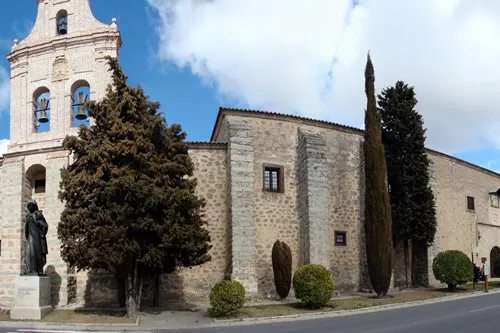
This convent was founded in 1515. It is a convent of the Religious Order of the Carmelite nuns, where Saint Teresa of Jesus stayed during twenty nine years of her life and where she became a nun.
The church was built over the site occupied by a family house and the former convent of San José. The Renaissance façade contrasts with the belfry added in the XVIII Century.
It has four naves of two floors. The central courtyard is surrounded by a cloister of two floors. It suffers different restorations during the XVIII Century. A chapel was built over the Saint´ s cell in 1630.
In the cloister some relics, valuable manuscripts and a drawing by St John of the Cross are kept. Through its grilles, both Saints talk about the necessary steps to reach the mystic union with God.
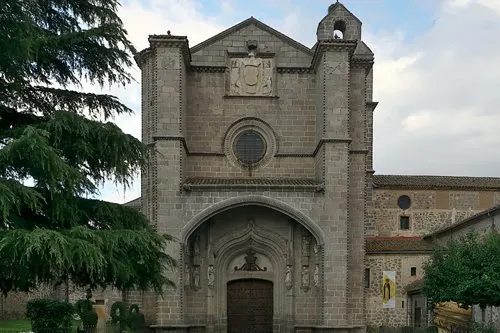
It is a monumental convent from the XV Century sponsored by the Catholic Kings and the inquisitor Fray Tomás de Toquemada, and was founded by doña María Dávila. It was built for the Dominican Order.
It consists of three cloisters: the novitiate cloister, of great strictness; the Silence cloister, profusely decorated with pomegranate, stone balls, known as perlado abulense; and the Kings´cloister.
In the major altar we can find St Thomas´ altarpiece by Pedro de Berruguete, which consists of five bodies.
Fancelli was who carried out the sepulchre of the Catholic Kings´ son, Don Juan, who died being young. It was carved with surprisingly realism. The set of chairs of the choir was carried out with walnut wood in Gothic style.
In the same building is located the Museum of Oriental Art, created by the Dominican Order.
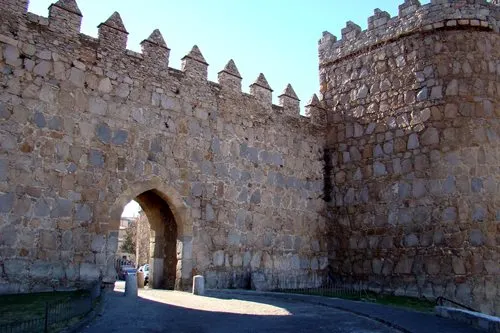
The city is one of the most important fortified precincts in the world. They are considered as the most complete construction from the Middle Ages.
They were started by Raimundo de Borgoña. It approximately has 2500 meters of perimeter, with 88 towers and large fortified towers. The average high of the wall is 12 meters. The design is an irregular rectangle and it is fortified with towers and cubes crowned by merlons. They are well conserved due to its restorations. The monumental gates of the Alcázar and San Vicente are flanked by towers that are more than 20 meters high. In the wall is inlayed the apse of the Cathedral, with a semicircular tower much bigger than the rest of towers, it is called the Cimorro.
The walls were built in order to control the entrance of provisions, the entrance of merchandise, and to isolate the city from possible plagues and epidemics, including its defensive function.