Cookie settings
We use our own and third-party cookies in order to offer our services, display videos, obtain statistics and offer personalized advertising.
For more information, please read our cookies policy.
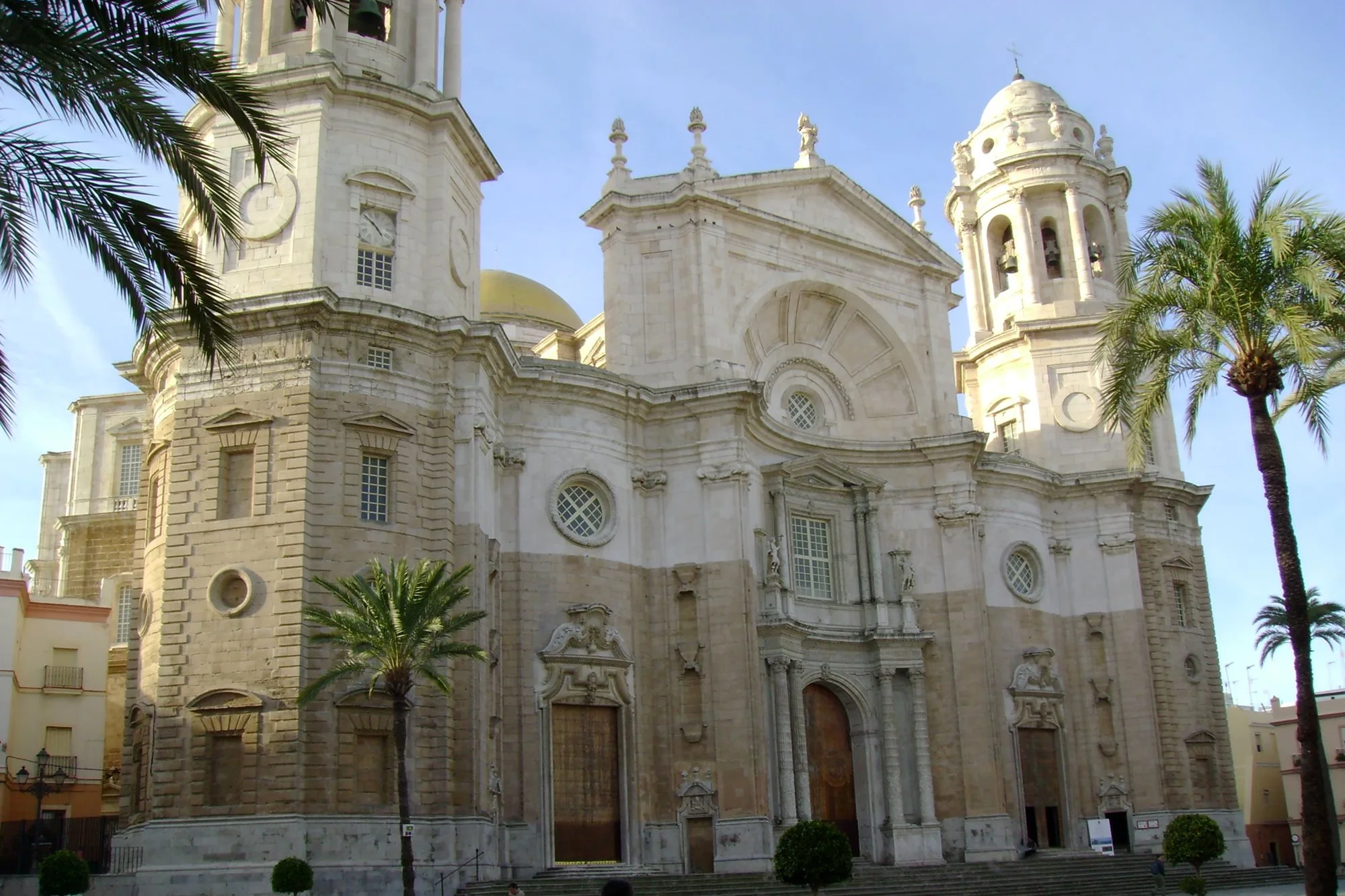
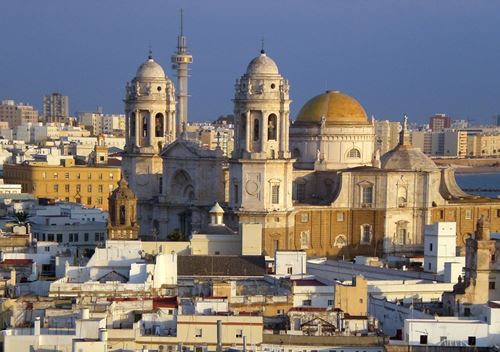
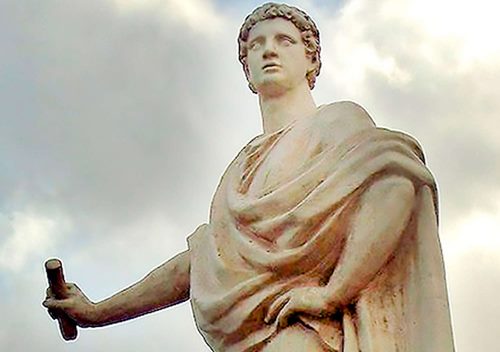
It is a religious building that was firstly built according to the architect Acero's design. This architect left the project in 1739 and Gaspar Cayón continued the work, although he passed it to his nephew Torcuato Cayón in 1757. However, it was finished in 1838 when Domingo de Silos Moreno, whose statue is placed in front of the façade, was bishop.
It is a three naves temple with Latin Cross plan, with a circular ambulatory. The façade seems to be alive, with a central body and two towers that do not belong to Acero´ s initial project. Inside, it is divided into three naves. It is 85 meters long by 60 meters wide with a dome of 52 meters high in the transept. The set of chairs of the choir was carved by Pedro Duque Cornejo.
However the main artistic work of the temple is San Bruno, made by Martínez Montañez. It is a beautiful chapel which is the burial place of this saint, with a four meters high silver monstrance made by Antonio Suárez. The Cádiz Cathedral is the last link in the chain of great cathedrals in Spain and other churches that were built on the other side of the Atlantic Ocean.
Built: XVII – XVIII Centuries (1722- 1838)
Author: Clemente Acero
Style: Baroque, Neoclassical
Category: Religious
Type: Cathedral
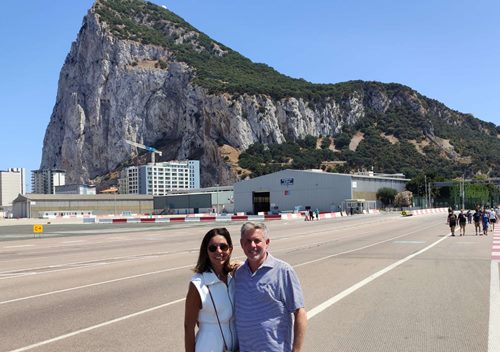
Discover Gibraltar, a charming British enclave in southern Europe.
Departing from Cádiz, enjoy scenic views of oak forests and picturesque white villages along the way.
Once in Gibraltar, you’ll visit the Rock’s Natural Reserve, the Pillars of Hercules viewpoint, St. Michael’s Cave, and get up close to the famous Gibraltar monkeys. You’ll also have free time for lunch and a stroll along lively Main Street before heading back.
A perfect day trip combining history, nature, and something truly different.
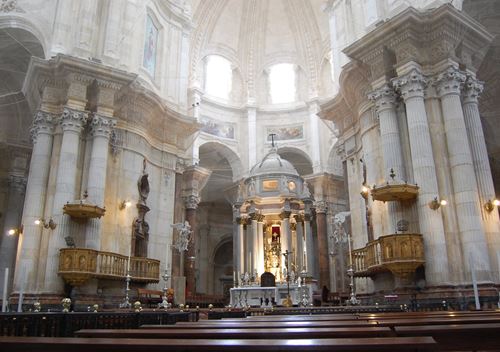
Step into Monumental Cádiz with this guided tour.
Explore in detail the city’s iconic Cathedral and its Museum, as well as Cádiz’s most famous watchtower: the Tavira Tower — home to the unique Camera Obscura.
Admission tickets are included. Don’t miss this opportunity!
If you're visiting Cádiz for a short time and want a quick yet complete overview, this is your best option: Panoramic Guided Tour of Cádiz.
With an Official Guide and Heritage Interpreter, you'll travel through 3,000 years of Cádiz's history.
You'll be amazed at how much you can discover in just 90 minutes.
Dive into ancient Gades—Roman Cádiz—with this guided tour. Discover the strategic importance it once held within the Roman Empire.
Explore archaeological remains that still coexist with the modern city: the Roman Theatre*, the ancient salt-fish factories, and the area around San Antonio, where a necropolis was uncovered.
An ideal route to travel back in time and discover the Roman imprint that remains alive in Cádiz.
* IMPORTANT: From 1 May 2026 the Roman theatre will remain closed for 22 months for restoration and the expansion of new areas to visit in the future. Instead, visitors will be able to visit the Roman theatre interpretation centre and the section dedicated to Roman culture in the Cádiz museum.

Address and telephone
Opening times
Prices
Services
Guided Tours, Own publications, Shop.If you see any mistakes or want to add anything to this information, please contact us.
Discover Gibraltar, a charming British enclave in southern Europe.
Departing from Cádiz, enjoy scenic views of oak forests and picturesque white villages along the way.
Once in Gibraltar, you’ll visit the Rock’s Natural Reserve, the Pillars of Hercules viewpoint, St. Michael’s Cave, and get up close to the famous Gibraltar monkeys. You’ll also have free time for lunch and a stroll along lively Main Street before heading back.
A perfect day trip combining history, nature, and something truly different.
Step into Monumental Cádiz with this guided tour.
Explore in detail the city’s iconic Cathedral and its Museum, as well as Cádiz’s most famous watchtower: the Tavira Tower — home to the unique Camera Obscura.
Admission tickets are included. Don’t miss this opportunity!
If you're visiting Cádiz for a short time and want a quick yet complete overview, this is your best option: Panoramic Guided Tour of Cádiz.
With an Official Guide and Heritage Interpreter, you'll travel through 3,000 years of Cádiz's history.
You'll be amazed at how much you can discover in just 90 minutes.
Dive into ancient Gades—Roman Cádiz—with this guided tour. Discover the strategic importance it once held within the Roman Empire.
Explore archaeological remains that still coexist with the modern city: the Roman Theatre*, the ancient salt-fish factories, and the area around San Antonio, where a necropolis was uncovered.
An ideal route to travel back in time and discover the Roman imprint that remains alive in Cádiz.
* IMPORTANT: From 1 May 2026 the Roman theatre will remain closed for 22 months for restoration and the expansion of new areas to visit in the future. Instead, visitors will be able to visit the Roman theatre interpretation centre and the section dedicated to Roman culture in the Cádiz museum.
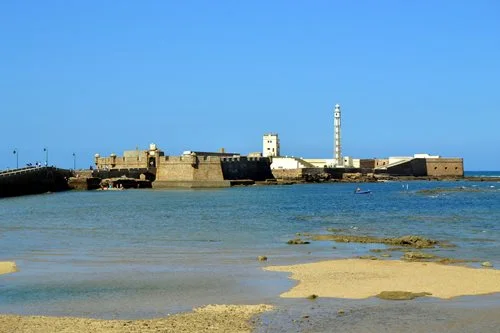
The Castillo de San Sebastián is a fortress in Cádiz located at one end of La Caleta. Its specific location is on an islet, which according to classical tradition is the site once occupied by the Temple of Kronos.
The ancient castle was built in the early 17th century and transformed in 1706. At that time, an irregularly shaped fortified enclosure was constructed to defend the northern flank of Cádiz. It had the shape of a nine-sided polygon with two inward angles and the rest projecting outward.
The entire island was protected by a parapet around its perimeter, except on the southern front, which had a natural defence. The perimeter parapet had gunports, and there was a water moat with two drawbridges. In front of the moat, there was a parade ground to defend the entire island territory. In the north-western corner, there was a watchtower and the hermitage of San Sebastián.
In the most advanced area, a casemated battery or causeway was built to connect the island with the urban centre of Cádiz (1860).
Inside the fortress, a lighthouse 30.10 meters high was erected on the base of a Moorish watchtower, according to the project by Rafael de la Cerda in 1907. It is the only lighthouse with an iron structure in Spain; being the second electric one in the country, standing 41 meters above sea level. This lighthouse was restored in 2017.
It was declared a Site of Cultural Interest on 25 June 1985.
A very interesting monument due to its shape. Owing to its originality and being located over the sea, it has been the setting for various films shot in Cádiz. Examples include Alatriste (2005), or “Die Another Day” from James Bond (2002). Today it hosts exhibitions and events.
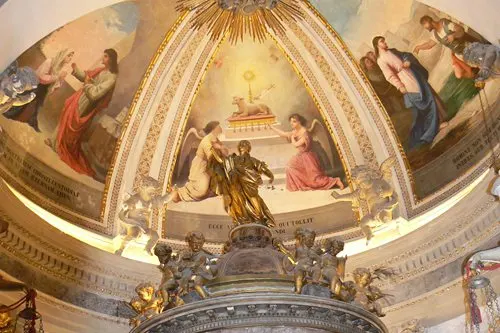
The Oratorio of the Holy Cave is an 18th-century temple composed of two chapels: the lower one, which is underground or of The Passion, and the upper chapel dedicated to the Blessed Sacrament.
It is one of the finest examples of religious neoclassical architecture in Andalusia. It has been declared an Asset of Cultural Interest, published in the BOE on 25 January 1982.
This oratory was the work of Torcuato Cayón and Torcuato Benjumeda. It was consecrated for worship in 1796 by Bishop Antonio Martínez de Plaza.
The priest and Marquis of Valde-Iñigo, José Sáez de Santamaría, was the one who promoted its construction. He provided it with a musical piece that accompanied the morning of Good Friday: the preaching of the seven last words of Christ. This piece was commissioned to the Austrian composer Joseph Haydn under the title The Seven Last Words of Our Saviour on the Cross.
The upper chapel - of the Blessed Sacrament - is richly decorated and bright, while the lower chapel - of The Passion - is more austere. In the latter there is a polychrome wooden calvary made by Vaccaro and Gandulfo.
Three canvases by the brilliant Francisco de Goya stand out in the upper chapel: The Last Supper, The Miracle of the Loaves and Fishes, and The Parable of the Wedding Feast of the King's Son. All were restored by the Prado Museum in the year 2000.
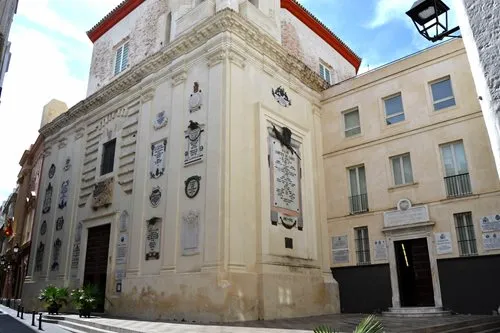
The Oratory of San Felipe Neri is one of the few elliptical plan temples of Andalusian Baroque architecture.
It was built between 1685 and 1719 by the work of Blas Díaz. Previously it belonged to the original oratory of the Filipenses.
Its main altarpiece dates from the mid-18th century, featuring an Immaculate Conception by Bartolomé Esteban Murillo (also considered one of his best works).
In 1907, it was declared a Historic Artistic Monument. It gained this recognition for being the seat of the Cortes that drafted the Constitution of 1812. It also preserves several commemorative plaques on its exterior from this event.
After the Lisbon earthquake of 1755, whose effects were also felt in Spain, its double-section ridged dome with eight windows was devastated. This was rebuilt eight years later by the master Pedro Luis Gutiérrez de San Martín.
In this Oratory, the investitures of new Ladies and Knights of the Royal Meritorious Institution of the Hospitaller Knights of San Juan take place. These ceremonies occur twice a year, since 1807, with one held on the day of the Immaculate Conception and another on that of San Juan.
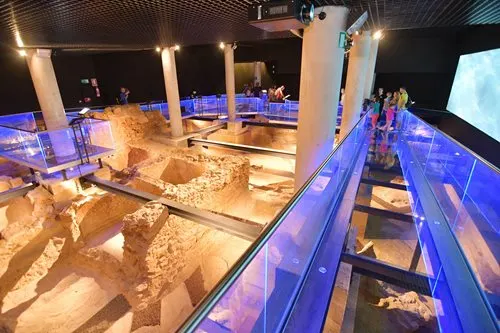
The Phoenician Archaeological Site of Gadir is one of the oldest settlements of this civilisation in the whole of the West.
It is a must-visit place to learn about Phoenician culture, as their preserved remains in the Mediterranean are scarce.
It is located at the highest point of what was the island of Eritea (Erytheia. According to Pliny the Elder, the term was used by geographers Ephorus of Cyme and Philistides, referring to its earliest settlers of Tyrian origin, coming from the Erythraean or Red Sea), which is the smallest of the ancient Gadir archipelago.
It is structured in different phases or layers, corresponding to the periods when the settlement was occupied. It highlights the layout of streets, houses, and utensils from the 9th century BC. In this site, eight dwellings are preserved, distributed on two terraces, arranged around two paved streets.
All constructions were made of mud and clay. The streets were paved with clay since the first buildings were erected. Many fossilised hoof prints of bovine animals that roamed these streets can still be seen.
The constructions of a Roman fish processing factory are also preserved, where the salting fish tanks can be seen.
The visit is centred around Mattan, a Phoenician who died in a great fire in the city in the 6th century BC. His remains are an essential part of the tour's theme.