Cookie settings
We use our own and third-party cookies in order to offer our services, display videos, obtain statistics and offer personalized advertising.
For more information, please read our cookies policy.
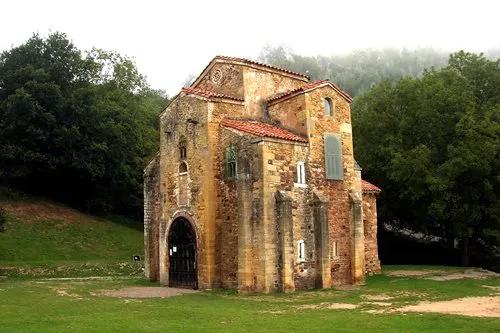
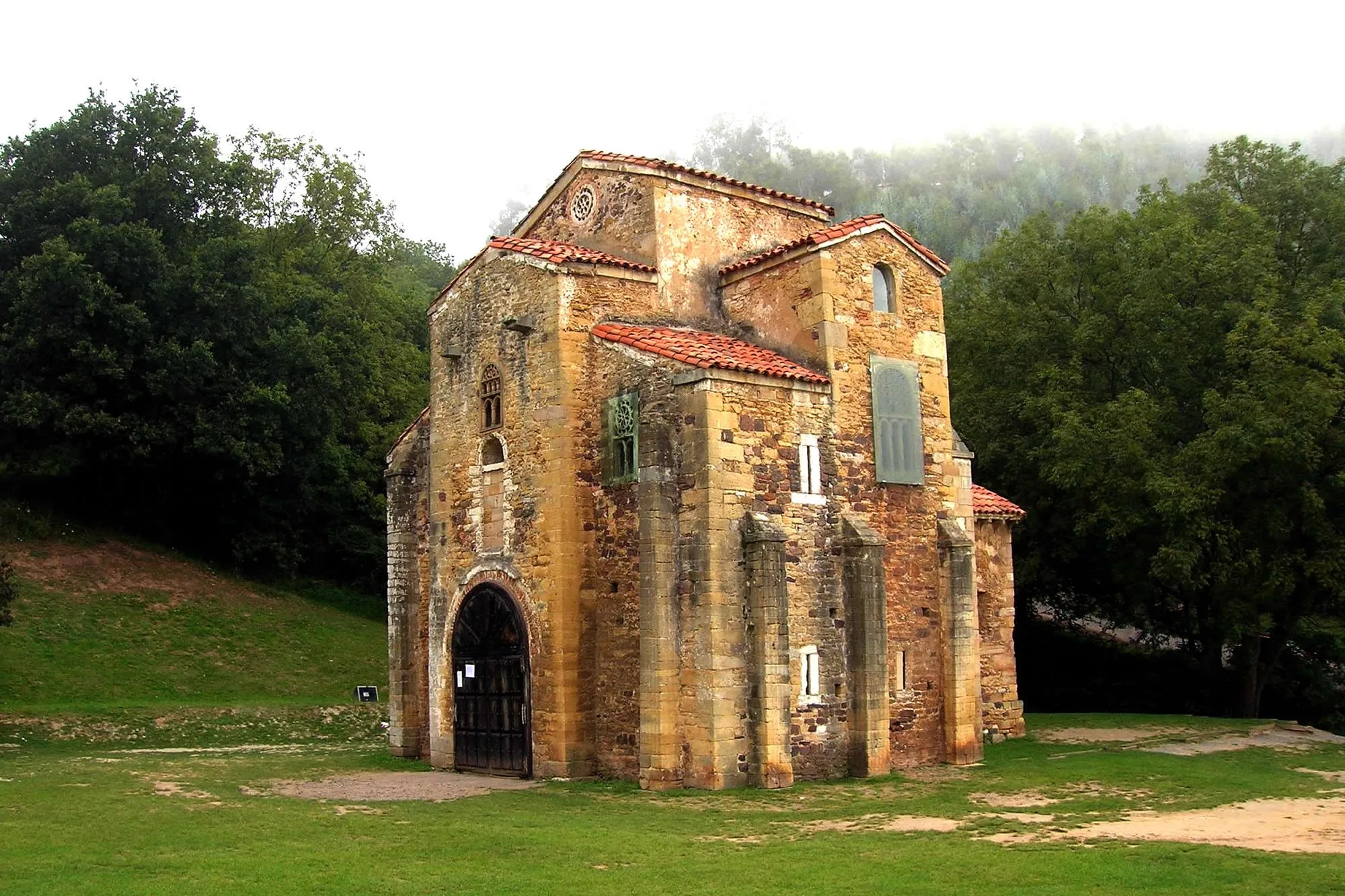
It was built in times of the king Ramiro, in order to attend the needs of the Court.
It originally had Basilical structure and three naves. Only the third part of the building has survived because it was partially destroyed because of a landslide in the XIII Century. The hall and the base of the three naves are the only elements that have survived in the primitive floor.
Over the hall we can find the Royal rostrum flanked on both sides by two small rooms. It is covered by barrel vaults. The naves are divided by arches that lean on columns. The use of the pillars is very peculiar and typical of the Asturias art. The walls were decorated with murals, where the human figure has a main role. We should highlight the ornamentation of the bases and capitals, and some vestiges of the lattice of the windows. There are many sculpture decorative elements, in which is obvious the influence from Lombardy.
Built: IX Century (848)
Author: Anónimo
Style: Preromanesque
Category: Religious
Type: Church
Address and telephone
Opening times
Prices
If you see any mistakes or want to add anything to this information, please contact us.
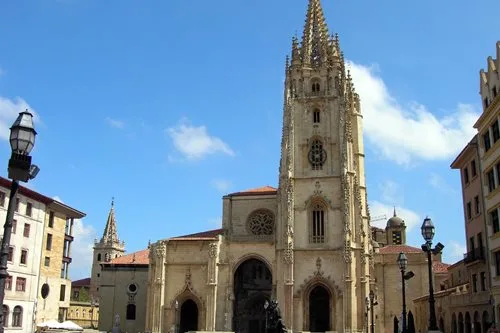
This cathedral was built on the ruins of a primitive basilica that had been built by Fruela in honour to this Saint and that had been destroyed by the Muslims.
The temple has a Latin cross plan with three naves, being the major one 10 meters width and the side ones 6 meters height. All the vaults are simple rib vaults except for the central one which is a star- shape vault. The central nave height allows the space to be better illuminated thanks to big windows of elliptic arches. The presbytery has suffered several changes.
During the Baroque, part of the choir was redesigned in order to build an ambulatory with radial chapels. The Major Chapel conserves its original plan keeping inside the altarpiece with scenes of Christ life by Giralte de Brusela, Alonso de Berrugueta and Juan de Balmaseda in Renaissance style, becoming one of the biggest altarpieces in Spain.
Around the apse there is a Renaissance ambulatory and five radial chapels has been opened to it.
The Gothic tower is 80 meters height and is finished off by a fretwork spire from 1556.
In the Chapel of the King Castro, we can find the Royal Pantheon in Baroque style, which is the burial place of the Prince and Princess of Asturias.
The Diocesan Museum has been set up in the cloister. This museum houses important archaeological samples.
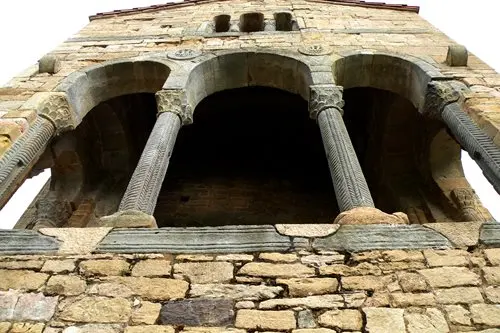
It is considered the masterpiece of the Asturian art. It was built during Ramiro I´s reign in the Naranco´s hill.
It was a Royal Residence, with baths and attached halls in the ground floor, and a hall for celebrations with beautiful widowed balconies in the upper floor. In the XI Century, the palace became a church, and it has worked as such until 1930, when it recovered its original appearance.
There is a half barrel vault in the whole building, except for the side halls of the lower floor that are covered with wood.
The lower floor has a wide central body covered with a Barrel vault, and it contains a baseboard, a circular windows, entry doors and ventilation´s hollows.
The upper floor is rectangular and it is covered by a canted barrel vault composed of six transverse arches that are leaned on cantilevers.