Cookie settings
We use our own and third-party cookies in order to offer our services, display videos, obtain statistics and offer personalized advertising.
For more information, please read our cookies policy.
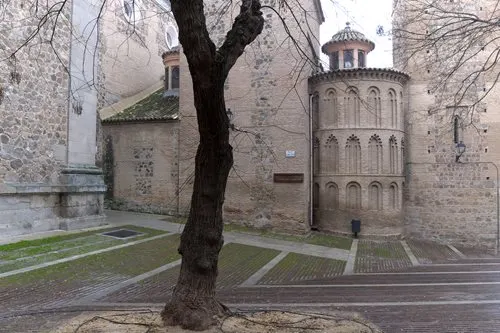
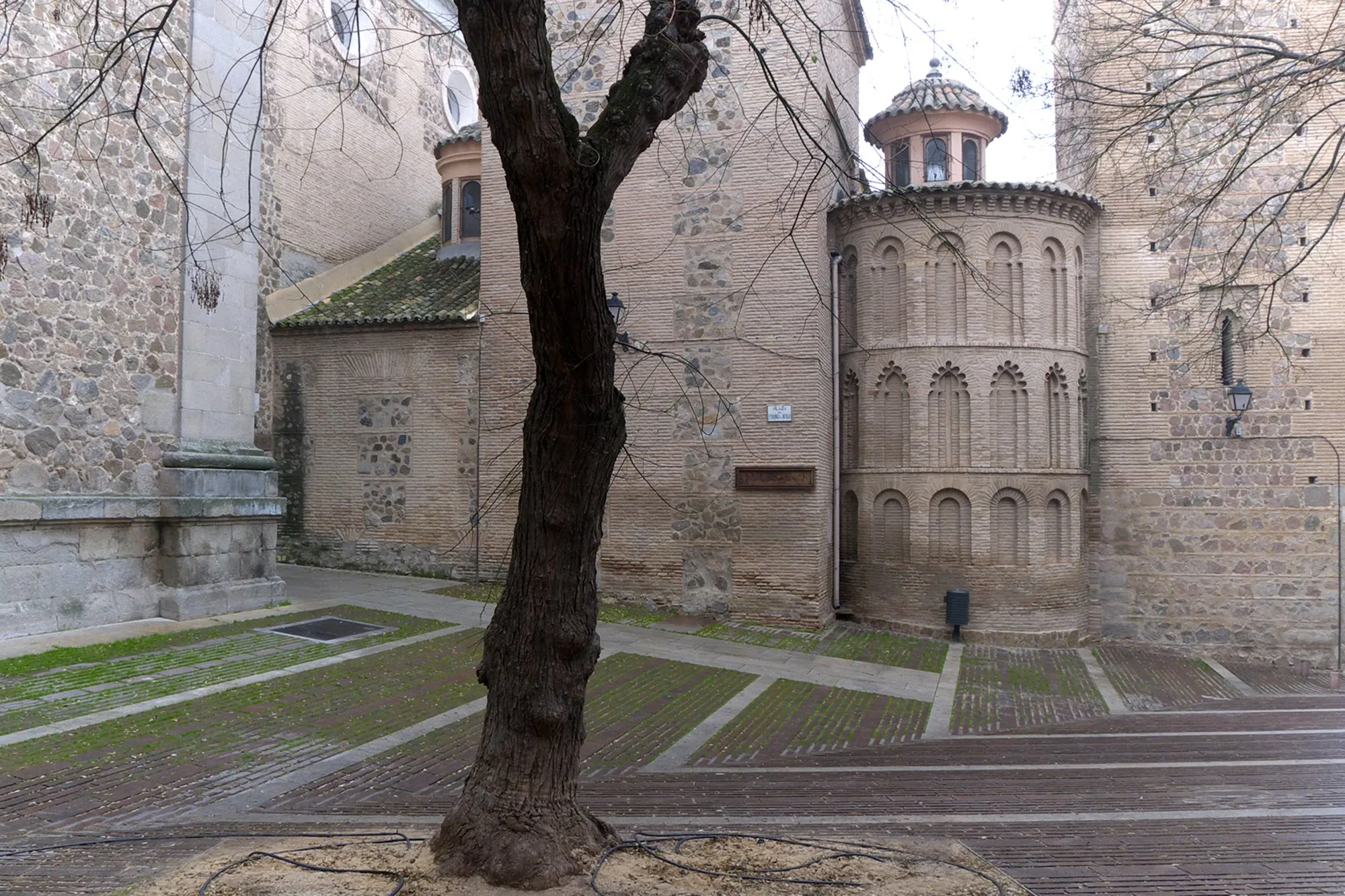
It is a Cistercian convent that was founded as result of the Spanish Reconquest and totally rebuilt in the XVI Century. It is one of the oldest convents in the town and its marvellous altarpiece is a Greco´ s work of art.
Its church, with Latin cross plan, consists of only one nave and houses a great collection of altarpieces and paintings by this artist. The first paintings of this author have survived, such as Santa Faz, San Juan Evangelista, San Juan Evangelista la Resurrección, in which its painting reached the highest level of plastic interpretation and expressive religious experience.
In its Renaissance choir we can see numerous works of art and contemplate its beautiful coffered ceiling.
It is the artist´ s burial place.
Built: XVI Century (1577-1579)
Author: Nicolás de Vergara, Juan Herrera
Style: Renaissance
Category: Religious
Type: Convent

The Cathedral of Toledo contains centuries of history, religion and art of the first rank. Discover its magnificent architecture and the treasures which it hold with this guided tour. You will get to know first-hand the second largest Cathedral in Spain. You will see the spectacular Baroque work of the Transparent, a heavenly oculus through which the sun's rays enter and illuminate the tabernacle. You will admire the monstrance carved by Enrique de Arfe and much more, accompanied by an official guide.
Do not worry about the entrance, it is included in the price of the visit.
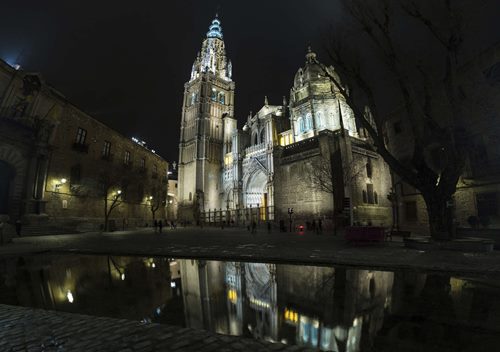
Sign up for this guided tour full of magic, mystery and legend in Toledo.
A tour guide will accompany to you to discover "la noche toledana" and its meaning. A very magical moment in the City of Three Cultures when the sun goes down and places as emblematic as its Alcázar light up.
Enjoy a walk through streets that keep the medieval imprint and legends.
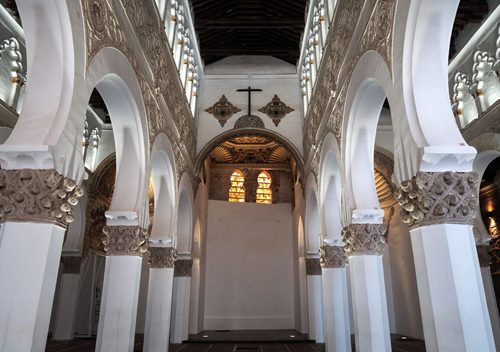
There are sights in Toledo that are essential to know. And the best way is with a private tour guide for you and yours.
Thanks of this tour you will have a guided visit to the Cathedral and three of the monuments included in the tourist bracelet: Synagogue of Santa María La Blanca, the Church of Santo Tomé which holds the masterpiece by El Greco called "El Entierro del Conde de Orgaz", and the Monastery of San Juan de los Reyes.
Afterwards, with the tourist bracelet, you can continue strolling on your own and letting yourself fall in love with the charms of the City of Three Cultures.

On this guided tour you will walk through the most outstanding streets and squares of Toledo, the City of Three Cultures, a city that was declared a World Heritage Site in 1986. Afterwards, you will enter its monumental jewel: the Primate Cathedral, which in the Middle Ages was known as the Dives Toledana for all the wealth it holds inside.
It houses the Treasury, which is the custody of Enrique de Arfe, the incomparable Transparent by Narciso Tomé, and works by El Greco, Titian, Velázquez, Van Dyck, among others.
The entrance to the cathedral is included in the price of the tour.
Translated with www.DeepL.com/Translator (free version)
Address and telephone
Opening times
Prices
If you see any mistakes or want to add anything to this information, please contact us.
The Cathedral of Toledo contains centuries of history, religion and art of the first rank. Discover its magnificent architecture and the treasures which it hold with this guided tour. You will get to know first-hand the second largest Cathedral in Spain. You will see the spectacular Baroque work of the Transparent, a heavenly oculus through which the sun's rays enter and illuminate the tabernacle. You will admire the monstrance carved by Enrique de Arfe and much more, accompanied by an official guide.
Do not worry about the entrance, it is included in the price of the visit.
Sign up for this guided tour full of magic, mystery and legend in Toledo.
A tour guide will accompany to you to discover "la noche toledana" and its meaning. A very magical moment in the City of Three Cultures when the sun goes down and places as emblematic as its Alcázar light up.
Enjoy a walk through streets that keep the medieval imprint and legends.
There are sights in Toledo that are essential to know. And the best way is with a private tour guide for you and yours.
Thanks of this tour you will have a guided visit to the Cathedral and three of the monuments included in the tourist bracelet: Synagogue of Santa María La Blanca, the Church of Santo Tomé which holds the masterpiece by El Greco called "El Entierro del Conde de Orgaz", and the Monastery of San Juan de los Reyes.
Afterwards, with the tourist bracelet, you can continue strolling on your own and letting yourself fall in love with the charms of the City of Three Cultures.
On this guided tour you will walk through the most outstanding streets and squares of Toledo, the City of Three Cultures, a city that was declared a World Heritage Site in 1986. Afterwards, you will enter its monumental jewel: the Primate Cathedral, which in the Middle Ages was known as the Dives Toledana for all the wealth it holds inside.
It houses the Treasury, which is the custody of Enrique de Arfe, the incomparable Transparent by Narciso Tomé, and works by El Greco, Titian, Velázquez, Van Dyck, among others.
The entrance to the cathedral is included in the price of the tour.
Translated with www.DeepL.com/Translator (free version)
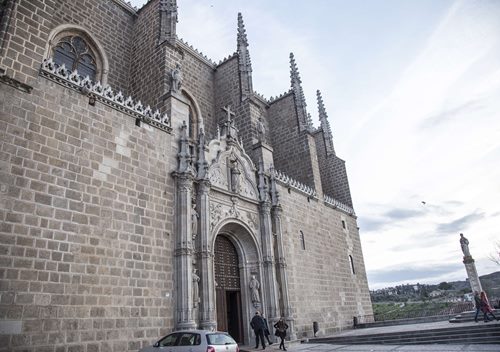
Discover with an expert guide the must-see corners of Toledo, the City of Three Cultures.
You will visit the most iconic streets and squares of the city.
Afterwards, you'll visit the Alcazar of Toledo and the Army Museum.
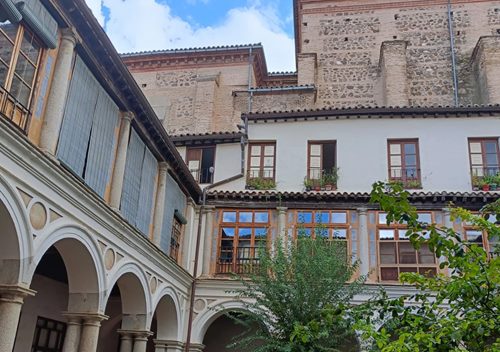
Take a unique stroll through Toledo, filled with history and pastry tradition. On this convent tour, you'll dive into the origins of Toledo's delicious marzipan.
At the Convent of the Comendadoras of Santiago, you'll discover the exceptional quality of marzipan made by nuns following traditional recipes.
At the Convent of Santo Domingo el Real, you'll learn about marzipan crafted by hand using the original recipe.
Finally, in the beautiful 16th-century house of Don Rodrigo de la Fuente, you'll enjoy a delightful marzipan tasting paired with La Mancha wines, savoring the contrast of flavors.
Don't miss your spot!
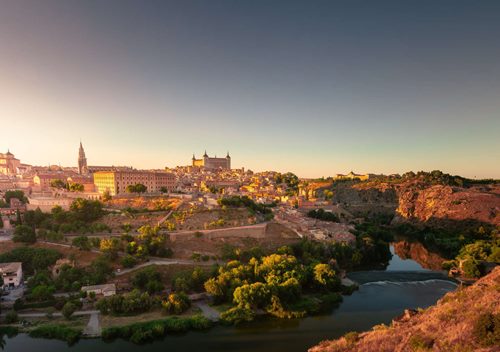
Discover Toledo through the cinema with this fantastic route offered by Lorens. From Plaza de Zocodover, you will pass through emblematic corners of the City of the Three Cultures, such as the Catedral Primada or the Hospital de Tavera. The guide will show you film sequences filmed in the city using tablets, QR codes, stills and a projector. You will see more than 25 sequences and montages.
The tour includes surprises, plus entrance to a convent with works by El Greco, and to the courtyard and chapel of the Hospital de Tavera.
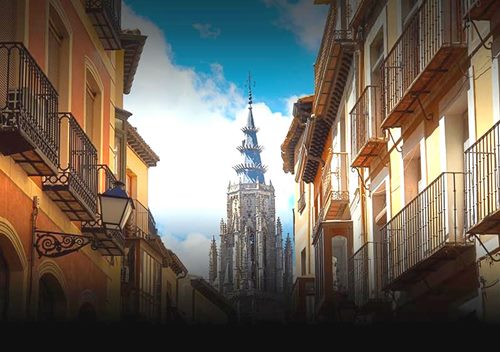
Discover Toledo on a guided tour through the City of Three Cultures, exploring the surroundings of the Cathedral of Saint Mary of Toledo and its rich historical heritage. Stroll through the Jewish Quarter while learning about legends, Visigothic history, and local traditions such as craftsmanship and sword-making.
A must-do experience to understand the essence of Toledo: book your tour now!
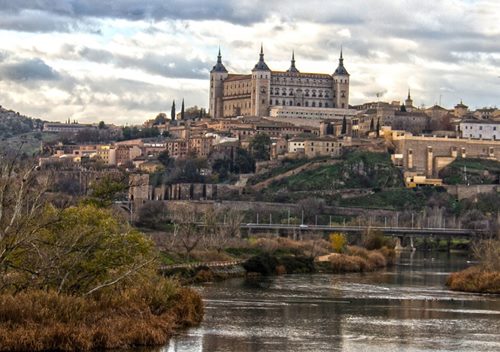
Explore Toledo on a guided tour that takes you through the streets where Jews, Muslims, and Christians lived together for centuries.
This UNESCO World Heritage city preserves an exceptional history that your guide will help you understand. You will stroll through its historic centre and see the façades of essential monuments such as the Primate Cathedral, the Alcázar, and the Town Hall.
An ideal visit to discover the essence of Toledo and gain an excellent first impression of its extraordinary heritage.
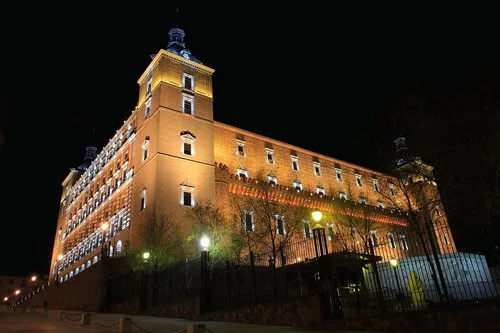
It is a Toledo symbolic building that has grown at the same time as the town, having its oldest origins in Roman times. It is located on a hill, being its location an important strategic point, developing different functions through the years.
It has a square floor and a central courtyard also square with angular towers.
The facade shows its great horizontality, with three bodies, that are finished off by a balustrade. The reconstruction of the Alcázar has changed the original apparence of the building in a necessary way and this fact is reflected in its four facades, belonging each of them to a different architectural style. One of them is Renaissance, another one is Plateresque, the Western one is Medieval with large fortified towers and battlemented defence, and the Southern one is Churrigueresque, erected according to Juan de Herrera´ s design.
It was Carlos V´ s royal residence and became a state prison in 1643. It was tranfered to the cardinal Lorenzana by Carlos III.
After the reform that he entrusted to the architect Ventura Rodríguez, its rooms became the head office of the Royal Charity. In the central courtyard stands a copy of the sculpture of Carlos V by Leoni. At the bottom of this courtyard there is a beautiful staircase by Herrera Villalpando.
Nowadays it houses the headquarters of the Museo del Ejército (Museum of Army), where you can find different types of arms, objects and military documents from different times, collections of tin soldiers or the scale model of the appearance in ruins of the Alcazar after the Civil War.
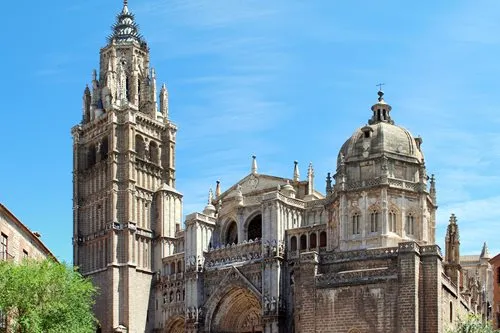
It seems that it was founded in the VI Century by San Eugenio, the first bishop of Toledo. The Muslim invasion turned it into a mosque, called La Mayor.
When Toledo was reconquered by Alfonso VI, it became cathedral. Later, San Fernando ordered to demolish it and ordered to place the first stone of the current one in 1227.It has five naves supported by 88 huge pillars, and transept, finished off by the apse with a marvellous double ambulatory, that is a continuation of the side naves.
More than 750 artistic stained- glass windows, from the XV and XVI Centuries, give a great beauty and fantastic brightness to the interior. Outside, five monumental doors and three secondary ones give access to the great basilica.
However, the most amazing element that we should highlight because of its grandness and art is the altarpiece of the Major Chapel, by Rodrigo Alemán, Vigarni, Egas and Pedro Gumiel. It consists of five bodies with scenes of the New Testament with real size polychrome sculptures and is worked with flame- gilded wood. It was commissioned by the Cardinal Cisneros between 1497 and 1504.
The Chapel of St James, from the XV Century, is in a Flamboyant style and houses the sarcophagus of the High Constable Álvaro de Luna and his wife, Juana de Pimentel.
The higher choir consists of seventy two chairs by Alonso de Berruguete and Felipe Vigarni, from Burgundy, in 1540. The higher part is occupied by Christ´ genealogies according to the gospels; the lower part is occupied by the characters of the Old alliance with the characters of the New one and the Saints of the Church.
Its grille was carried out by Domingo de Céspedes. The space that gives access to the sacristy is the entrance to a real museum with works of artists as known as Jordan, Caxés and Ricci. In the sacristy we can see an interesting collection of pictures. In the central altar is located El Expolio by El Greco, among other paintings by Bellini, Bassano or Goya.
We should also pay special attention to the room “El Ochavo”, a sumptuous space from the end of the XVI Century, with octagonal floor, that is part of the cathedral “sacred” or “sacrarium”. It houses an interesting collection of pieces such as San Luis´ Reliquary and busts of San Juan Bautista or la Cruz and the cardinal Mendoza.
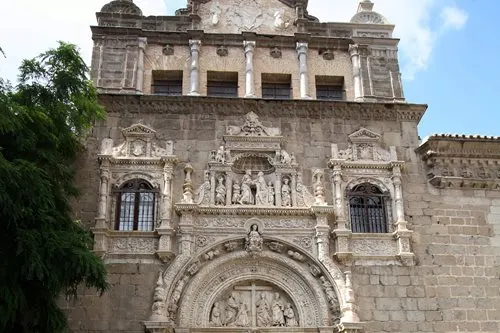
This building was founded by the Cardinal Pedro González de Mendoza at the beginning of the XVI Century with the aim of taking in orphans. It is located in the former Santa Cruz Hospital, a Renaissance building with a Plateresque façade, a cloister and a palace staircase, by Covarrubias, as well as Mudejar and Renaissance coffered ceilings.
Today, it has become a museum with sections of Fine Arts, Archaeology and Decorative Arts. In the wide galleries of this building are shown several paintings of El Greco, such as “The Assumption of the Virgin” and other important pieces of Visigothic Art, such as graves or altars. In this way, this museum is used for important thematic exhibitions. It is considered as one of the best “Provincial Museums” in Spain.
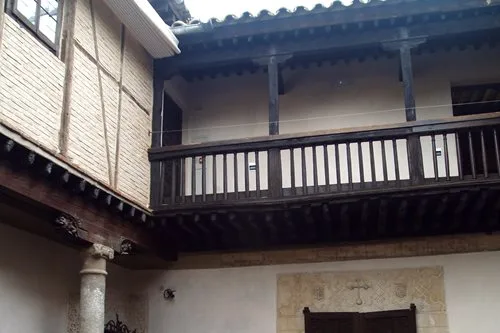
It was built by the Marqués de la Vega Inclán, over the foundations of a Renaissance palace located in the Toledo Jewish quarter.
It consists of two buildings: a house with courtyard from the XVI Century and an enlargement from the beginning of the XX Century which causes a garden.
This house-museum was not the authentic residence of El Greco, it faithfully reproduces a Toledo´ s mansion from the XVI Century; its furniture and artistic objects enrich and decorate it and together with the building structure, evoke the housing of that time. Inside, we can see objects and scenaries of that time such as twenty of his best known paintings which almost all of them belong to his last period of artistic activity, between 1600 and 1614, such as “Vista general de Toledo” or “Apostolado”, except for the splendid version of “Lagrimas de San Pedro” from the XVI Century in the upper floor, and other contemporary authors from the Toledo School, the Madrid School and Seville School from the XVII Century, in the ground floor.