Cookie settings
We use our own and third-party cookies in order to offer our services, display videos, obtain statistics and offer personalized advertising.
For more information, please read our cookies policy.
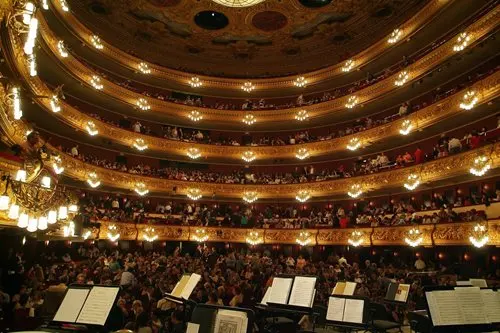
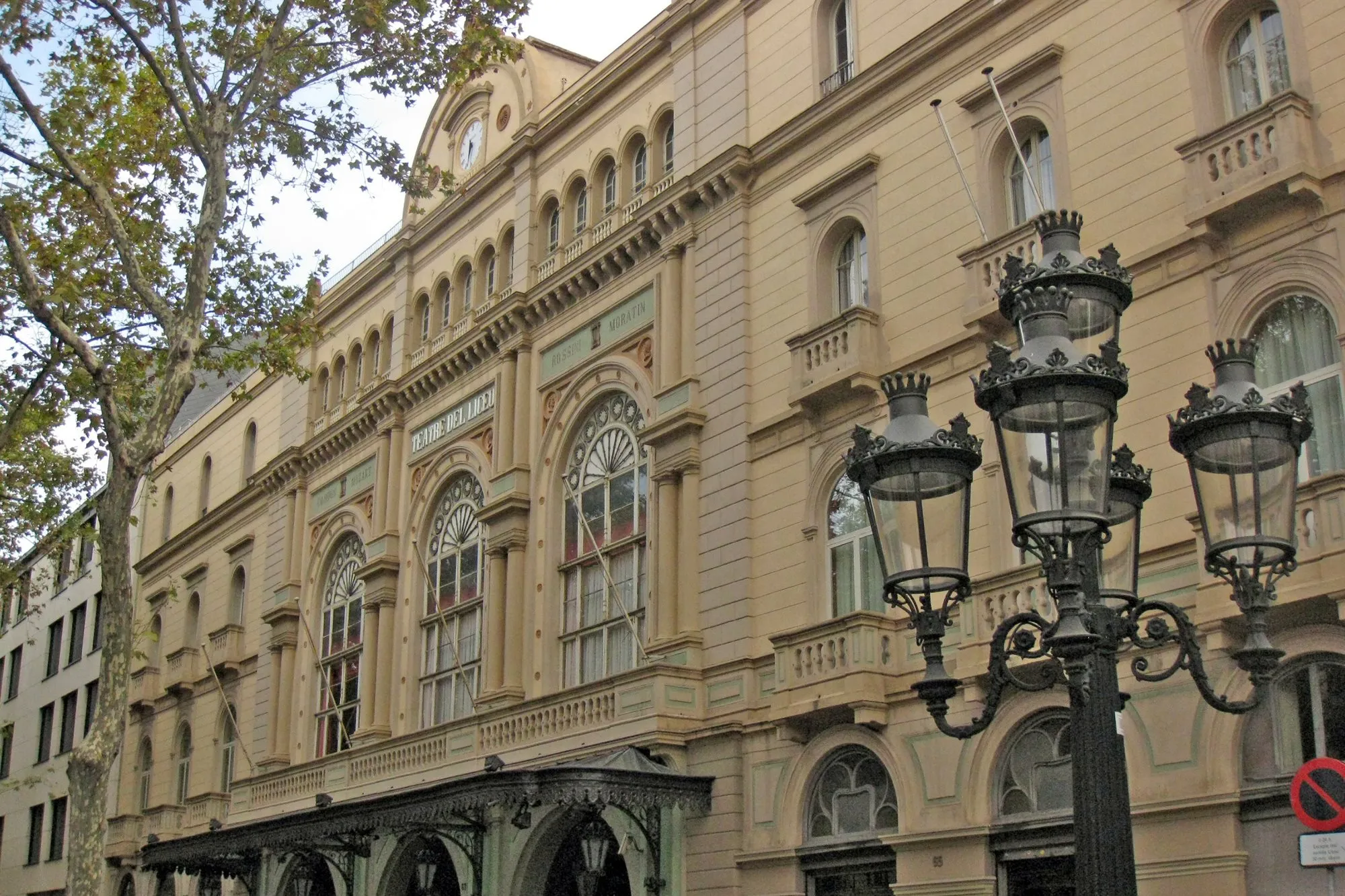
It is built on the ruins of the former Trinitarian monastery. It is the biggest European theatre from that time, and it is situated on La Rambla. During Felipe V´ s reign, the opera becomes the entertainment of that time.
Its floor has the form of a horseshoe arch, with six storeys and stalls. In 1861, it suffered a terrible fire, and it was rebuilt by Joseph Oriol Mestres, who removed the amphitheatre of the second floor.
A new fire destroyed the theatre the 31 January 1994, destroying the hall and the horseshoe arch form. The reconstruction took 5 years and it was directed by Ignasi de Solà-Morales, Xavier Fabré and Lluis Dilmé.
The 7 October 1999 the new Liceu opened its doors, with different appearance but provided with the most sophisticated technological advances. Outside, the Gran Teatre del Liceo, situated on the popular Rambla, is relatively more modest in relation with its interior. It is sumptuous and follows the tradition of the opera houses from the XIX Century.
The main hall, with big columns, drives to a marble staircase that drives to the Mirrored Salon and to the Amphitheatre. The foyer, inspired on la Scala of Milano, has a floor with horseshoe form, stalls and five levels. It has a capacity of 2,292 people, and is one the biggest opera houses in Europe. It is a symbol and meeting point for the Catalonian aristocracy and bourgeoisie.
Built: XIX Century (1845- 1847)
Author: Miquel Garriga i Roca
Style: Neoclassical
Category: Civil
Type: Theatre
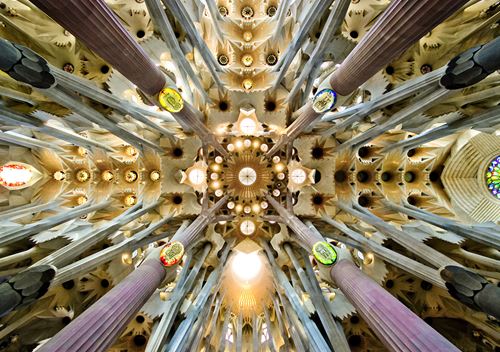
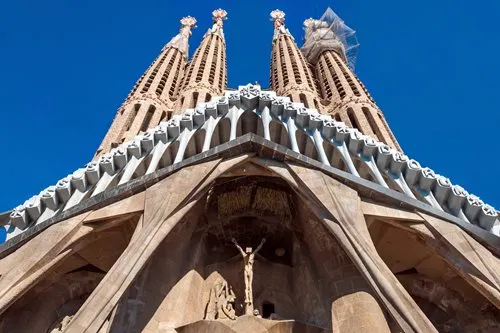
This guided tour will show you La Sagrada Familia of Barcelona. You'll have fast track without waiting queues.
We will talk about the history, outside and inside decoration and its oustanding colums, vaults and rich details.
Besides, in the Sagrada Familia's Museum we will learn about its designer, Antoni Gaudí. At the end of the tour, you'll have free time inside the monument to enjoy it on your own.
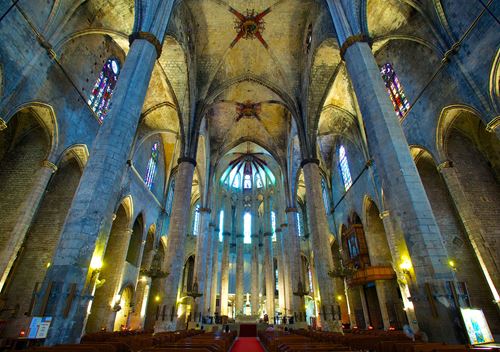
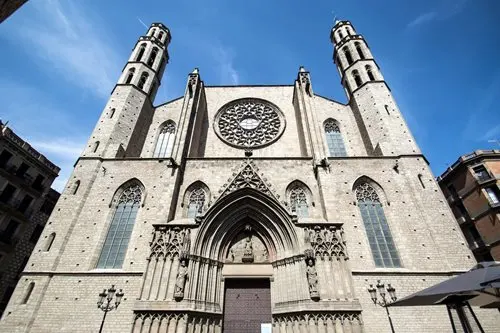
This literary tour will let you relive the stories of this exciting novel through its different locations; places that after almost 700 years we will revisit from a different perspective whilst admiring the Gothic Quarter of Barcelona. This is a unique opportunity to learn more about the characters and about one of the most emblematic monuments of Barcelona, Santa Maria del Mar, the apogee of Catalan Gothic art.
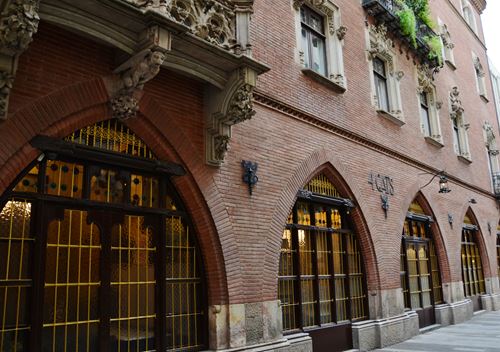
You can read any book, but just with few it's possible to live and breathe them. We present this walking tour as a unique opportunity to wander around the amazing Barcelona depicted in "The Shadow of the Wind", a novel that has captivated thousands of readers all around the world. From letters to words, from imagination to reality.
Address and telephone
Opening times
Prices
Services
Guided Tours, Shop.If you see any mistakes or want to add anything to this information, please contact us.
This guided tour will show you La Sagrada Familia of Barcelona. You'll have fast track without waiting queues.
We will talk about the history, outside and inside decoration and its oustanding colums, vaults and rich details.
Besides, in the Sagrada Familia's Museum we will learn about its designer, Antoni Gaudí. At the end of the tour, you'll have free time inside the monument to enjoy it on your own.
This literary tour will let you relive the stories of this exciting novel through its different locations; places that after almost 700 years we will revisit from a different perspective whilst admiring the Gothic Quarter of Barcelona. This is a unique opportunity to learn more about the characters and about one of the most emblematic monuments of Barcelona, Santa Maria del Mar, the apogee of Catalan Gothic art.
You can read any book, but just with few it's possible to live and breathe them. We present this walking tour as a unique opportunity to wander around the amazing Barcelona depicted in "The Shadow of the Wind", a novel that has captivated thousands of readers all around the world. From letters to words, from imagination to reality.
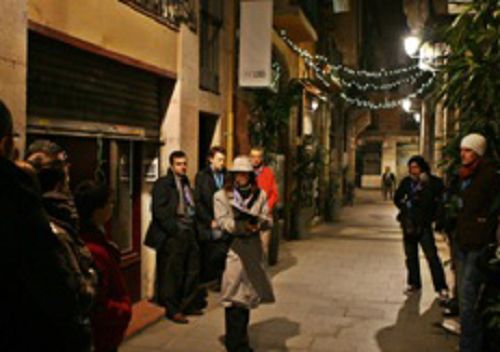
What do the streets of Barcelona hide when night falls? Which stories marked our ancestor’s lives forever? Let yourself become absorbed by the paranormal mysteries of Barcelona with the explanations of an experienced guide.
The Ghost Walking Tour is a night visit around Sant Pere, Santa Caterina and la Ribera quarters, based on the book “Fantasmes de Barcelona” written by Sylvia Lagarda-Mata.
The tour tells the mysterious and hair-raising stories that have been taking place in those areas for decades.
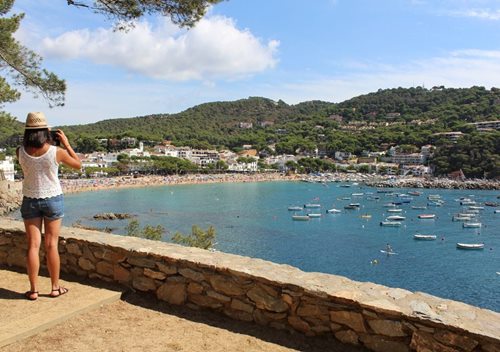
Would you like to spend a day visiting typical towns of the Costa Brava? Book now this day trip from Barcelona and you will discover enchanting places: the typical fishing village of Calella de Palafrugell, and Llafranc as well. You will visit the medieval city of Pals.
This will be an amazing tour in a comfortable bus with free Wi-Fi.
Enjoy your holidays in Catalonia. No matter how short your stay in Barcelona, make a getaway to the Costa Brava.
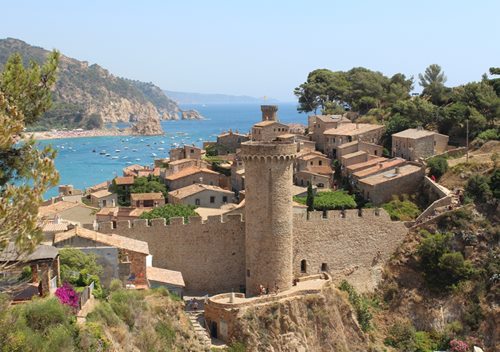
If you’re on holidays in Barcelona and you’d like to make a getaway, book now this Half Day tour to the Costa Brava. This is an 8-hours-excursion to visit along with a professional guide the emblematical and touristic villages of Lloret de Mar and Tossa de Mar. You’ll fall in love of its enchanting cliffs, landscapes and monuments.
Afterwards, this trip includes the tickets of boat to Tossa de Mar and visit to other essential sites, such as the Vila Romana dels Amettlers.
You’ll go on board of a comfortable bus with free Wi-Fi and multilingual audioguide.
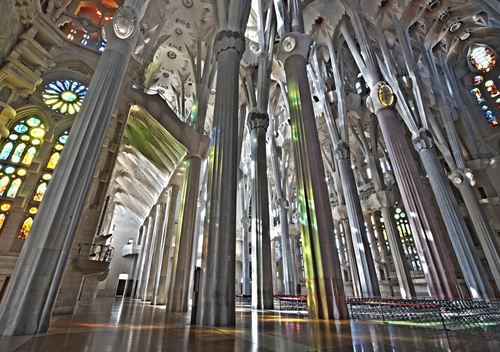
The Sagrada Familia is an architectural Gaudi’s Modernism jewel and the most emblematic building in Barcelona.
Here you are the choice of visiting it in the best moment of the day and in small group up to 6 people. You could access to this Basilica at the less fluency of sightseers time and an official guide explain you all its details and curiosities in exclusive for your group. The guide will be at your disposal for attending any question whatever you want to do.
Don’t worry about the tickets. You only have to reserve your visit and the tour company will run of all including the start time confirmation.
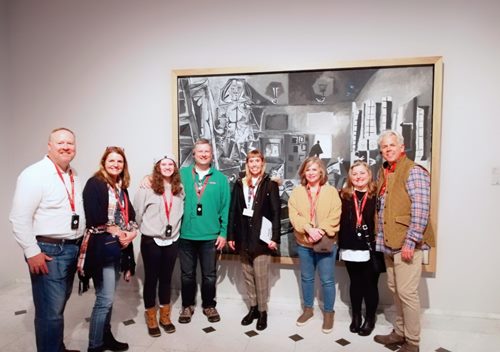
Enter and discover the biggest Picasso’s artworks collection in its Museum of Barcelona. Do it with this small group tour by an Art expert guide.
Moreover, the skip-the-line ticket is guaranteed. Don’t worry about nothing. You only have to book your and enjoy of contemplate the paintings of the main Spanish Cubism artist along with an expert.
Only in English!
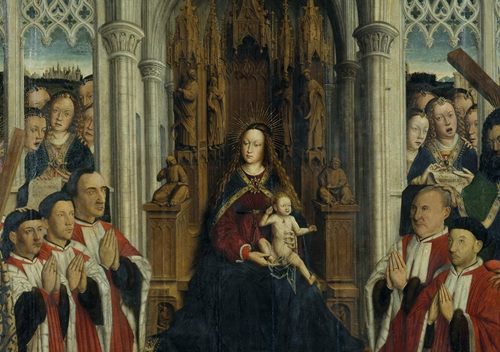
Delve into Catalan art with this private tour at the National Art Museum of Catalonia.
You will begin in the museum's stunning hall, where an introduction will be given. You will explore the Romanesque art galleries, admiring the impressive medieval mural paintings preserved here. Next, you’ll move on to Gothic art, discovering its intricate altarpieces. The journey continues through modern art with works by Gaudí, Miró, and Casas.
Additionally, the guide will share anecdotes and details to help you gain a deeper understanding of the history of Catalan art. The tour will also be tailored to your specific interests.
Don’t miss this visit if you are an art lover, set in the privileged location of Montjuïc in Barcelona.
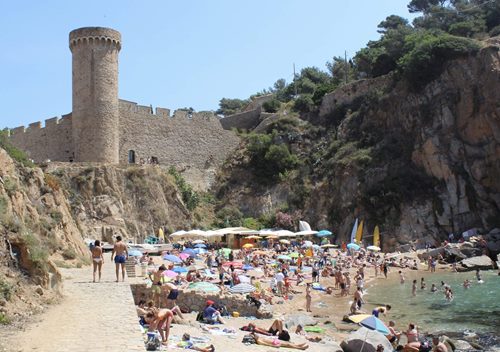
Explore the essence of the Costa Brava on a full-day excursion to Tossa de Mar, one of the most emblematic towns along the Catalan coast. Enjoy a guided walk through the historic Vila Vella, with spectacular views from the lighthouse and a stroll through its medieval streets and fishermen’s quarter.
After the guided tour, make the most of your free time to swim at its beaches—Playa Grande, Mar Menuda, or Cala d’es Codolar—discover local shops, or taste Mediterranean cuisine.
A perfect getaway to experience nature, history, and the sea all in one day. Book now and let the Costa Brava surprise you.