Cookie settings
We use our own and third-party cookies in order to offer our services, display videos, obtain statistics and offer personalized advertising.
For more information, please read our cookies policy.
Jaime I began the construction of the cathedral on the ruins of the old mosque of Misleida, at the end of the XIII Century and it was continued until the XVI Century.
It has three naves with side chapels and an octagonal bell tower. The main façade has seven ogive arches with stone carved figures of the apostles. The central nave is taller than the two side naves. The choir is placed in this nave and it has Renaissance set of chairs with expressive sculptures made by Berástegui.
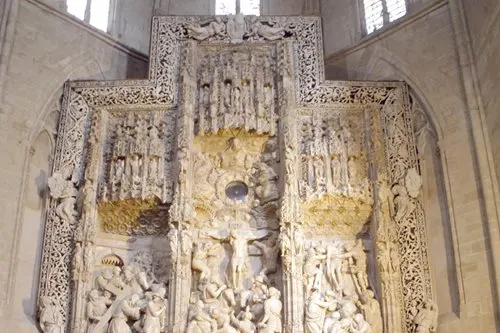
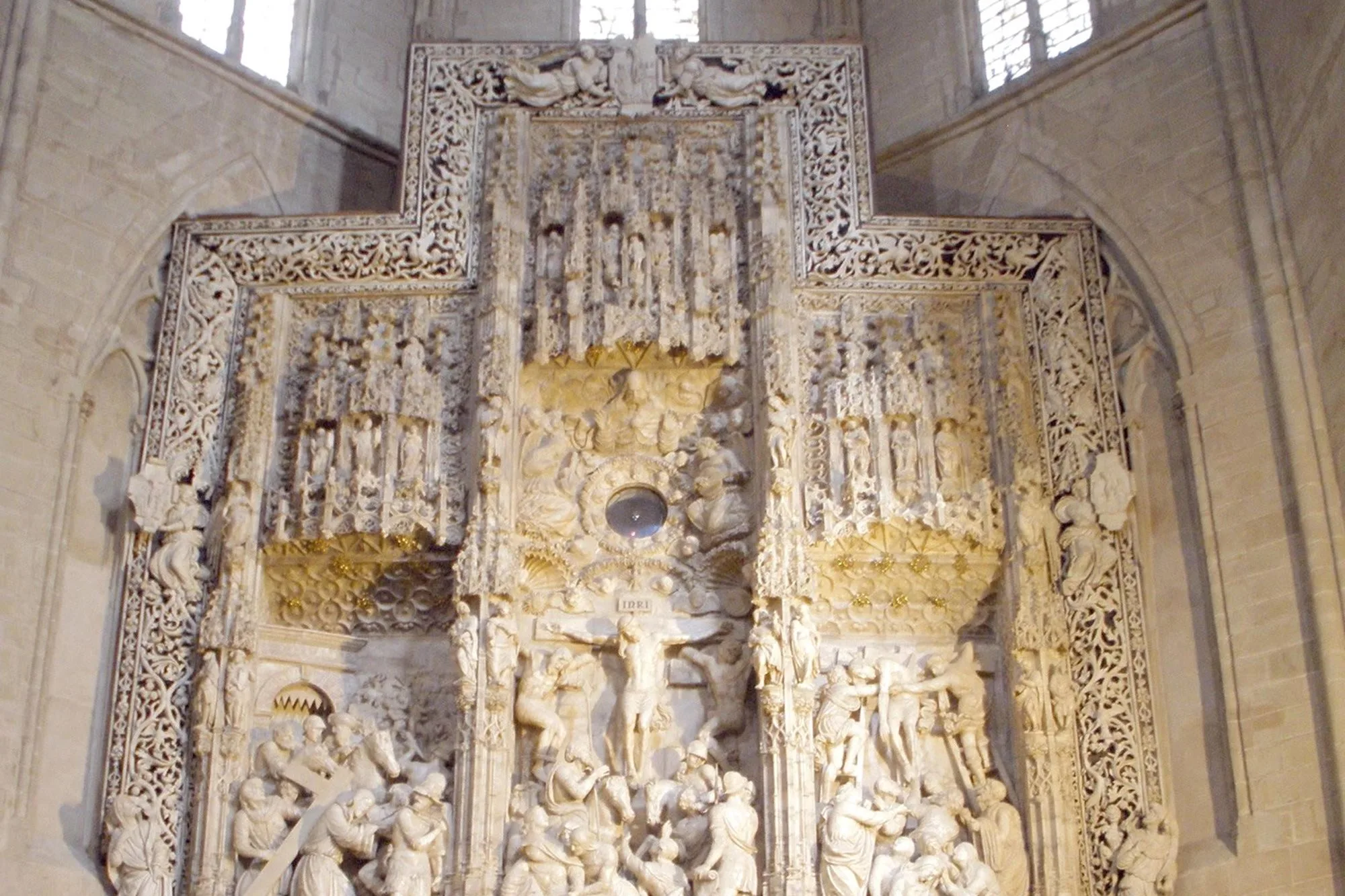
The altarpiece of the Major Altar, made of alabaster in a Renaissance style, represents the Passion of Christ and it is a Damián Forment´ s work. The cloister is previous to the cathedral and it shows the purest Romanesque style in its doors and construction.
It preserves some funeral inscriptions and a beautiful bass- relief of the Virgin. The Chapter House has become a Diocese Museum, with sculptures from the XII and XIII Centuries, murals, boards from the XV Century, the best Aragon painters´ canvas and the famous silver altarpiece of the Virgen de Salas. Valuable codeces are kept in its archives.
Built: XIII- XVI Centuries
Author: Anónimo
Style: Gothic
Category: Religious
Type: Cathedral
Address and telephone
Opening times
Monday to Sunday: from 9:00 a.m. to 1:30 p.m. and from 4:00 p.m. to 7:00 p.m.
Prices
If you see any mistakes or want to add anything to this information, please contact us.
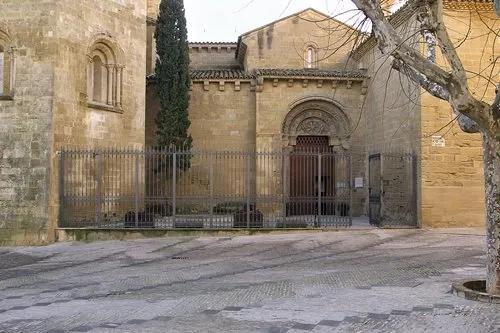
It is one of the most interesting churches in the town and one of the oldest in Spain. It probably existed in Visigoths times and after the Arab domination. When the town was conquered, this church was donated to the Monastery of San Ponce de Tomeras, and the current Romanesque temple was built in the XII Century.
It consists of three naves and a transept with three apses. The facade is simple, and in one of the sides of the building we can see a hexagonal tower as well as the door from the XIII Century.
The main door is Romanesque with relieves from the XII Century. Inside one of its chapels, we can find the remains of the Saints Justo and Pastor.
In the sacristy there is a beautiful relief of San Jerónimo. The altarpiece of the Major altar is a work by Juan Berruela.
The cloister is one of the best examples of Spanish art. The sculptures in the tympanum of the Epifanía are very interesting. The relieves of the capitals are of great artistic value and curiosity. Next to the cloister, the Romanesque chapel of San Bartolomé is opened, that houses the Royal Pantheon, with the sepulchres of don Ramiro, “el Monje” and Alfonso el Batallador, his brother.