Cookie settings
We use our own and third-party cookies in order to offer our services, display videos, obtain statistics and offer personalized advertising.
For more information, please read our cookies policy.
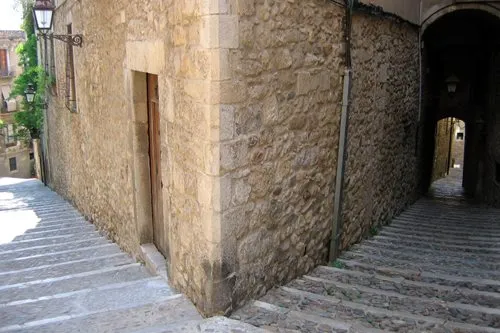
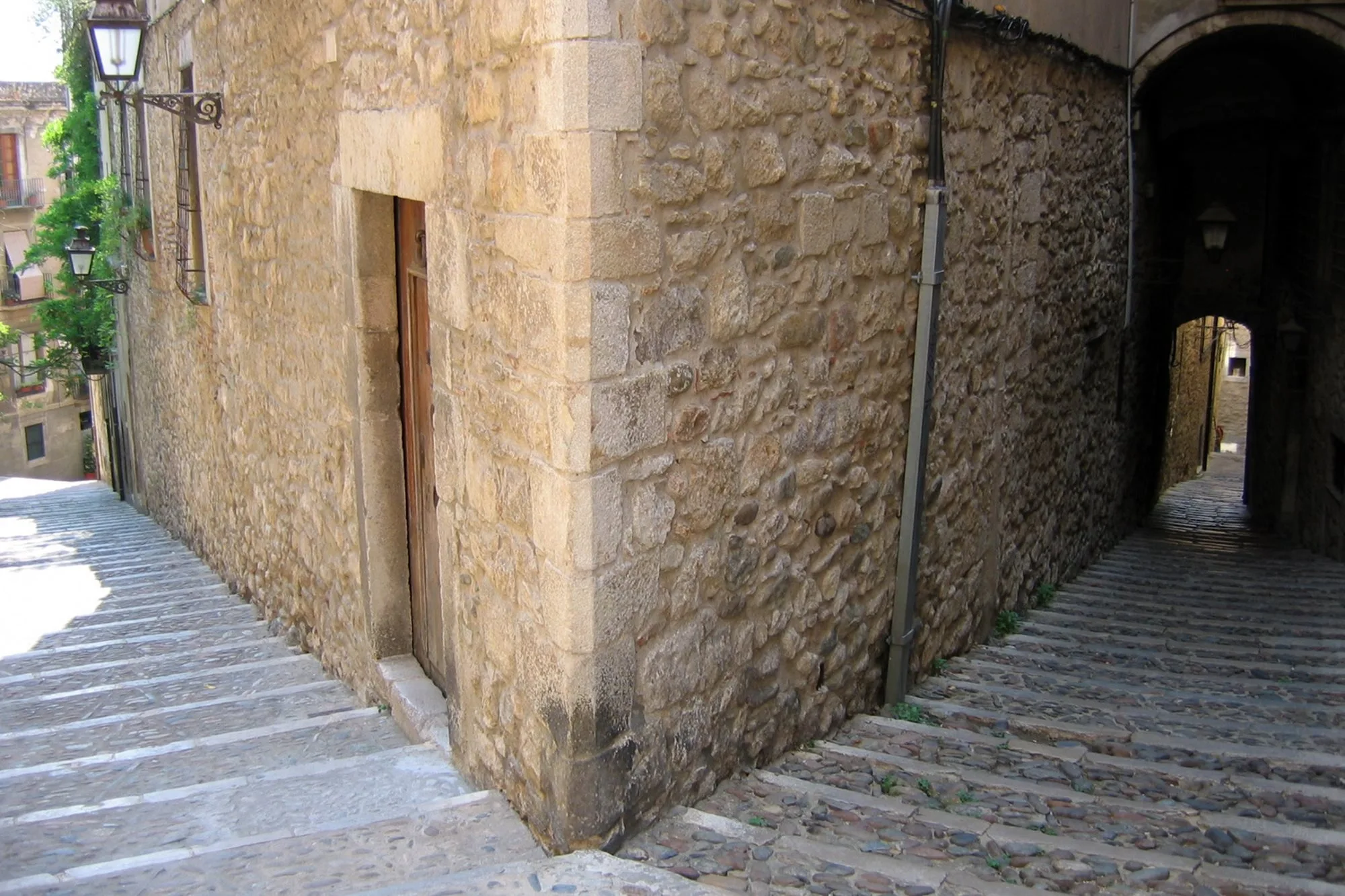
The call, the old Jewish quarter, is a maze of cobbled streets.
The first known Jewish person in the city was a woman named Doucerella, according to a document dating from the year 963. the Museu d’Historia dels Jueus (Jewish History Museum) is a testimony to the importance of the Jewish community that occupied this part of Girona until 1492.
In the call there was the synagogue, the ritual baths and the butchers, as well as other community services.
Built: X-XV Centuries
Author: Anónimo
Style: Mudéjar
Category: Civil
Type: Jewish Quarter
Address and telephone
If you see any mistakes or want to add anything to this information, please contact us.
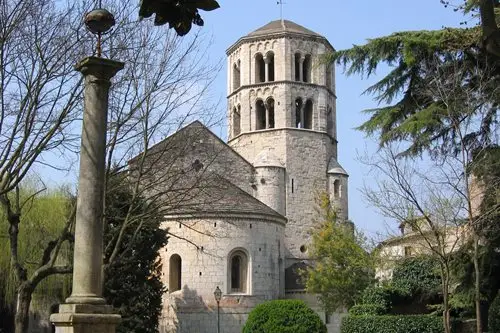
The Girona branch of the Archaeology Museum of Catalonia is located in the Sant Pere de Galligants Monastery since 1557, in the historic centre of the city.
This monastery was a former Benedictine abbey. A clear example of Romanesque religious architecture in Catalonia, whose construction began at the end of the 10th century and was completed in the 12th century. Its church (now closed to worship and dedicated to the Museum) has a basilica floor plan with three naves. Attached to it is a small cloister, which, due to its specific historical-artistic characteristics, is included within the extensive group of Catalan cloisters. It also features an octagonal bell tower and twin Romanesque windows.
As a Museum, it houses archaeological materials found in excavations from various sites in the province of Girona. These date from Prehistory to the Middle Ages. The visit begins in chronological order through the cloister.
This property has become one of the most interesting places in the city, as it was a setting in the successful HBO series "Game of Thrones". Specifically, we can see it in the last episode of the sixth season, when Girona becomes "Oldtown". The Archaeology Museum of Catalonia itself was used to represent the entrance to the Citadel Library, where Sam arrives with Gilly.
Additionally, the Galligants bridge, which crosses the river of the same name and is located next to the Museum, was also the setting for an intense sequence starring Arya Stark.
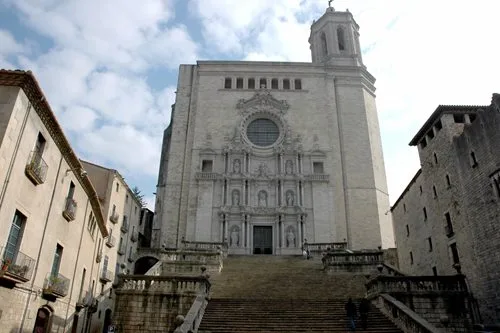
The Cathedral is the result of varios superimposed styles (c. XI-XVIII). The single nave is the broadest of Gothic architecture in the world.
The Arxiu Capitular (Chapter Archive) conserves a Beatus (c. X), a Medieval manuscript with wonderful ilustrations that demonstrate the clear influence of Mozarabic art and where the name Ende appears, on of the rare examples of a woman participating in the ilustration of manuscripts.
The Tresor de la Catedral (Cathedral Treasure) shows a copy and one of the jewels of Romanesque art in Catalonia, the Tapis de la Creació (Tapestry of the Creation, c. XI-XII).
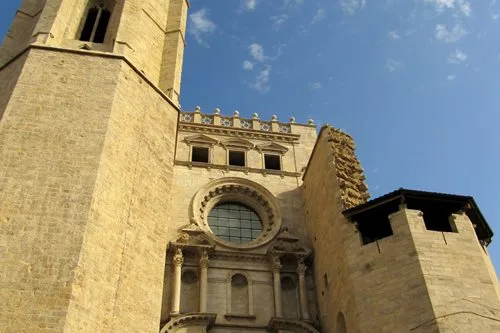
Sant Feliu Church (c. XIII – XVII) contains the chapel dedicated to the patron saint of Girona, Sant Narcis, known as the saint of the flies alter the miraculous appearance of these insects coming out of his tomb that finally, according to the legend, drove out the French troops Turing the 1285 siege.
In Sant Feliu square is a replica column of La Lleona (The Lioness, c. XII) which is the origin of the popular phrase addressed to newcomers: “you can’t be resident in Girona until you’ve kissed the backside of the lioness”. As a visitor, a kiss guarantees that you will return one day.