Cookie settings
We use our own and third-party cookies in order to offer our services, display videos, obtain statistics and offer personalized advertising.
For more information, please read our cookies policy.
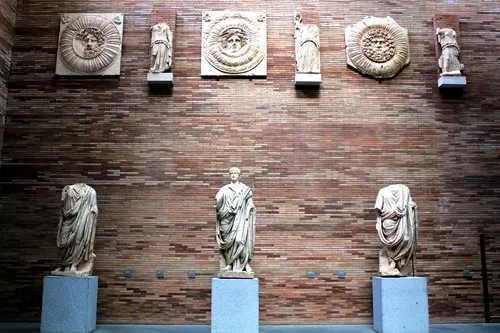
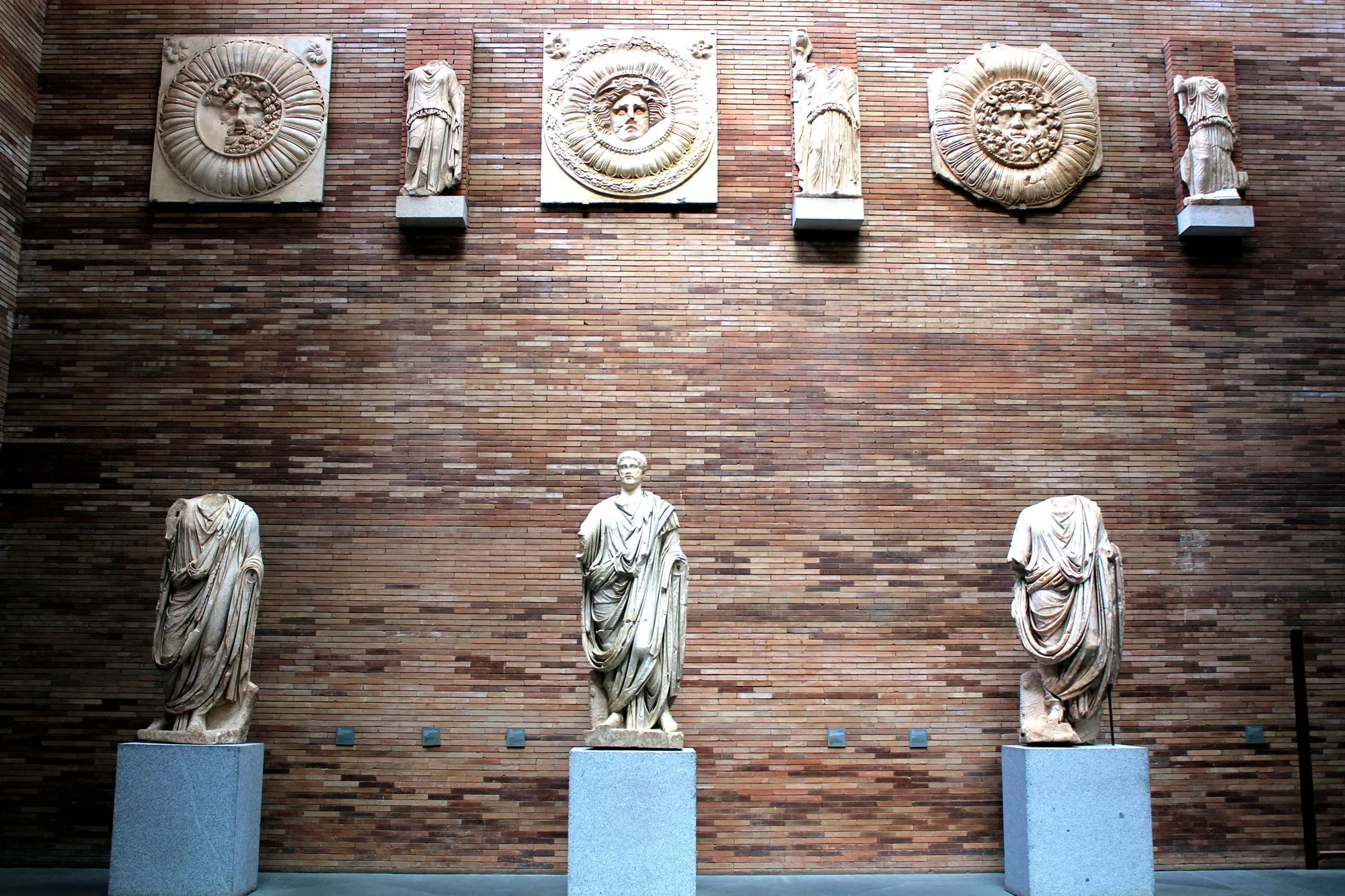
The building was built over Roman ruins that can be contemplated and from there, by a subway, you can access to the theatre and the amphitheatre.
It has an excellent collection of artistic material from Roman times: constructive elements, sculptures, paintings, mosaics, numismatics, dishes, etc. It includes a great part of the Visigothic collection of the town.
It is a first order tourist and information place, in which conferences, congresses, courses, exhibitions and other activities of national and international range take place.
Built: XX Century (1981 - 1985)
Author: Rafael Moneo
Style: Contemporary
Category: Museum
Type: Museum
Address and telephone
Opening times
Prices
If you see any mistakes or want to add anything to this information, please contact us.
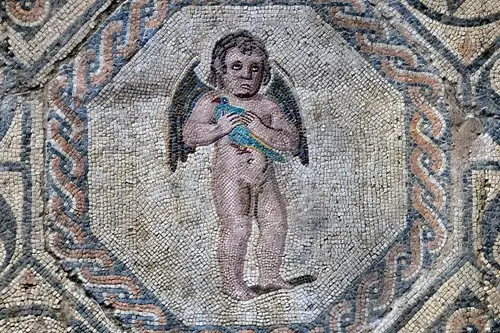
This house is known as “Casa del Mitreo” (House of the Mitraeum) due to its relation with the remains that found in the Bullring and are related to the worship to Mitra. It is located on the Southern slope of the hill San Albín and was built with masonry and with ashlars in the corners. The house has three courtyards, rooms for its inhabitants, commercial or industrial rooms, gardens and springs.
The rest of the rooms are distributed around the peristyles or courtyards with portico with interior garden. They are decorated with mosaics and murals of great quality, such as the Cosmologic Mosaic which represent the allegory to the natural elements (Sky, Earth and Sea) and the figure of Aion (eternity) dominates it.
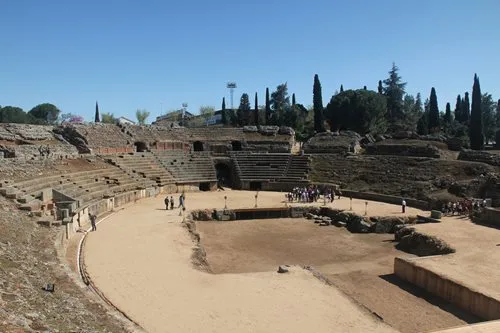
The amphitheatre is located close to the Theatre and both are joined by a short passage. This building has been built in the centre of a knoll, in the slopes of the hill San Albín. It has an elliptical form, with the arena in Latin cross plan and it could hold up to 14, 000 people.
The structure of the building is built with cement, masonry and granite. It has 16 gates, two stalls and two boxes located in the axis of the ellipse. It is completely uncovered and delimited by the ellipse of the arena, the cavea (divided into ima, media and summa cavea), the entrances, the staircases and the rest of the supplementary areas, without forgetting the cross- shape pit located in the centre and where the wild animals went out. The gladiators´ fights took place here.
I was reformed in times of the Flavian Dynasty or perhaps in Trajan times.
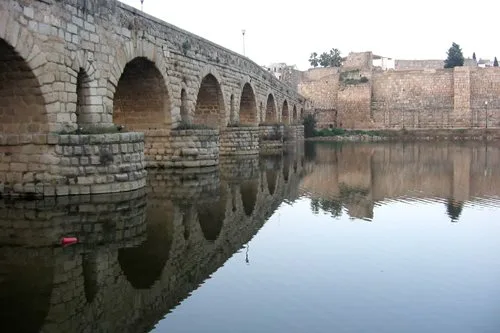
This bridge was built in times of the Roman Emperor Augusto. The bridge is located over the river Guadiana. It was the meeting point of the Roman paved roads of the Southwest. The bridge was the first work really practical, and was strategically built with the aim of protecting the colony as well as the Eastern part of the peninsula.
The bridge is built with a cement nucleus that is covered by granite ashlars. It consists of 60 arches and has a length of 792 meters, being one of the largest and most important bridges of the Empire. It was originally divided into two parts. The original pillars have rounded cutwater in order to lighten the water preassure.
The bridge suffered several reforms after the deterioration caused by the swollen of the river and the different wars.
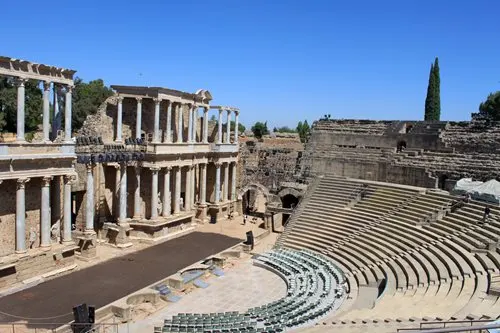
It was built in 16- 15 B.C. and was donated by the Roman Emperor Marco Agripa (Emperor Augusto´ s son in law). It dates from the same time as the foundation of Emerita Augusta. It suffers several changes in I and II Centuries A.C.
This theatre could hold up to five thousand people, with a height of twenty two meters height.
It conserves its stands where the different social classes of that time were divided. It has vaulted galleries of access that ended in the orchestra, destined to the chorus.
The stage was 60 meters length and the pulpitum or floor would be covered by wood. The front of the stage is the most spectacular area. Over an ashlar base covered by red marbles, stand luxurious columns with Corinthian capitals which shelter and keep splendid statues.
On the back of the stage there were rooms that were used by the actors, with a peristyle with gardens and a small chapel for the imperial cult.