Cookie settings
We use our own and third-party cookies in order to offer our services, display videos, obtain statistics and offer personalized advertising.
For more information, please read our cookies policy.
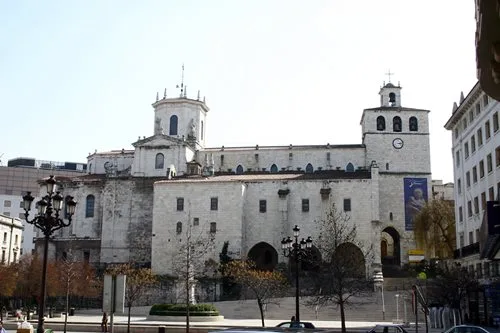
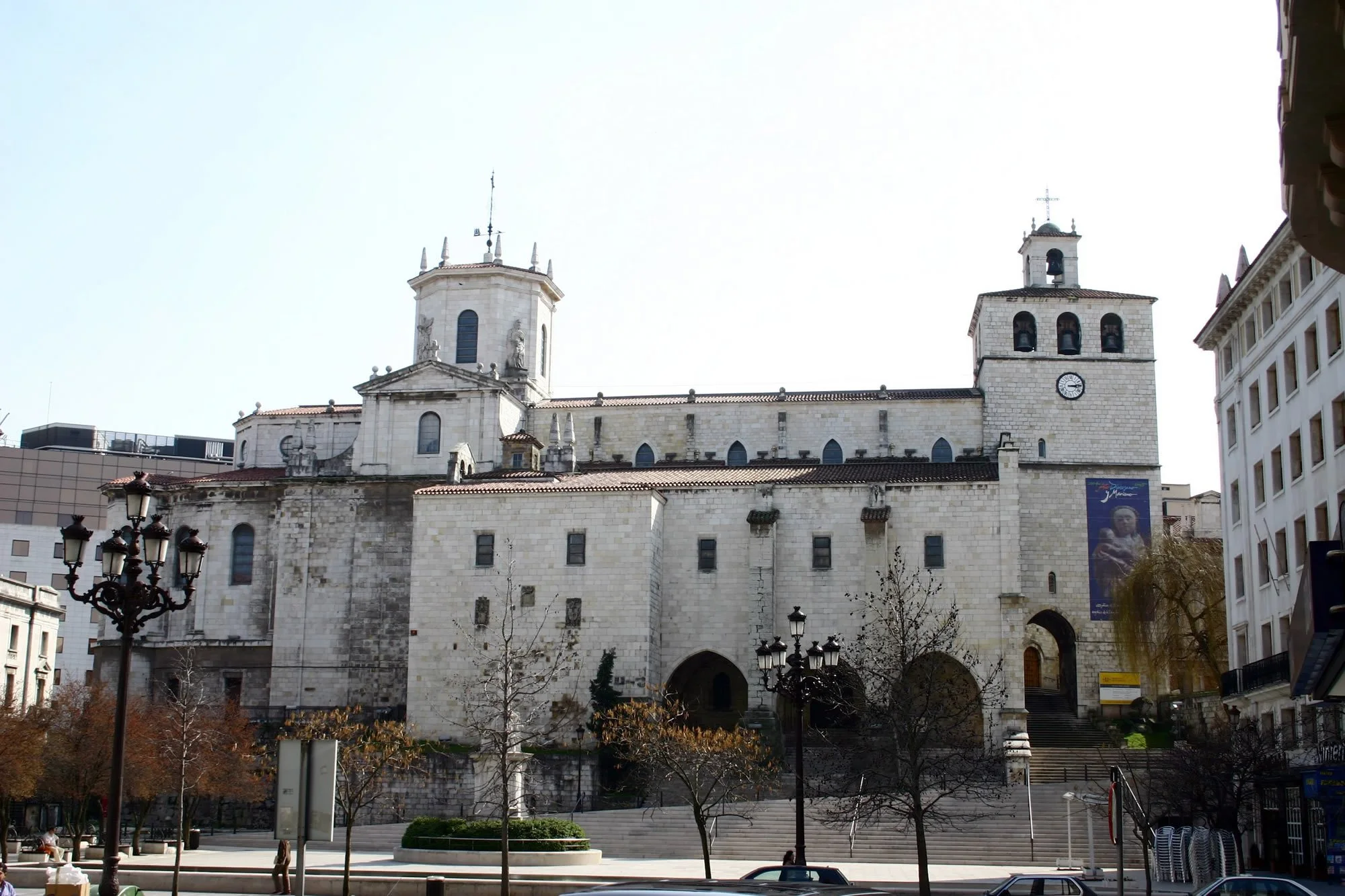
This Cathedral was an abbey in the VIII Century and a collegiate church in the XIII Century. It has three naves with four bays. The characteristic that made this monument to be unique was that it is composed by two superimposed temples with same floor. The lower temple, known as “crypt or Christ´ s parish”, was built around the year 1200 over other buildings that belonged to the Roman times. The upper temple, today Santander Cathedral- Basilica, was built in the middle of the XIII Century. The presbytery has three polygonal chapels.
It has a rib vault with ogives supported by columns of cross- shaped pillar. Its cloister is square with pointed arches. It is not decorated.
Inside, we can find Menéndez Pelayo´ s mausoleum by Victorio Macho, which is the burial place of the Saint Martyrs (St. Emeterio and St. Celedonio) whose remains arrived to Portus Victoriae (the old Roman Santander) by ship.
Built: VIII Century
Author: Anónimo
Style: Romanesque
Category: Religious
Type: Cathedral
Address and telephone
Opening times
Prices
If you see any mistakes or want to add anything to this information, please contact us.
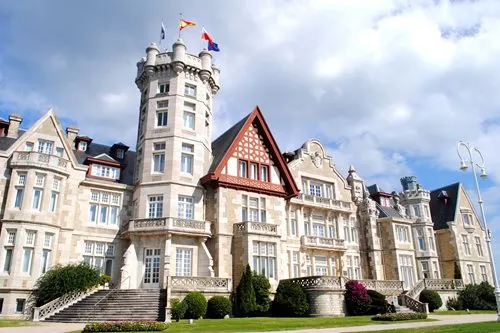
The Royal Palace of La Magdalena is situated in the peninsula of the same name. It was built in order to provide accommodation for the king Alfonso XIII and his family, who regularly stayed in it until the proclamation of the Second Republic, as summer residence.
The style of this palace is difficult to define due to it has Neoclassic elements reflected in the distribution of the outer elements, the abundance of chimneys, the windows´ form, etc., and French elements such as the curving staircase of the main stairs, the asymmetry of the bodies of the building, and it also has a touch from the Santander region. It is surrounded by beautiful gardens and is a comfortable place to enjoy the coast and go for a walk accompanied by the marine breeze.
During the Republic, the palace became the headquarters of the International University Menéndez Pelayo that was created in 1932.
It has two entrances, one in the North used for carriages, with portico, and another one in the South, which is the main one, with two octagonal towers and a curving staircase. The building has been built using masonry stone covered with slate. It was completely reformed in 1993 by Luis de la Fuente.
Among all the students and foreign and Spanish lecturers that have come here, we should highlight: Pedro Salinas, García Lorca, Marañón, Ortega y Gasset, Unamuno, Américo Castro, etc.