Cookie settings
We use our own and third-party cookies in order to offer our services, display videos, obtain statistics and offer personalized advertising.
For more information, please read our cookies policy.
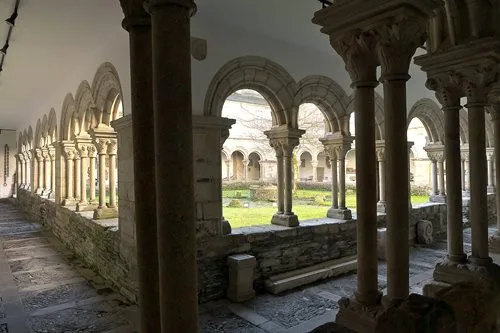
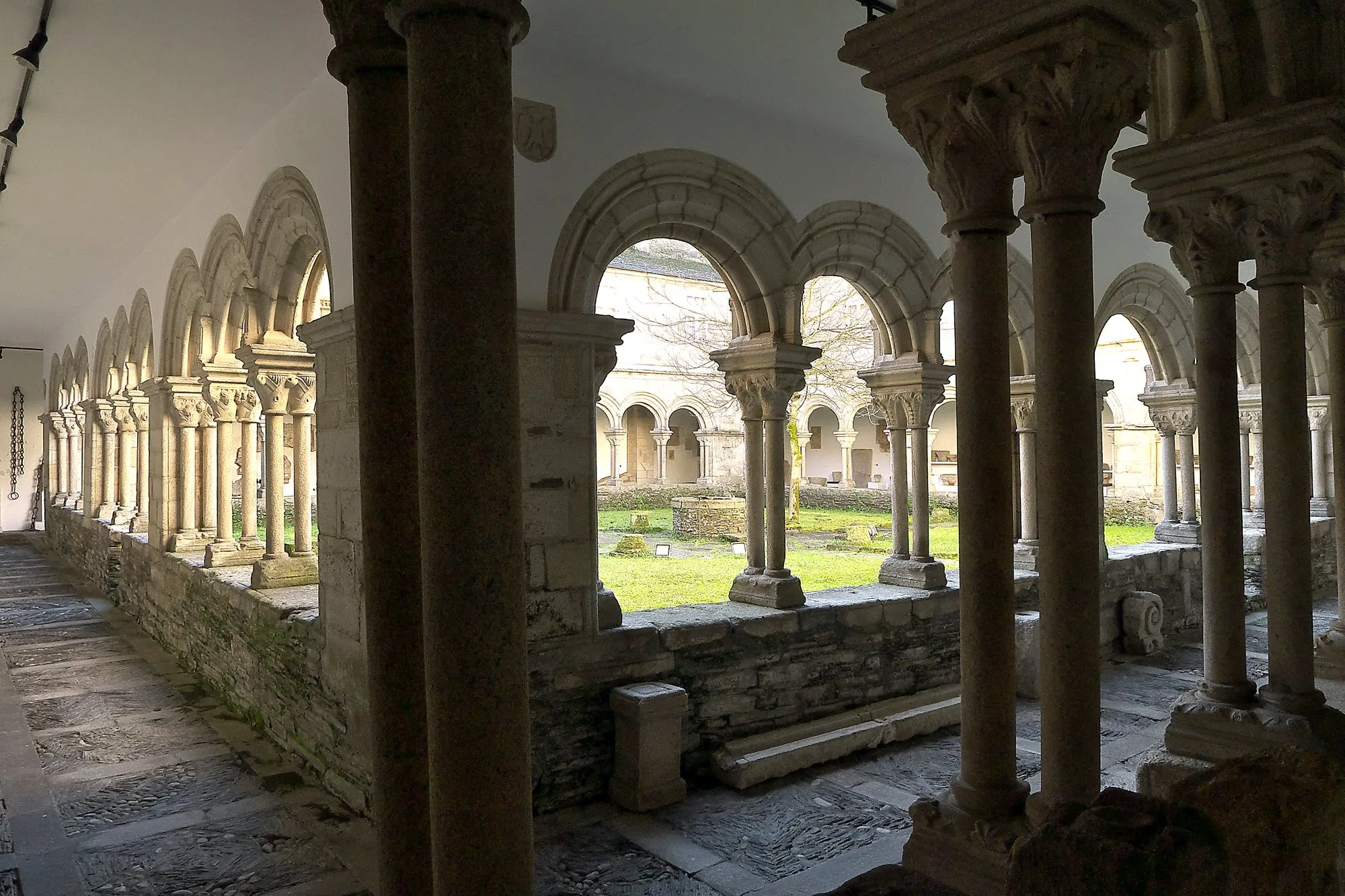
Site of the sections of Archaeology, Popular Arts, and Fine Arts of the Lugo Museum. Today it is one of the sites of the Provincial Museum of Lugo.
It is suspected that the convent was created by San Francisco on the road to Santiago. The church, whose name is San Pedro, was built in the XV century in Gothic style. There is a Latin cross plan with pointed arches. Beside it there is a bell tower.
What remains of the convent is the cloister with square floor plan surrounded by semicircular arches supported on double columns, decorated with plant motifs.
The walls of the cloister are decorated with epigraphy, mosaics, etc. Another space that is intact is the kitchen decorated with useful items typical to a Galician, village kitchen such as pots, coal irons, lanterns, etc.
Built: XIII Century
Author: Anónimo
Style: Gothic, Romanesque
Category: Religious
Type: Conventual church
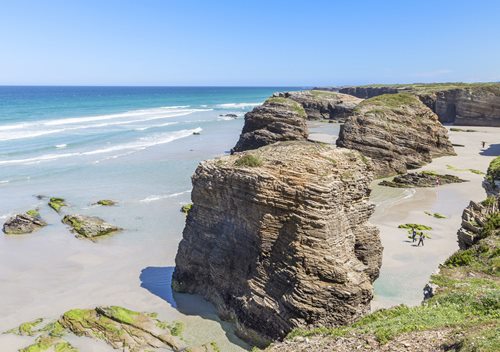
Playa de las Catedrales is a must-see location in the province of Lugo. It is an incredible Natural Monument due to the shape and size of its rock formations. Its name comes from the peculiar cavities they present, similar to Gothic arches.
With this guided tour, you will immerse yourself in this stunning coastal landscape of Lugo. You will also discover the history and charm of the beautiful town of Ribadeo and its modernist buildings.
Don’t worry about transportation — from Lugo, we will make the round trip included in the price.

Address and telephone
Opening times
From 1 July to 31 August:
Monday to Friday: 11:00 a.m. - 2:00 p.m. and 5:00 p.m. - 8:00 p.m.
Saturday: 10:00 a.m. - 2:00 p.m.
From 1 September to 30 June:
Monday to Saturday: 10:30 a.m. - 2:00 p.m. and 4:30 p.m. - 8:30 p.m.
Sundays and public holidays: 11:00 a.m. - 2:00 p.m.
Closed: Sundays and public holidays (1 July to 31 August), 22 May (St. Rita), 1 January and 24, 25 and 31 December.
Prices
Free Entry
If you see any mistakes or want to add anything to this information, please contact us.
Playa de las Catedrales is a must-see location in the province of Lugo. It is an incredible Natural Monument due to the shape and size of its rock formations. Its name comes from the peculiar cavities they present, similar to Gothic arches.
With this guided tour, you will immerse yourself in this stunning coastal landscape of Lugo. You will also discover the history and charm of the beautiful town of Ribadeo and its modernist buildings.
Don’t worry about transportation — from Lugo, we will make the round trip included in the price.
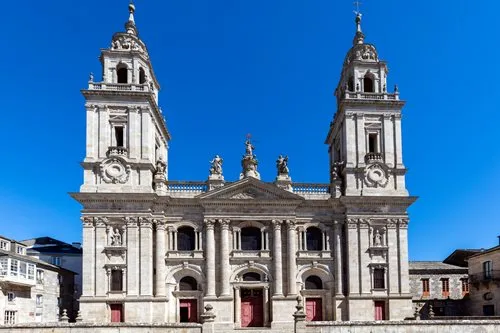
Its prolonged construction originated the mixture of styles in its construction.
After undergoing a long series of vicissitudes, the expert Raimundo de Monforte began work which lasted from 1129 to 1273.
It combines several architectonic styles which range from Romanesque to Neoclassical. The ambulatory, the Main Chapel and the chapels in the apses are Gothic, from the 14th century The sacristy, the chapel of Virgen de los Ojos Grandes and the cloister are Baroque. The main façade is Neoclassical. It houses the Diocesan Museum.
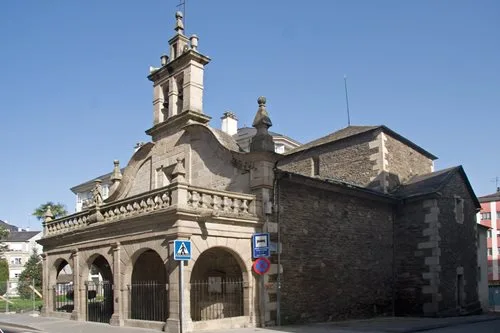
It belongs to the Parish of Santiago La Nova. It follows the standards of Compostela baroque, of a central plan, work of Lucas Ferro Caaveiro.
It is located near the Wall, opposite the San Pedro or Toledana Gate; originally, it was situated next to the old Castilla road.
The saint titular of this chapel gave its name to the neighbourhood that formed around it and grew due to the granting of the annual San Froilán fairs in 1754.
Its plan is of a Latin cross, with a sober exterior, covered with a barrel vault and a semi-spherical dome at the crossing.
It was constructed around 1731 and later a beautiful frontal portico with an upper balcony was added.
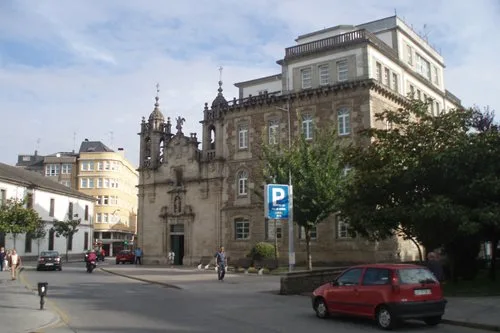
It belonged to the former hospital of San Juan de Dios. It is located in Ferrol Square, near the Puerta Falsa.
Its origin was a chapel linked to the now-disappeared hospital of San Bertomeu, founded in 1621, which a hundred years later came to be managed by the brothers of San Juan de Dios.
It was built in its current form in 1768 during the times of Bishop Izquierdo. It is covered by a barrel vault with a small central dome.
It has a Baroque façade with the bishop's coat of arms and is crowned by a statue of San Rafael, the medical archangel. The image of San Bertomeu presides over the door, and the façade is flanked by two bell towers.
With the disappearance of the hospital due to a fire in 1878, the chapel soon became the parish church of San Froilán.
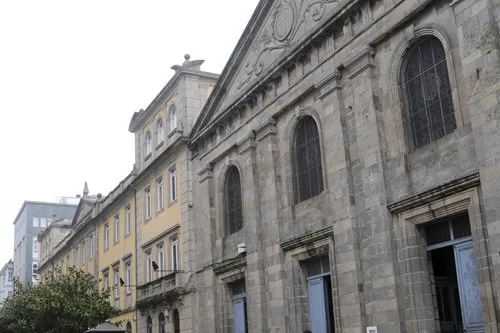
It was the church of the Convent of Santiago, founded in the 13th century.
It was reconstructed in the 18th century and was plundered during the Napoleonic invasion. It has been the parish church of Santiago since 1859. It formerly belonged to the Dominican nuns' convent which settled here in 1363, and disappeared with the Disentailment.
It was dedicated to Saint Mary and was called Santa María “A Nova” to distinguish it from the Cathedral, which is also dedicated to the Virgin.
No remains of the original monastic buildings survive. The current church is neoclassical. Later, the temple was modified to align with the general layout of the Rúa de Raíña, and the new façade was built in 1914. The exterior is simple, with the south door standing out from the ensemble. Inside, the view of the dome that crowns it, and an image of Santiago Matamoros, stand out.

Book your hotel