Cookie settings
We use our own and third-party cookies in order to offer our services, display videos, obtain statistics and offer personalized advertising.
For more information, please read our cookies policy.
This collegiate church was founded in 1005 by Fernando I de Castilla, in order to become the burial place of San Isidoro de Sevilla.
It is crowned by a square tower. It has three naves, a prominent transept and a presbytery with three apses, (the central one was turned to the Gothic style at the end of the Middle Ages).
The main façade presents a triple arch, Renaissance cornice, Plateresque pilasters and an imperial coat of arms in its centre.
The door of entrance consists of paired columns by both sides. Two monumental doors are opened in the Southern side. The Puerta del Perdón (Door of Forgiveness) is decorated with a beautifully sculpted tympanum with scenes of the Descent from the cross, the Empty Sepulchre and the Ascension. The Puerta del Cordero (the Lamb´ s door) is even more beautiful than the other one, and is decorated with scenes of the Sacrifice of Isaac. It is accompanied by the sculptures of St Isidoro and St Vicente and a beautiful zodiac.
Later, the famous and splendid Panteón de Reyes (Royal tomb), the oldest conserved sepulchral monument, is built.
The Major chapel has a splendid star- shaped vault by Juan de Badajoz. St Isidoro´ s relics are located in the major altar, kept in a valuable silver box.
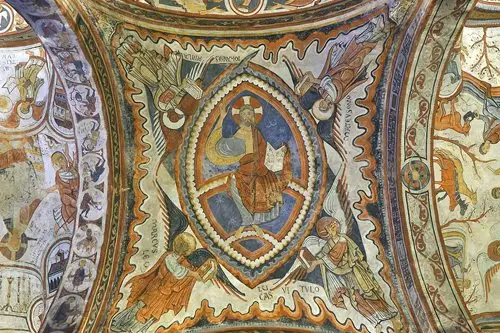
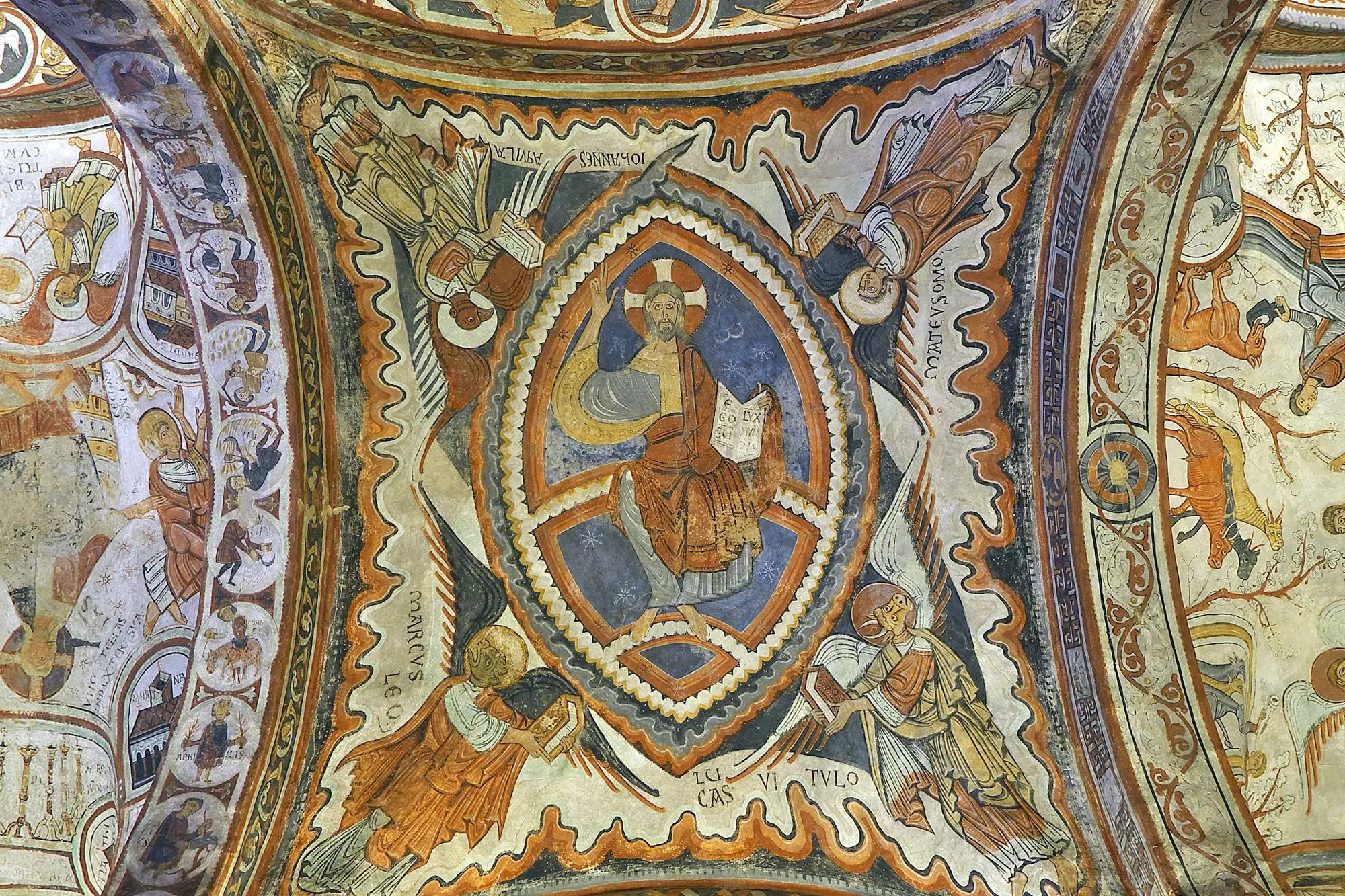
We should highlight St Catalina´ s chapel where there are Romanesque paintings, soft distempers that are the most notorious work of Byzantine style in Spain.
Built: XI Century
Author: Anónimo
Style: Romanesque
Category: Religious
Type: Collegiate Church
Address and telephone
Opening times
Prices
Services
Guided Tours, Library, Shop.If you see any mistakes or want to add anything to this information, please contact us.
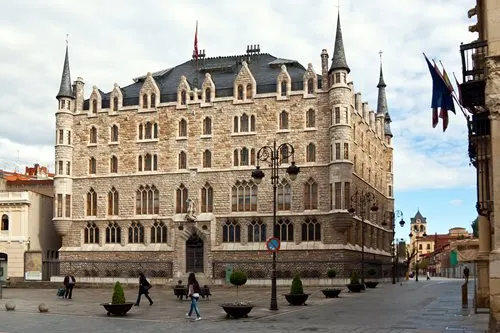
This building was entrusted to Gaudí by the company “Fernández y Andrés” from León, who had trading relations, because of their textile business, with the Count Eusebio Güell who recommended Gaudí to be their architect. It is rectangular building of medieval inspiration, designed in Neogothic style.
You access to it through a lobed door located in the centre of the main façade, being the only place where the pit that surround the building is broken. Over this door is located the statue of San Jorge fighting with the dragon which is closed with a forged iron grille.
The four facades are recovered by stone ashlars and on each angle there is a circular tower. In the upper floor, the lighting is also ensured by skylights, located in the roof.
The metallic columns in the basement which create a clearer space, the Neogothic windows that ensure a better lighting; and vegetal motives which evocates the name of the city are the typical elements of Gaudí´ s architecture.
The building was used for housing offices and warehouses for the textile business on its floors and at the same time it had houses on the upper floor.
Nowadays, the Casa de los Botines belongs to the Fundación Obra Social de Castilla y León (FUNDOS). Inside it houses a museum dedicated to the memory of Gaudí, as well as about the history of the building. It also preserves a collection of high-quality paintings from the old Caja España, the previous entity that owned this building.
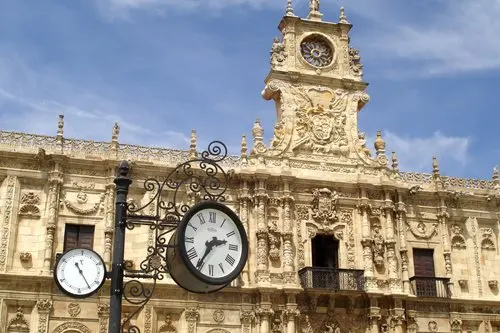
The convent is one of the masterpieces of the Spanish Plateresque style. It was entrusted by the Catholic Kings, used as hospital for pilgrims in the way of St. James. The church of the convent has a Latin cross plan, consists of a wide nave covered by star- shape rib vaults.
The sacristy, by Juan de Badajoz, has three star- shape vaults. The medallions that decorate the cloister, Renaissance and Baroque, belong to the same author, and the floral ornamentation belongs to Juan de Juni. We should also highlight the sacristy.
The set of chairs the choir was finished in 1542, by Guillén Doncel, with the possible collaboration of Juan de Juni, author of all the representations of the apostles and some saints.
The monastery houses the Museo de León, with a wide epigraphic collection, with objects from Prehistory as well as Classic, Middle Age and Renaissance and Baroque objects.
Nowadays is a state-run tourist hotel.