Cookie settings
We use our own and third-party cookies in order to offer our services, display videos, obtain statistics and offer personalized advertising.
For more information, please read our cookies policy.
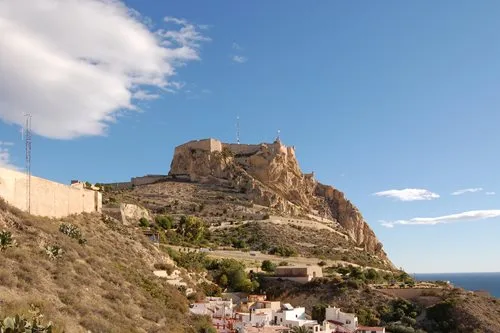
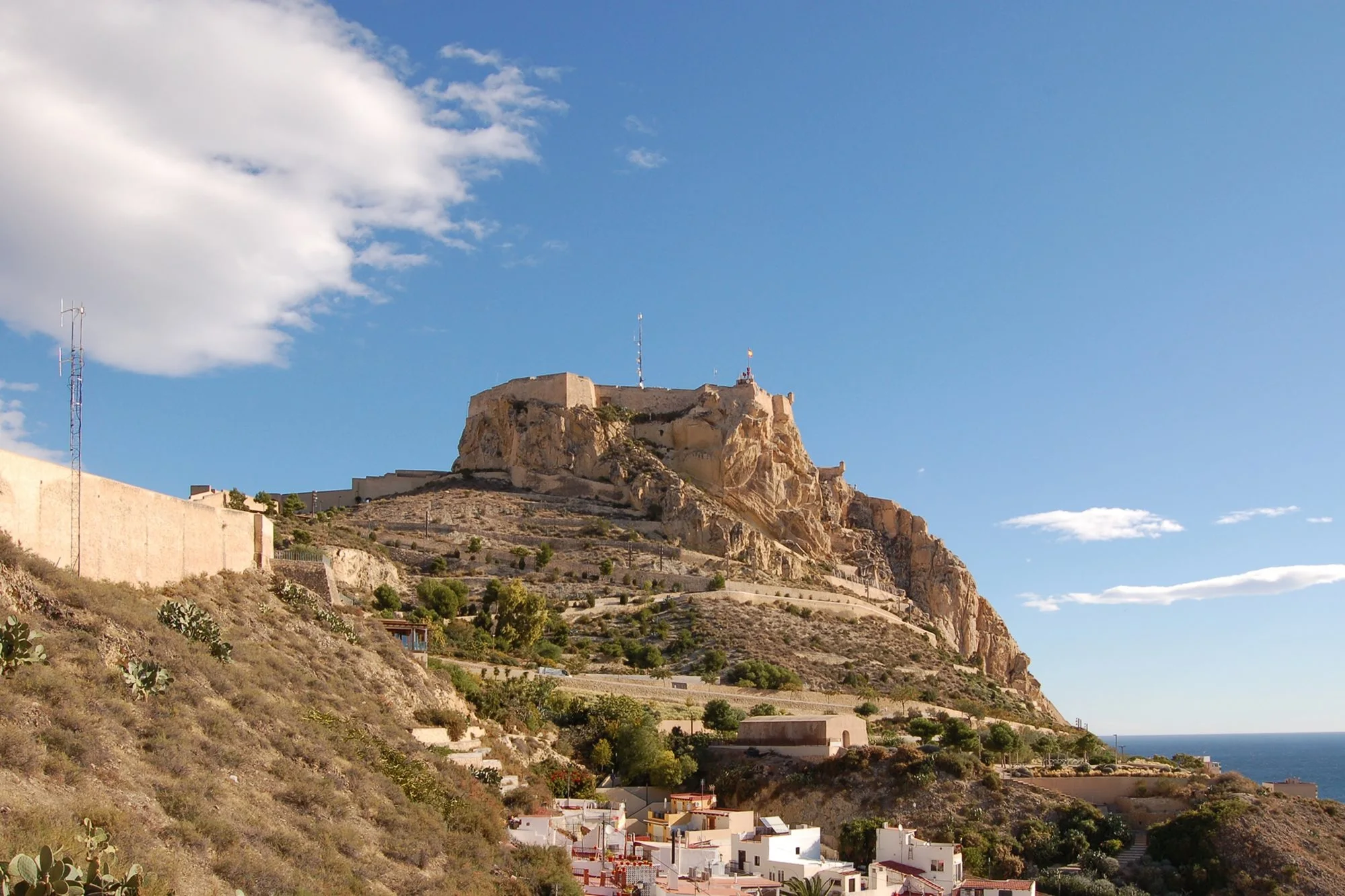
Located at a height of 166 metres on Mount Benacantil, this is a fortress with an enormous strategic value.
It was given the name Santa Bárbara because it was on her feast day, 4th Deember, in 1248, that it was taken from the Arabs by Prince Alfonso of Castile, the future King Alfonso X The Wise.
Santa Bárbara Castle is divided into three separate precints. The first of these is known as La Torreta and it contains the old Torre del Homenaje, which house the oldest remains of the fortress. The middle precint dates from 1580: Salón Felipe II, the former Corps opposite the large inner Ward, Santa Bárbara chapel and the Queen’s Bastion, amongst others. The third precint is the lowest and dates back to the 18th century; it is here that the battlement known as the Revellín del Bon Repós can be found. Its interior also hosts exhibitions.
The castle can be reached by a lift that has been excavated out of the rock, opposite El Postiguet Beach, or by a road that runs between the pine Groves on the Northern slope of Mount Benacantil and starts in Calle Vázquez de Mella. On its slope is La Ereta Park, from which there are spectacular views of the city and access to the old quarter.
Built: XIII-XVI Centuries
Author: Anónimo
Style: Gothic, Renaissance
Category: Military
Type: Castle
Address and telephone
Opening times
Prices
If you see any mistakes or want to add anything to this information, please contact us.
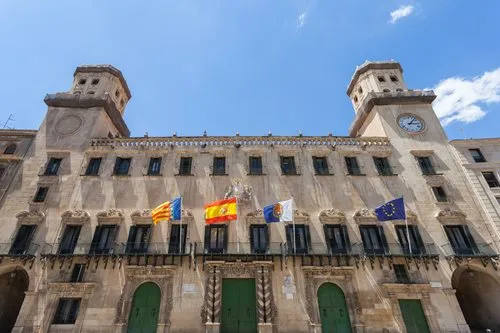
This is an 18th Century baroque palace built on the side of the former Casa de la Ciudad.
The building is an inusual structure, flanked by a tower at either end, divided into three stories and finished off with a balustrade.
Inside, its most striking rooms are the famous Blue Room, the Council Chamber and a chapel where mass can be give due to a Papal Bull signed by Pope Pius VI.
Inside the building is the reference point from which the height of any place in Spain above sea leve is measured. This reference point, known as cota cero, is located on the first step main staircase of the building.
In the Basement of the Town Hall’s adjoining building, which also houses some local council offices, is the exhibition “La ciudad descubierta” (The city uncovered), with interesting archaeological remains that have been preserved from mediaeval times to the modern day.
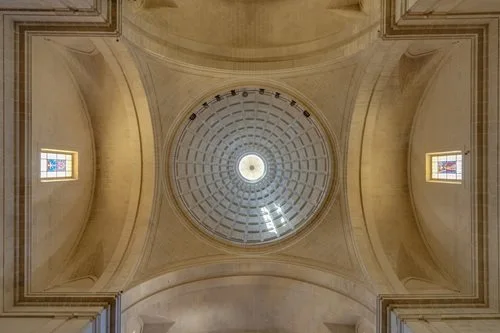
This building in the Herrerian Renaissance style is located in the city’s old quarter andi s one of the most emblematic buildings in the quarter.
It is a Latin-cross plan church with short arms and communicating side chapels.
Inside you can see the 15th Century cloister with two baroque Doors, the altar, the 18th Century Communion Chapel and the 45-metre high blue dome. The interior decoration is a clear example ilusionistic style from the first half of the 18th Century.
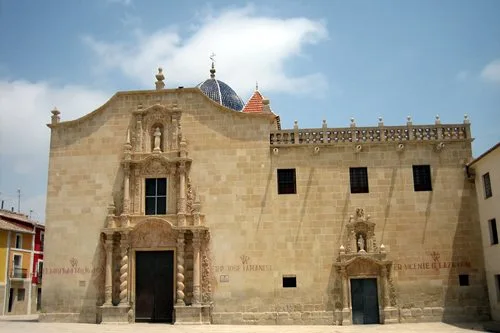
In the baroque style with a pyramid-shaped dome, this monastery is five kilometres from the city centre.
Inside, there is a relic brought from the Vatican in the 15th Century which, according to popular tradition, is the veil with which Veronica wiped the blood from Jesus’ face on the way to the Calvary.
Every year, thousands of people head there on a pilgrimage from Alicante on the second Thursday after Easter Sunday, and it is one the city’s most tradicional local fiestas.
Given its status as a pilgrimage church, there is a chapel behind the main altarpiece where the relic of the Holy Veil is kept.
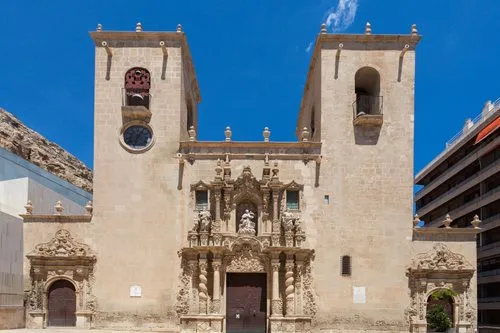
The origins of the Basilica date back to the 14th Century, as it was built on the side of the Great Mosque.
It has a single nave, without a cross shape, with side chapels located between the buttresses and a total of six bays. It has a series of rooms and elements that have been added over time to the basic construction, among which are the 18th century Rocoo high altar, the 16th century baptismal font and the 1653 Valencian baroque organ.
Highlights include the doorway with its image of the Virgin Mary by sculptor Juan Bautista Borja.
Since the beginning of the 1990’s various restoration projects have taken place in the building.