Cookie settings
We use our own and third-party cookies in order to offer our services, display videos, obtain statistics and offer personalized advertising.
For more information, please read our cookies policy.
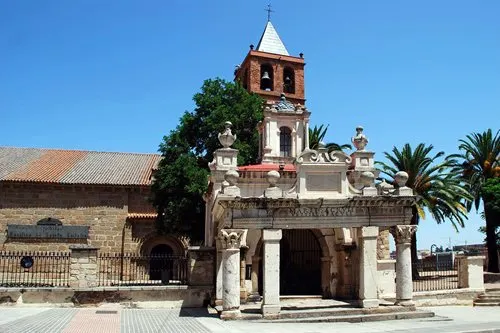
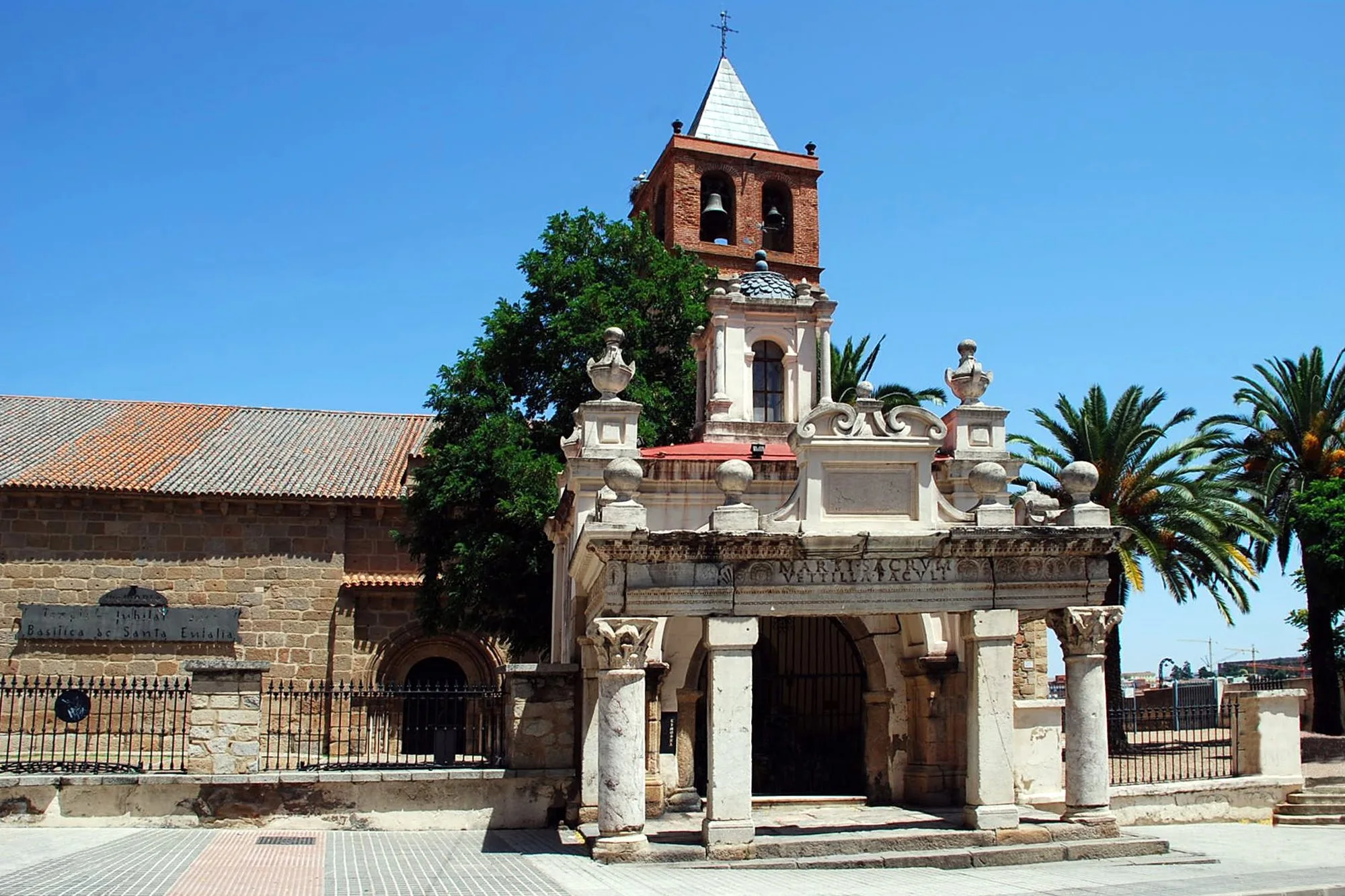
After the Reconquest of 1229, Mérida was the place chosen for the construction of a church dedicated to Santa Eulalia, Patron Saint of the town, persecuted and martyred in times of Diocletian.
The primitive basilica should be built in the V century A.C. During the Islamic rule, this building should be abandoned.
In the XIII Century, after the conquest of the town by Alfonso IX, the temple will be rebuilt, with several changes.
It has a Basilical floor with three naves and a tripartite presbytery with semicircular apses, where the main nave is approximately 500 meters. The pointed arches follow the Classic tradition. There are examples of Paleochristian, Visigothic, Byzantine and Romanesque art. Outside, it conserves the famous “hornito”, a chapel built in honour of the martyr Santa Elulalia, with remains of a former temple dedicated to the Mars, and that has become a real popular Christian veneration place.
Built: V - XIII Centuries
Author: Anónimo
Style: Romanesque, Visigothic
Category: Religious
Type: Basílica
Address and telephone
Opening times
Opening times of the Crypt
The monument is closed 1 January and 24, 25 and 31 December.
Prices
If you see any mistakes or want to add anything to this information, please contact us.
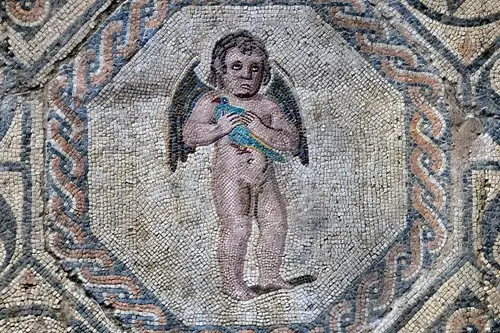
This house is known as “Casa del Mitreo” (House of the Mitraeum) due to its relation with the remains that found in the Bullring and are related to the worship to Mitra. It is located on the Southern slope of the hill San Albín and was built with masonry and with ashlars in the corners. The house has three courtyards, rooms for its inhabitants, commercial or industrial rooms, gardens and springs.
The rest of the rooms are distributed around the peristyles or courtyards with portico with interior garden. They are decorated with mosaics and murals of great quality, such as the Cosmologic Mosaic which represent the allegory to the natural elements (Sky, Earth and Sea) and the figure of Aion (eternity) dominates it.
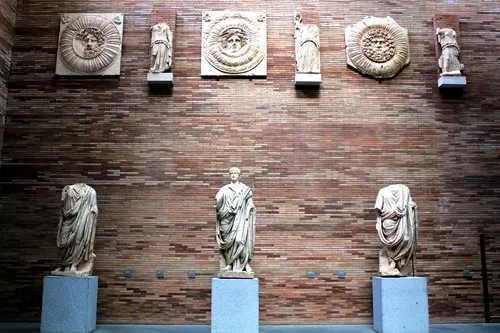
The building was built over Roman ruins that can be contemplated and from there, by a subway, you can access to the theatre and the amphitheatre.
It has an excellent collection of artistic material from Roman times: constructive elements, sculptures, paintings, mosaics, numismatics, dishes, etc. It includes a great part of the Visigothic collection of the town.
It is a first order tourist and information place, in which conferences, congresses, courses, exhibitions and other activities of national and international range take place.
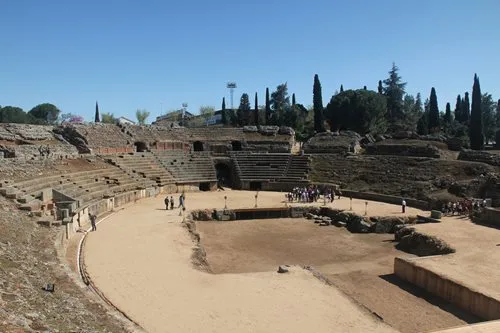
The amphitheatre is located close to the Theatre and both are joined by a short passage. This building has been built in the centre of a knoll, in the slopes of the hill San Albín. It has an elliptical form, with the arena in Latin cross plan and it could hold up to 14, 000 people.
The structure of the building is built with cement, masonry and granite. It has 16 gates, two stalls and two boxes located in the axis of the ellipse. It is completely uncovered and delimited by the ellipse of the arena, the cavea (divided into ima, media and summa cavea), the entrances, the staircases and the rest of the supplementary areas, without forgetting the cross- shape pit located in the centre and where the wild animals went out. The gladiators´ fights took place here.
I was reformed in times of the Flavian Dynasty or perhaps in Trajan times.
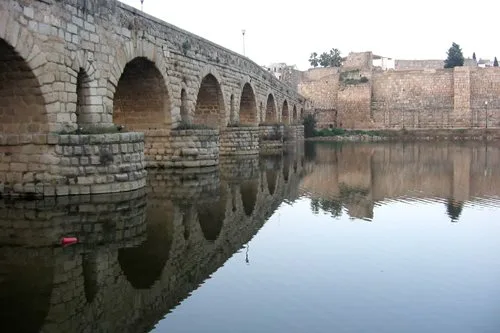
This bridge was built in times of the Roman Emperor Augusto. The bridge is located over the river Guadiana. It was the meeting point of the Roman paved roads of the Southwest. The bridge was the first work really practical, and was strategically built with the aim of protecting the colony as well as the Eastern part of the peninsula.
The bridge is built with a cement nucleus that is covered by granite ashlars. It consists of 60 arches and has a length of 792 meters, being one of the largest and most important bridges of the Empire. It was originally divided into two parts. The original pillars have rounded cutwater in order to lighten the water preassure.
The bridge suffered several reforms after the deterioration caused by the swollen of the river and the different wars.

Book your hotel