Cookie settings
We use our own and third-party cookies in order to offer our services, display videos, obtain statistics and offer personalized advertising.
For more information, please read our cookies policy.
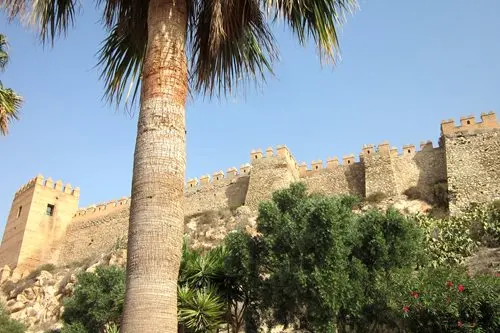
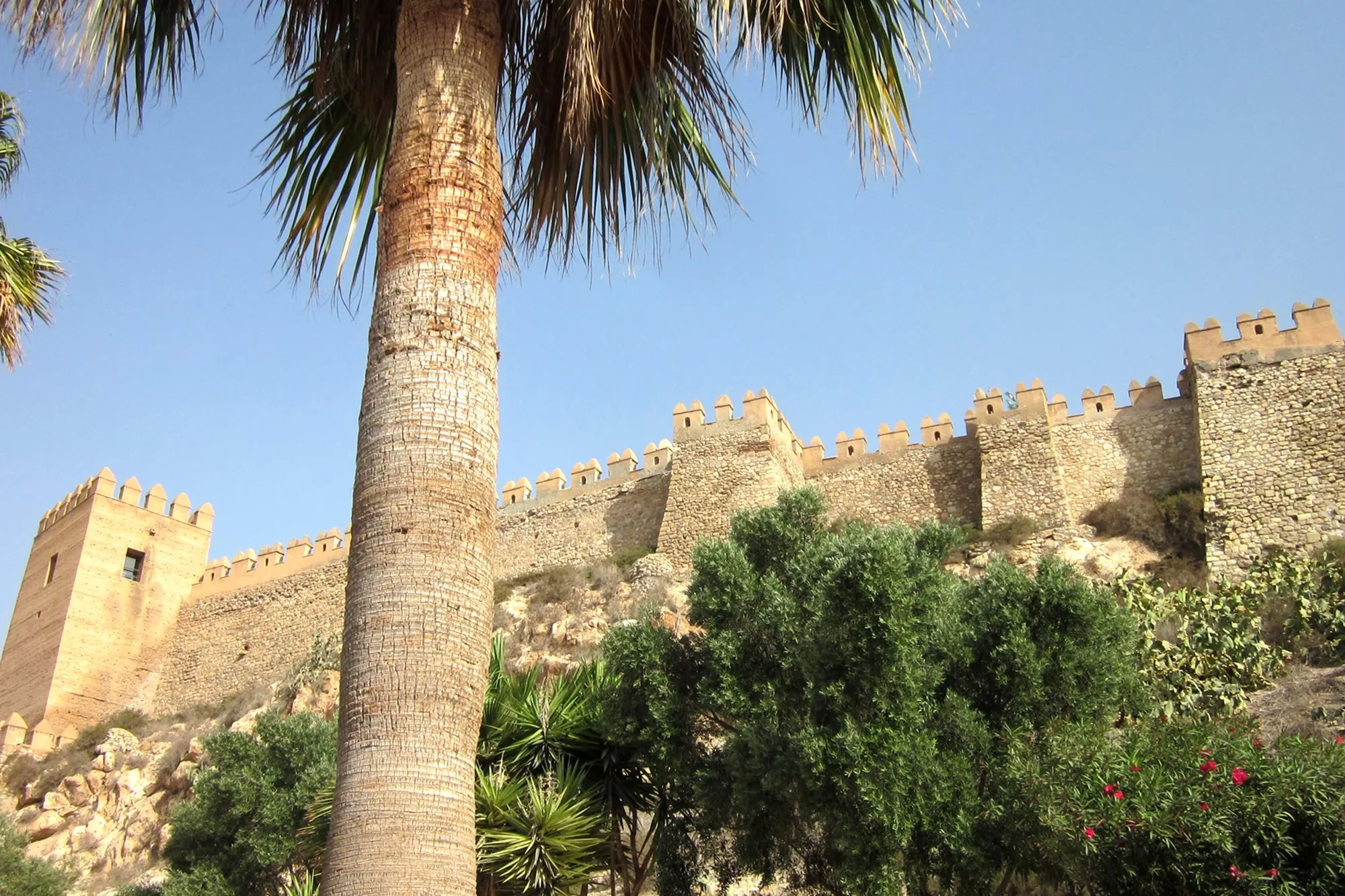
Abderrahmán III ordered the construction of the Alcazaba, over the ruins of an old fortress, in an isolated hill that dominates the bay. Later, it became the palace and fortress of Hairan, the first King of Almería. During many years, it remains in a complete oblivion. In the current Monumental Complex, we can see that it is divided into three different precincts: the first two have a Muslim design, and the third has a Christian one.
The first precinct is dominated by gardens. In the most eastern end, the Saliente Bastion is located, from here you can go up to the esplanade of the Vela Wall, whose name comes from the Vela bell, that announced different events when they were taking place: when ships came into the bay, danger, fire, etc. In the second precinct the city- palace was located, with the mosque, the baths, cisterns, shops, etc. In this part, the ruins of the Arab Palace of Almotacín are located.
The works from the third precinct were ordered by the Catholic Kings. The old cisterns are conserved in its square. The haughty Keep dominates the whole complex. This fortress is linked to the Castle of St. Cristobal by strong walls.
Built: X Century (995)
Author: Anónimo
Style: Arab
Category: Military
Type: Alcazaba
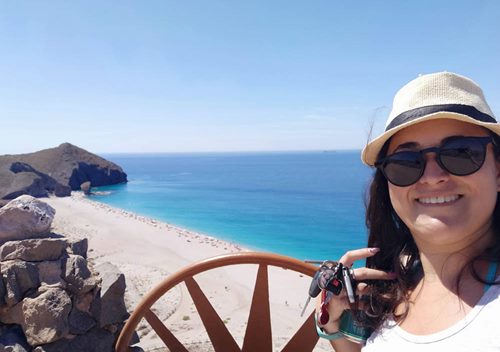
Discover the spectacular landscapes of the Almería coastline on this full-day excursion. Travel from Almería city to Carboneras, one of the gateways to Cabo de Gata Natural Park.
From Mesa Roldán you'll enjoy outstanding panoramic views and, if available, visit its historic lighthouse.
The experience continues with a boat trip past hidden coves, volcanic cliffs and the famous Playa de los Muertos. You'll also have the chance to swim in the crystal-clear waters of Cala Enmedio.
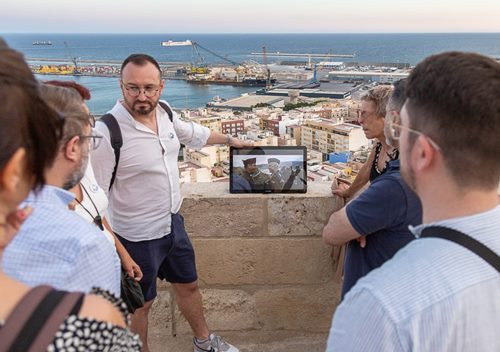
If you visit Almería, you can't leave without getting to know its universal legacy in cinema. On this guided tour, you'll discover the history of this city and its links to the filming of some of the most famous movies. You will visit the places of interest in the city centre, such as the Cathedral, the Alcazaba or the Chanca neighbourhood.
You will discover how scenes set in Morocco, Egypt, Lebanon, Mexico, etc. are represented in Almeria through film. You will live an immersive experience thanks to the photographs and sequences that the guide will show you on a Tablet.
You'll finish with refreshments and a surprise at the end. Don't miss this fantastic tour of Almeria.
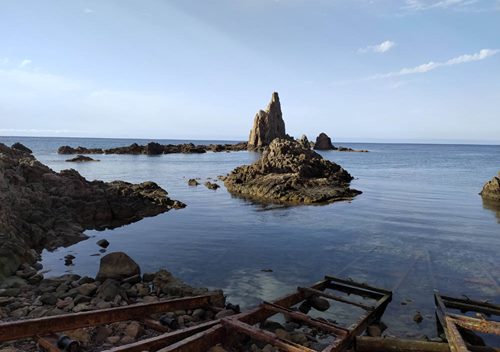
Discover the Cabo de Gata Natural Park on a guided tour from Almería in a small group (max. 8 people), with private transport, a local expert guide, and a picnic featuring local products.
Explore the Salt Flats, the Arrecife de las Sirenas, and other unique landscapes on an unforgettable experience.

Address and telephone
Opening times
Prices
Services
Groups.If you see any mistakes or want to add anything to this information, please contact us.
Discover the spectacular landscapes of the Almería coastline on this full-day excursion. Travel from Almería city to Carboneras, one of the gateways to Cabo de Gata Natural Park.
From Mesa Roldán you'll enjoy outstanding panoramic views and, if available, visit its historic lighthouse.
The experience continues with a boat trip past hidden coves, volcanic cliffs and the famous Playa de los Muertos. You'll also have the chance to swim in the crystal-clear waters of Cala Enmedio.
If you visit Almería, you can't leave without getting to know its universal legacy in cinema. On this guided tour, you'll discover the history of this city and its links to the filming of some of the most famous movies. You will visit the places of interest in the city centre, such as the Cathedral, the Alcazaba or the Chanca neighbourhood.
You will discover how scenes set in Morocco, Egypt, Lebanon, Mexico, etc. are represented in Almeria through film. You will live an immersive experience thanks to the photographs and sequences that the guide will show you on a Tablet.
You'll finish with refreshments and a surprise at the end. Don't miss this fantastic tour of Almeria.
Discover the Cabo de Gata Natural Park on a guided tour from Almería in a small group (max. 8 people), with private transport, a local expert guide, and a picnic featuring local products.
Explore the Salt Flats, the Arrecife de las Sirenas, and other unique landscapes on an unforgettable experience.
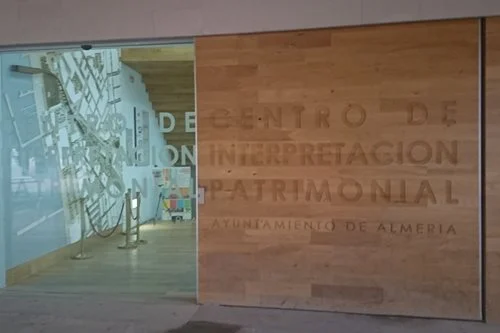
The Almería Heritage Interpretation Centre (CIP of Almería) is located in the former Casa del Policía (Plaza de la Constitución). It comprises an exhibition tour of the city's past and present culture.
It was inaugurated on 23 October 2014 after restoring and rehabilitating the building for its musealisation.
Its permanent collection is divided into three floors. In the reception room, you can see a model of Almería's main buildings. There is also an audiovisual room where a documentary about the history of Almería with interactive elements is screened.
The first floor displays Muslim Almería (10th to 15th centuries), with a model of the Alcazaba. Here, the history of al-Mariyya is traced from its foundation by Abderramán III (955 AD) until the city's handing over to the Catholic Monarchs by El Zagal (1489), passing through the Taifa of Almería instituted by Jairán.
The second floor shows Christian Almería (15th to 18th centuries) and the contemporary period (19th to 20th centuries). Here you can see the transformation of the city after being taken by the Catholic Monarchs. You can also see the clothing worn by the Moors, a reproduction of the Banner of the Conquest and a model of the cathedral.
The contemporary Almería area hosts the exhibition explaining how the city grew after the walls were demolished (1855) and the economic boom thanks to mining. Here you can view a model of the English Cable and learn about the air-raid shelters. The Indaliano Movement is also shown, an artistic movement that arose between 1943 and 1963, led by Jesús Perceval.
Current Almería is exhibited on the third floor with images of the modern city. Here there is a terrace serving as a viewpoint of Almería, from where you can see views of the Plaza de la Concepción, the Alcazaba and Jairán's walls. This terrace has also been used for performances.
In addition to the permanent exhibition rooms, the CIP of Almería has the Jairán Room, dedicated to temporary exhibitions of various artistic kinds.
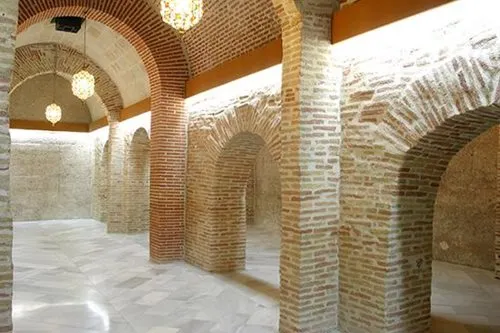
The Arab cisterns of Jairán are named after the governor of the Taifa of Almería in the 11th century, responsible for their construction. They are a civil infrastructure that aimed to solve the city's water supply problem.
The cisterns were supplied by the spring of Zuhaír, located outside the walls. At the time, a ditch of about 6,400 metres was responsible for transporting the water. Currently, a total of three interconnected brick naves are preserved, with an octagonal half-barrel vault, all supported by Roman columns and caliphal arches.
This cistern remained in use until the 19th century, when a new reservoir was built on the current Avenida de Santa Isabel. Today, the so-called Arab cisterns of Jairán are an exhibition and conference space.
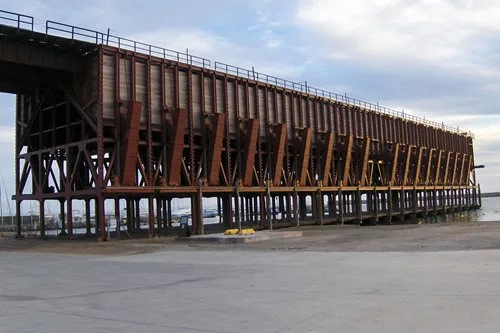
The Cable Inglés is a mineral loading bay in Almería, of the company The Alquife Mines and Railway Company Limited. This company obtained the concession in 1901 and its construction began a year later.
A prime example of 20th-century iron architecture. It is located on the beach of Las Almadrabillas, between the commercial and sports ports, at the mouth of the Almería rambla.
It is an engineering work, conceived as a means of transport, storage and shipment of minerals from the Alquife mines (Granada) via the maritime route. It was designed as a deep-water pier, allowing large tonnage ships to dock and a mineral storage system.
Its construction was made possible by the building of the port and the railway, and it was completed in 1904, connecting the station to the port. Of eclectic style, using new materials under the guidelines of the Gustave Eiffel school.
It consists of two parts: the access that links the railway station with the loading bay, and the jetty itself where trains unloaded directly into the ships' holds.
Its access begins at the railway terminal, with its middle section supported by large semicircular arches on ashlar pillars. These pillars are separated by metallic sections through large iron beams.
This mineral loading bay was declared a Site of Cultural Interest on August 22, 1998.
Today, its protruding part belongs to the Almería Port Authority, delegating powers to the Junta de Andalucía. The remaining part of the building is owned by the Almería City Council.
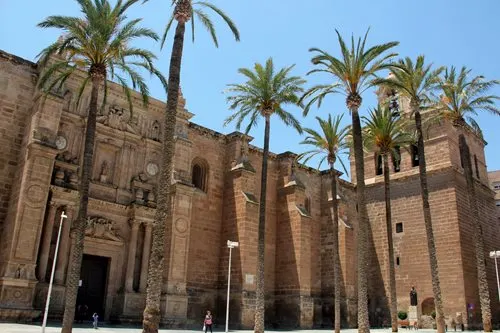
The Cathedral of Our Lady of the Incarnation of Almería is a unique example of a fortress-cathedral from the 16th century.
The Cathedral of Our Lady of the Incarnation is the episcopal see of the diocese of Almería. It is one of the most outstanding artistic and cultural manifestations of Andalusia and Spain, as it is the only fortress-cathedral from the 16th century. It is declared a Site of Cultural Interest and a historical-artistic Monument belonging to the National Artistic Treasure (published in the Madrid Gazette on 4 June 1931).
It was built for both worship and defence against Berber pirate attacks in the city. After an initial construction on the former Great Mosque, it began in 1524 after the earthquake that occurred two years earlier. Its first layout was designed by Diego de Siloé and continued by Juan de Orea.
Its fortress character is evident in its main façade: large buttresses and turrets at the corners. Its entrances are of Renaissance style. Its walls are solid, and the decoration is centred on the main entrance, where the coat of arms of Charles V and that of Fray Diego Fernández Villalán - Founder Bishop of the cathedral - are represented.
The lateral entrance is called "Los Perdones", located on Velázquez Street. It repeats the Renaissance style of the main one, but its decoration is simpler.
Its interior is a hall plan with three naves and four sections. Its structure is of late Gothic style, as are its star-vaulted ceilings. It has two bays on its southern side. One houses the sacristy, ending with a cube adapted for the Chapter Hall. The cloister opens in the other bay.
The Sacristy and the Choir Stalls stand out, both works by Juan de Orea in Renaissance style. The retrochoir and the Cloister, realised at the end of the 18th century in neoclassical style, also stand out.
The cloister was constructed by J. Antonio Munar after the death of Ventura Rodríguez (author of the retrochoir and shrine). It is considered the best in neoclassical style of all the cathedrals in Spain.
The Main Altar was remodelled in the 18th century. It is presided over by the tabernacle or small temple. On its front stand out paintings in the manner of a retable depicting the life of the Virgin and two 16th-century reliefs in the centre: The Annunciation and The Calvary of Christ.
Behind the Main Altar is the ambulatory, through which three chapels can be accessed, which correspond externally to three towers or bastions.
The most notable chapels are in the ambulatory of the Cathedral, specifically behind the Main Altar: that of St. Indalecio, The Christ of Listening, and Our Lady of Mercy.
The bell tower is on the northwest side of the temple. It is a simple and robust square-plan tower, housing a spiral staircase inside. It began to be built in the 16th century and was completed in 1622 by the stonemason Mancio Infante. The bell body maintains the same decorative simplicity and is crowned by a belfry from 1780.