Cookie settings
We use our own and third-party cookies in order to offer our services, display videos, obtain statistics and offer personalized advertising.
For more information, please read our cookies policy.
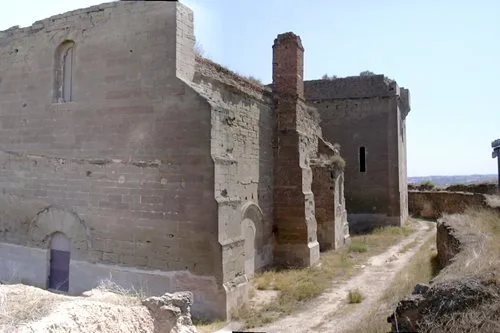
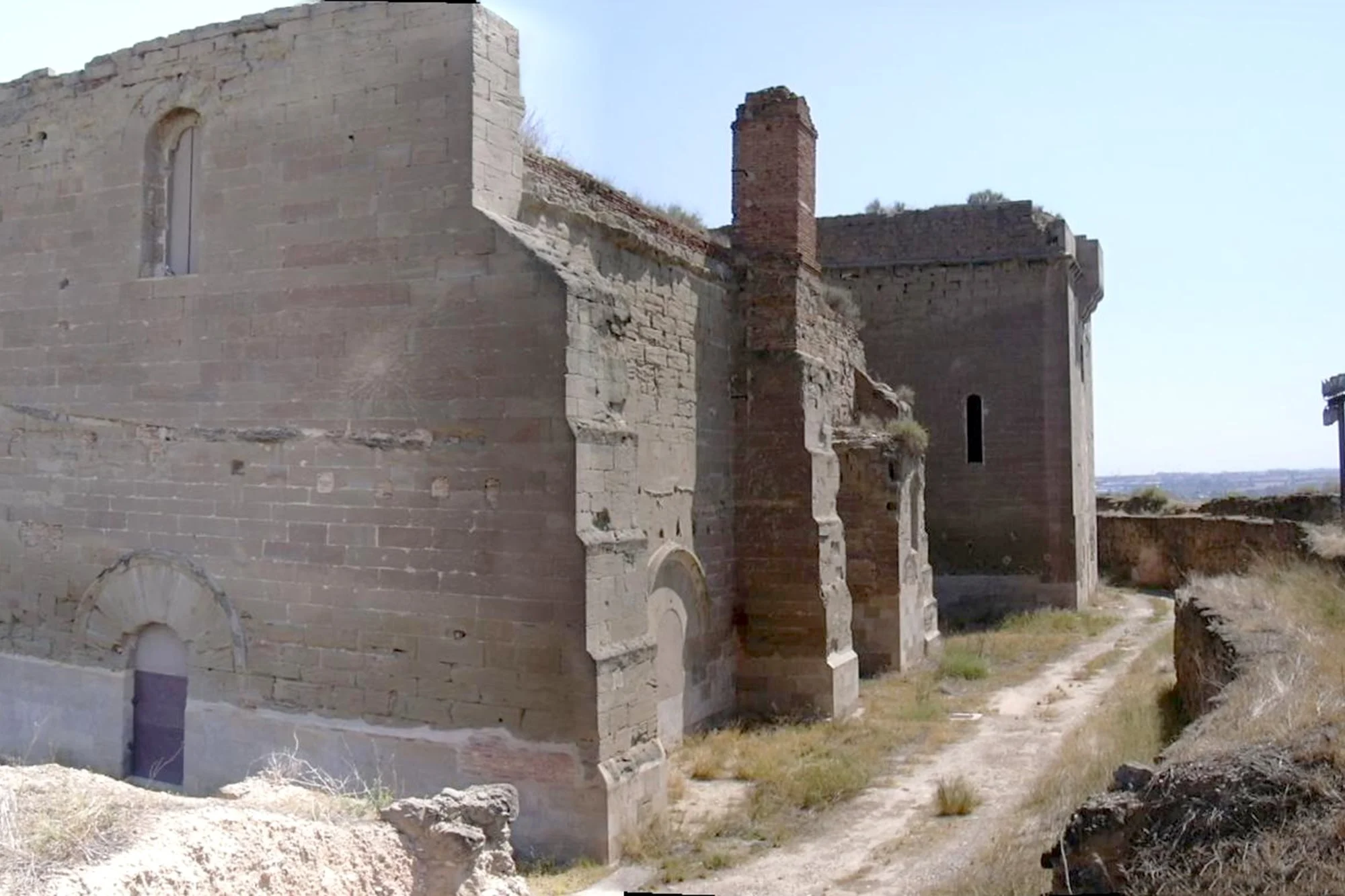
In the second half of the 12th century, the Order of the Knights Templar built a monastery complex on the strategic plateau of Gardeny.
The hillock had already been used before our period as a base for military operations and had been visited by brilliant strategists, such as Julius Caesar himself, who confronted Afranius and Petreius, two supporters of Pompey who had established themselves in Ilerda in 49 B.C.
During the 17th and 18th centuries, the former medieval complex was extended and turned into a new military fort, whose design corresponded to the new defensive needs involved in the introduction of the artillery: walls flanked by bastions and surrounded by vast spaces, moats and retaining walls.
The current image of this monumental complex corresponds to the remains of what was an impressive fortress.
The Castle of Gardeny in Lleida, together with those of Miravet, Monzón, Peñíscola and to the town of Tortosa, is a part of the Domus Templi Templar route.
This journey through the time brings you to discover an important part of the Templar heritage and legacy of the former Crown of Aragon.
Built: XII Century
Author: Anónimo
Style: Gothic, Medieval
Category: Military
Type: Castle
Address and telephone
Opening times
Prices
If you see any mistakes or want to add anything to this information, please contact us.

The Seu Vella old cathedral, also known as “Lleida Castle”, is definitely the city’s most emblematic monument.
This unique cathedral sits on top of the hill overlooking the city and affords magnificent views of Lleida and the surrounding countryside of Segrià county. Construction of the cathedral began in 1203, but the bell tower was not completed until 1431.
The first master builder was Pere de Coma.
According to historians, the cathedral was built on top of a former Muslim mosque. The temple was the first building to be completed and was consecrated for worship in 1278 and dedicated to the Virgin Mary.
It has a Latin cross floor plan with a nave and two aisles. The outstanding features of the interior include the stonework in the naves, which show the influence of the artisans from Tuscany, Toulouse and Provence who worked on the cathedral throughout the 13th century, as well as the remains of Gothic mural paintings.
After the consecration of the temple, work continued into the 14th century, when the cloister was completed and construction work began on the bell tower and lasted until 1431.
The entrance to the Seu Vella is through the Canonja, the name given to the set of buildings that housed the priests and canons who made up the Chapter at the cathedral.
These buildings date from the second half of the 12th century to the 16th century, and include the remains of the old church of Santa Maria l’Antiga, different chapels, the Pia Almoïna (canon’s house), the Chapter room, the archive, and the Decanóa or Vault House.
Besides the current entrance doorway in La Canonja, there are other doorways of great cultural interest, such as the Anunciata doorway (13th century), the “Fillols” doorway (13th-14th centuries), the Sant Berenguer doorway (12th century), and the Apostles’ doorway (14th- 15th centuries), as well as the three doors from the cloister (13th century), which provide a clear example of the style of architectural sculpture known as the Lleida School.
The oldest bells are from the 15th century: They are called Silvestra, which rings on the hours, and Mònica, which rings on the quarter hours. The other five are electric bells from the mid-20th century that have an essentially liturgical function. They are called Bàrbara, Puríssima, Crist, Marieta and Meuca.
This 14th-century rectangular cloister is a unique, open cloister, located on the west side of the cathedral. It has a gallery with five ogival arches and elegant tracery windows that provide breathtaking views of the city and the countryside beyond.
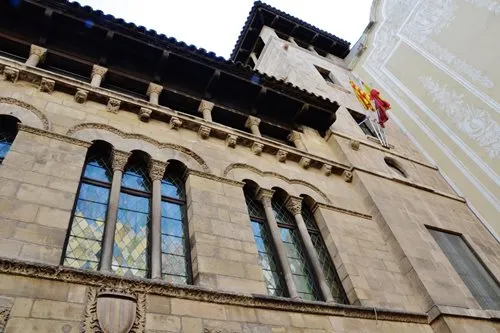
The Paeria Palace, the most representative work of Romanesque civil architecture in Lleida, is also one of the most emblematic monumental constructions in Catalonia.
At first sight, different interventions can be seen. The façade that overlooks the river Segre corresponds to neoclassical style architecture and in 1929, they chose to restore it in a neo-medieval style. The result is a perfect well-balanced building.
Built at the beginning of the 13th century, it is erected on "strata" of history that the technicians from Lleida City Council and the University discovered after consecutive excavations.
In the 14th century - more precisely in 1383 - the Sanaüja family, owners and precursors of the current construction, handed over the building to the city so that it could become the municipal government
headquarter.
Nowadays, La Paeria, known by Lleida inhabitants as the house of the paer en cap (mayor), is home to numerous treasures that reflect the identity of the city.
The word paer comes from the Latin word patiarii, which means man of peace. The nickname was adopted by the mayors of the city after King Jaime I had granted privileges to Lleida's former consuls.
The altarpiece of Virgin of Paers
The 15th-century gothic altarpiece (1451-1454) that decorates the noble room - where civil weddings are celebrated - originally presided over the altar of the Paeria chapel. The central figure of the work is the Virgin flanked by the archangels Gabriel and Michael. The Virgin, surrounded by the four paers, symbolizes the protection of the government of the city.
La Morra
In 1486, La Paeria basements were reformed to create a prison with separated rooms for men and women. The room destined for guilty people condemned to death is known as La Morra. The ashlars of the prison walls are covered in numerous pieces of graffiti that date from the 16th and the 17th centuries. This graffiti represents the crucifixion and codes as a sign of religious devotion and lack of liberty.
The City Archives and the "Carta Pobla"
There is a gorgeous baroque wooden wardrobe that is known as the Wardrobe of Privileges. Another treasure of the archive is the Llibre dels usatges, which dates back to the 14th century. However, the most important historical document that is catalogued in the city archives is, without a doubt, the Carta Pobla, the first constitution of the inhabitants of the lands of Lleida, dated 1150.
Book your hotel