Cookie settings
We use our own and third-party cookies in order to offer our services, display videos, obtain statistics and offer personalized advertising.
For more information, please read our cookies policy.
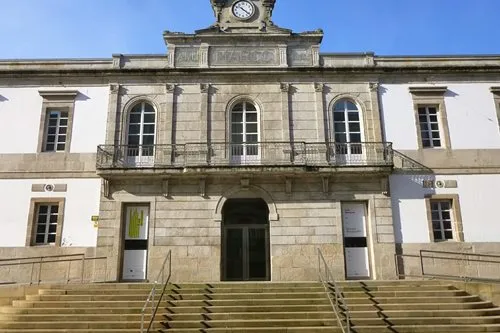
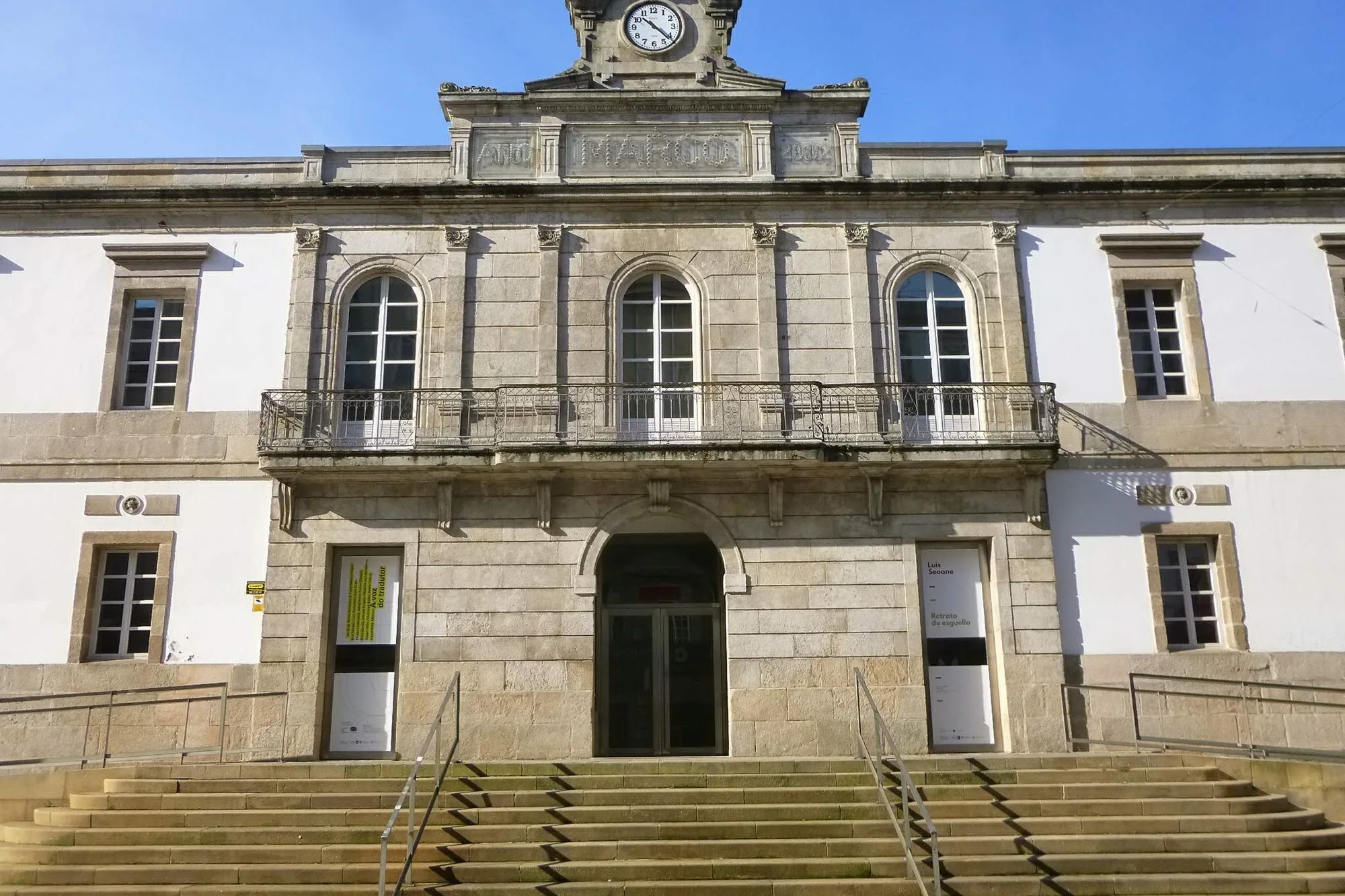
The building that houses the Museum of Contemporary Art is eclectic in style and was originally designed by the architect José Mª Ortiz in 1861 as the old Courthouse and prison.
This centre, which is quite recent to the city, was established in order to promote contemporary cultural initiatives. It is characterised by its dynamic programming and a spirit of participation.
The main activity of the museum centres on temporary exhibitions of recent artistic work in a variety of forms (painting, sculpture, architecture, video, design and film).
There are three priority areas – multidisciplinary exhibitions, Spanish and international art and culture and historical research and reviews to promote past Galician artists and artistic movements as well as more recent work. Apart from the main building, exhibitions of new Galician artists are held in the Annex Building.
The MARCO is the most innovative exhibition area in the city and organizes educational programs for schoolchildren, students and families and courses for artists and teachers. Facilities also include a library and a collection of periodicals and audiovisual material.
The unusual layout of the museum with the exhibition spaces surrounding a central point makes the MARCO particularly suitable for collective exhibitions. The museum regularly holds its own thematic exhibitions, organized around a theme or geographical area, in consonance with contemporary artistic movements.
It thus represents the wide multicultural artistic panorama of the moment and contributes to the circulation of exhibitions among other art centres.
Built: XIX-XX Centuries.
Author: Salvador Fraga, Fco. García-Quijada, M. Portolés
Style: Contemporary
Category: Museum
Type: Museum
Address and telephone
Opening times
Prices
Free entry.
If you see any mistakes or want to add anything to this information, please contact us.
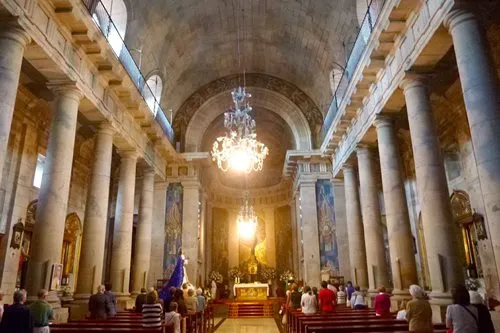
The collegiate church or Co-cathedral of Santa María de Vigo is one of the finest examples of neoclassical architecture in Galicia.
Together with the cathedral of Tuy, it serves as the episcopal seat of the diocese of Tuy-Vigo. It was designated as a Basilica by the Vatican in 2020.
The building we see today replaces the old collegiate church, which was damaged in 1809 by the explosion of a powder magazine at the castle of Castro. The previous church was built in the 12th century with a cemetery. It was dedicated to Santa María.
On this temple, another was built in a Gothic style (late 14th century – 1403), maintaining some chapels and transepts from the previous one. It became a collegiate church in 1497. In 1585, the pirate Francis Drake sacked the church, and it was considerably renovated in 1680.
The construction of the current temple was carried out by Melchor de Prado and Mariño, an academician of the Royal Academy of San Fernando. Its predominant style is neoclassical. It has a basilica ground plan with three naves, the central one being higher than the lateral ones.
Its façade presents a very simple classical image. Both the walls and the play of volumes are quite smooth and sober. Its central portal is framed with two thick pilasters, slightly advanced, under a triangular pediment. The entrance of this portal is lintelled, above which there is a cartouche with a rectangular frame. Above this cartouche rises a semicircular arch with a small oculus in the centre. In contrast to the sobriety of the façade, the baroque bell towers are located on either side.
Both the central nave and the lateral ones are covered with barrel vaults. The naves are separated by robust Doric columns on which rests the entablature with triglyphs and metopes. The result is an interior with marked and sober classicism. Two sacristies flank the main altar, as well as a series of chapels in the lateral naves.