Cookie settings
We use our own and third-party cookies in order to offer our services, display videos, obtain statistics and offer personalized advertising.
For more information, please read our cookies policy.
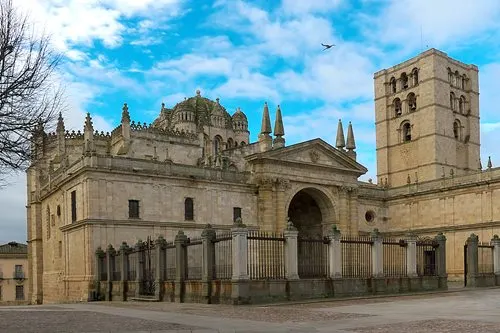
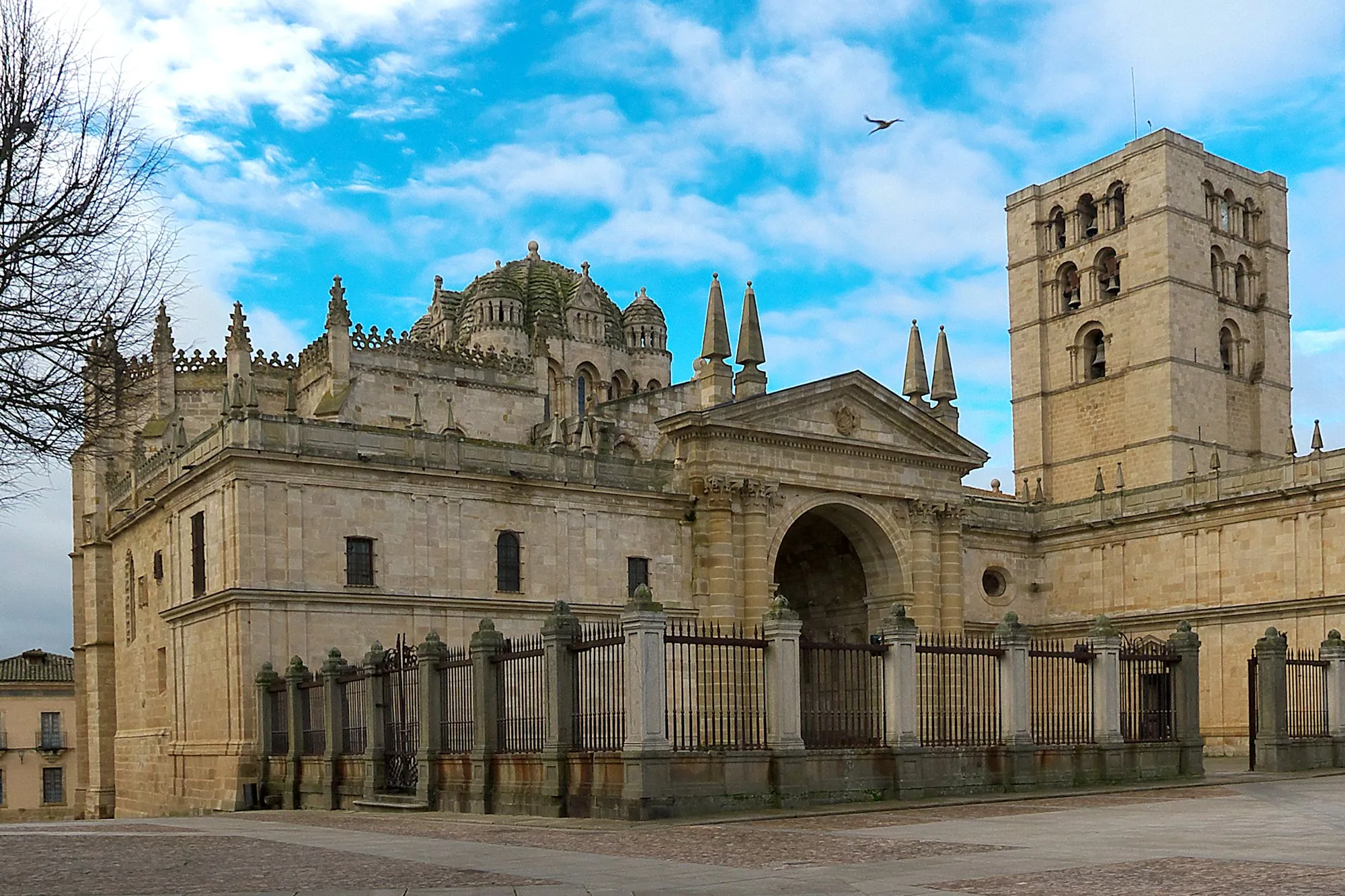
This cathedral was built in the higher part of the town, on the ruins of an older one. It has Romanesque and Byzantine influences, and its construction started in 1121, during Alfonso VII´ s reign. One of its main characteristics is its sobriety.
This temple has a Latin cross plan, with pillars that support the vaults and with adjacent columns of plain capitals. The roof of the central nave has ogives and the side naves are covered by Romanesque cross vaults. The main atrium is Neoclassic and was added in the XVIII Century.
The Puerta del Obispo (Door of the bishop) consists of a series of round and lobed arches, with some Romanesque relieves. The bell tower has a wide floor and was built later.
We should highlight the choir´ s carving that comes from the XVI Century and was made by a sculptors´ team directed by Mateo Alemán.
The cloister is situated inside the cathedral. The collection of sacred art that we can see is not very intense, but with high quality. There is also exhibited tapestry from the XV and XVI Centuries, with historic and religious themes. Among all these works of art, we should highlight the “Virgen con el Niño” by Bartolomé Ordoñez, that has been sculpted in marble from Carrara, from the XVI Century.
Built: XII Century (1151- 1174)
Author: Anónimo
Style: Romanesque
Category: Religious
Type: Cathedral
Address and telephone
Opening times
Prices
If you see any mistakes or want to add anything to this information, please contact us.
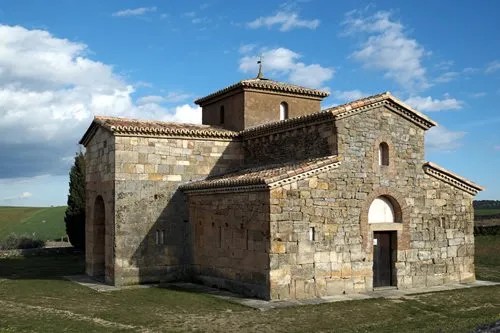
This Visigothic church is located in the town of Campillo, 12 kilometres from the capital city. It is one of the first Christian temples. It originally had its location on the bank of the River Esla, but, when the dam of Ricobayo was built, the building could be submersed into its water, so that was why Manuel Gómes Moreno decided to move it, stone by stone, to its current location and build it by the architect Alejandro Ferrant.
Its first design responded to the Greek cross plan, and later two side naves were built that confer its final aspect between the Basilical structure and the cruciform floor. There are three chapels, one in the presbytery that forms a rectangular apse and the other two chapels on the ends of the transept. The central nave is taller and wider than the side ones and is separated from them by arches that lean on pillars. It is covered by half barrel vaults. The arches are horseshoe arches in Visigothic style.
Inside, we should highlight the Romanesque bass- relieves and the sculptures of the capitals with varied figures of vegetables and animals. Moreover, we can find a sundial which is incomplete, but is part of one of the jewels that we can find in this church.