Cookie settings
We use our own and third-party cookies in order to offer our services, display videos, obtain statistics and offer personalized advertising.
For more information, please read our cookies policy.
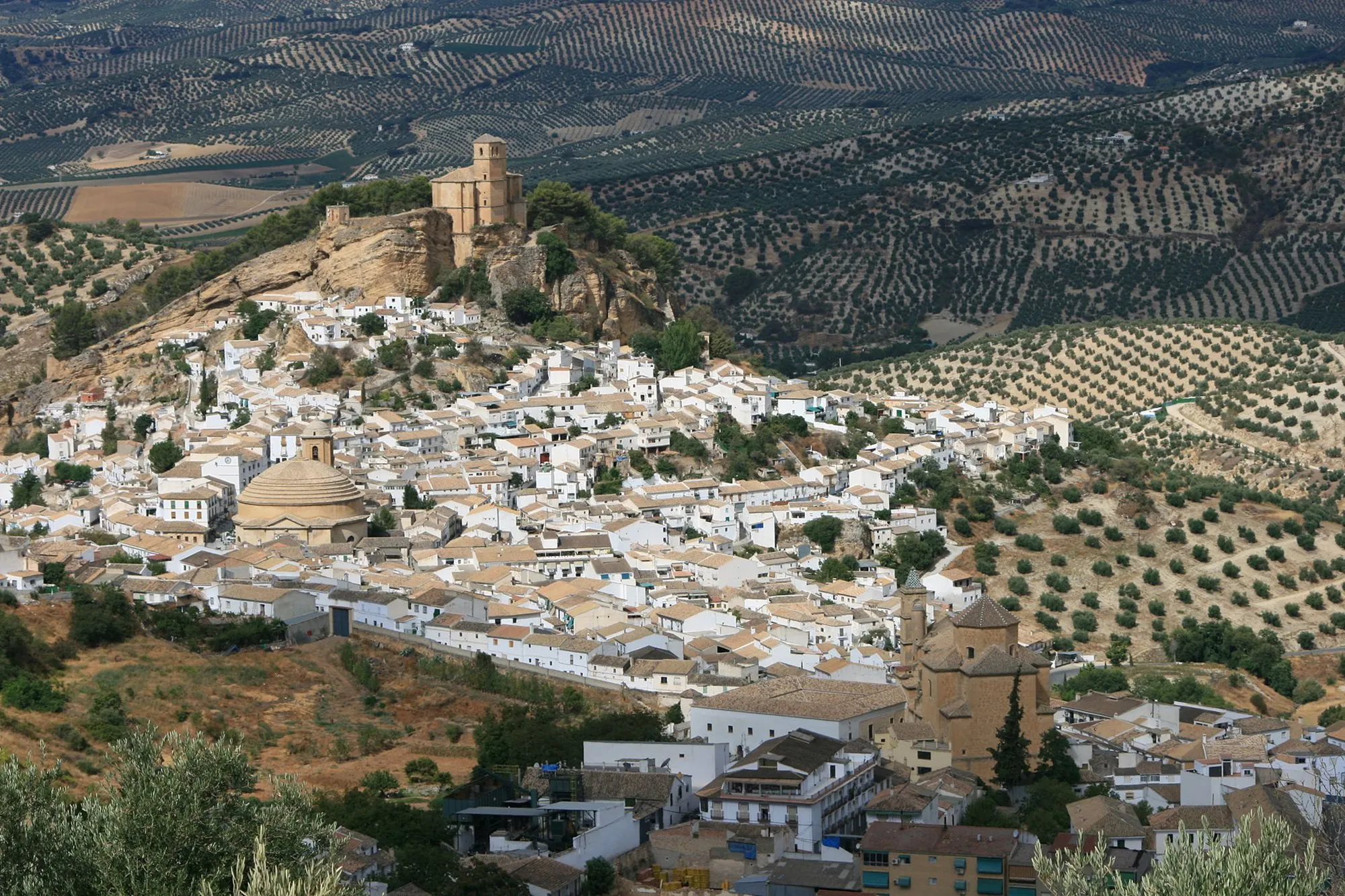
Im nördlichen Teil der Comarca Loja gelegen, ist Montefrío eine der ikonischsten Ortschaften Granadas. 1982 wurde es zum nationalen Kulturgut (Conjunto Histórico-Artístico Nacional) erklärt und 2015 von National Geographic als eines der zehn Dörfer mit den besten Ausblicken der Welt anerkannt.
Die Gemeinde hat ihren Ursprung in der prähistorischen Zeit, mit Funden von megalithischen Gräbern bis hin zu iberisch-römischen und mittelalterlichen Überresten. Das Gebiet der Peña de los Gitanos ist das herausragendste, wo sich alle maßgeblichen kulturellen und archäologischen Gebiete befinden. Die engen, verwinkelten Gassen, die weiß getünchten Häuser und eine städtische Architektur, die an die arabische Vergangenheit erinnert, machen es zu einem wirklich einzigartigen Ort.
In Bezug auf das monumentale Ensemble ist es bekannt für seine Burg und die sogenannte Iglesia de la Villa. In beiden Fällen sind Überreste der andalusischen Vergangenheit und der kastilischen Eroberung und anschließenden Wiederbesiedlung zu sehen.