We use our own and third-party cookies in order to offer our services, display videos, obtain statistics and offer personalized advertising. You can accept all cookies by clicking "Accept". If you want to refuse all or some of them, click "Cookie settings". For more information, please read our cookies policy.

Cookie settings
×

Cookie settings

We use our own and third-party cookies in order to offer our services, display videos, obtain statistics and offer personalized advertising.

Technical Cookies
These cookies allow the user to navigate the website and use the different options and services offered. InSpain.org uses its own and third-party technical cookies. Our website needs some technical cookies to work properly. These cookies cannot be disabled.
Analytical cookies
These cookies allow the tracking and the analysis of the visitors’ behaviors from the web site. The gathered information is used for measuring the website activity and to develop statistics to further improve the website. InSpain.org uses third-party analytical cookies.
Behavioural advertising cookies
These cookies collect information about your browsing habits in order to make advertising relevant to you and your interests. InSpain.org uses its own and third-party behavioural advertising cookies.

For more information, please read our cookies policy.

Startseite / Provinzen Spaniens / Sevilla / Carmona / Sehenswürdigkeiten in Carmona / Die Kirche Santa María /

Die Kirche Santa María

Geschichte

Im Jahr 1424 wurde die alte almohadische Hauptmoschee abgerissen, um die neue Kirche zu erbauen. Die erste Bauphase endete 1518, eine Zeit, in der Meister wie Rodrigo Gibaja sowie Baumeister der Kathedrale von Sevilla wie Alonso Rodríguez und Antón Gallego tätig waren.
 
Danach griff Juan de Matienzo ein und begann im Jahr 1525 mit der zweiten Phase. Hier spielte Diego de Riaño eine wichtige Rolle, indem er die zentrale Vierungskuppel überwölbte. Juan de Escalona leitete die Bauarbeiten 1542 und entwarf die Kapelle der Virgen de Gracia.

Im Jahr 1566 wurde Hernán Ruiz gebeten, den bisherigen Bau aufgrund wirtschaftlicher und arbeitsbedingter Probleme zu bewerten. Mit seinem Besuch wurde das Bauwerk vorangetrieben und 1578 von Pedro Díaz de Palacios vollendet. Während dieser Zeit wurde wohl das Chorgestühl im Stil des Manierismus errichtet.

Im 17. und 18. Jahrhundert wurden mehrere Umbauten durchgeführt. Die letzten erfolgten im 19. Jahrhundert mit dem Bau der Hauptfassade der Kirche, der beiden Kapellenfassaden sowie deren Fenstern.

Organisieren Sie Ihren Besuch

Adresse und telefon

  • Pl. Marqués de las Torres, s/n, 41410 Carmona (Sevilla)
  • +34 954 19 14 82

Öffnungszeiten

  • Montag bis Freitag, von 10:00 bis 13:30 Uhr und von 17:00 bis 19:00 Uhr. 
  • Samstag, von 10:00 bis 13:30 Uhr und von 18:00 bis 19:00 Uhr.
  • Sonntag: von 10:00 bis11:00 Uhr und von 18:00 bis 19:00 Uhr.


Wenn Sie einen Fehler entdecken oder diese Informationen ergänzen möchten, wenden Sie sich an uns.
Wo

Sehenswürdigkeiten in Carmona

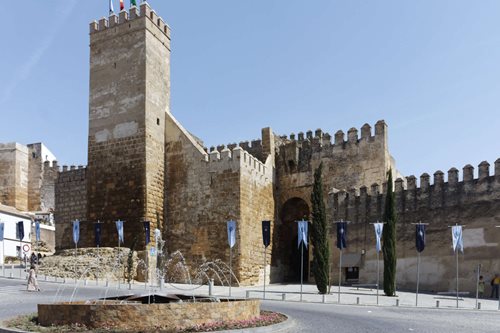
Der Alcázar de la Puerta de Sevilla, auch bekannt als Alcázar de Abajo in Carmona, verdankt seinen Namen der Puerta de Sevilla. Es handelt sich um eine Verteidigungsbastion, die sich im westlichen Teil der Stadt befindet.

Buchen Sie Ihr Hotel

Booking.com