Cookie settings
We use our own and third-party cookies in order to offer our services, display videos, obtain statistics and offer personalized advertising.
For more information, please read our cookies policy.
Santiago de Compostela is the capital of Galicia. Its historic centre is a World Heritage Site. Originally surrounded by a wall, the only remaining part is the Arco de Mazarelos, through which pilgrims on the Vía de la Plata entered Santiago.
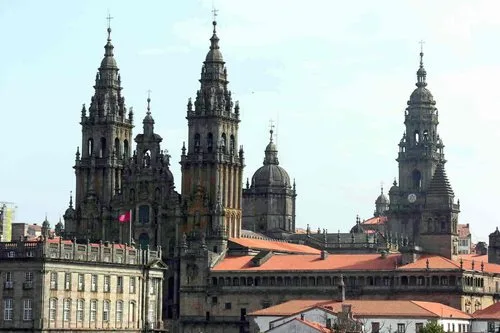
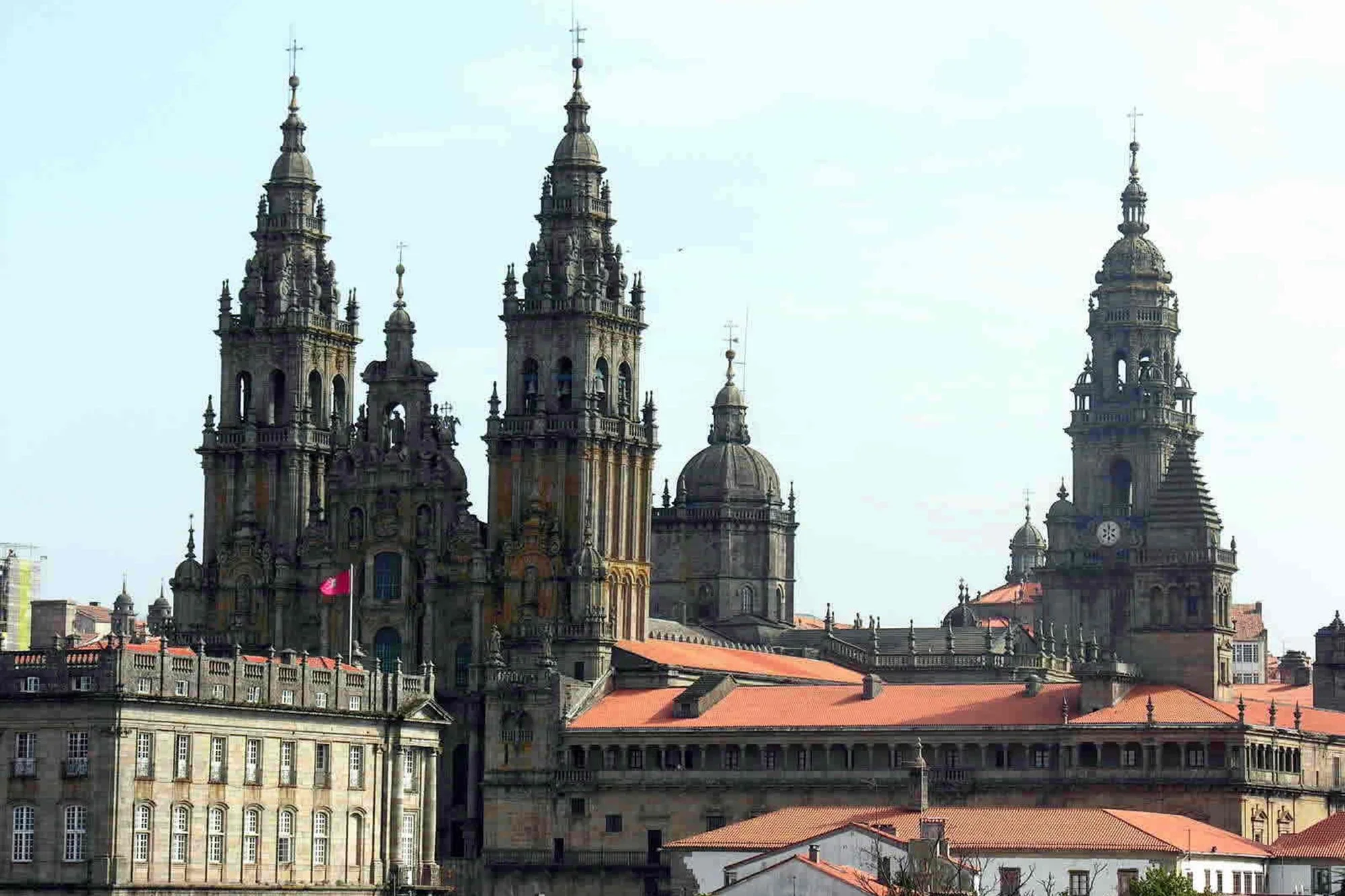
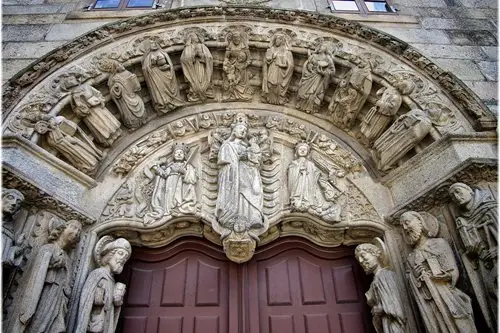
The Plaza del Obradoiro is possibly the most famous place in Santiago. In it is the kilometre 0 of the Way and also the baroque façade of the Cathedral of Santiago, a temple dedicated to the apostle James the Greater. In this square, you will also find the Pazo de Rajoy, a neoclassical building that is the town hall headquarters, and the Pazo de Gelmírez, a civil Romanesque building of great historical and artistic value, through which we can access the cathedral's rooftops and learn, for example, the story of Master Mateo.
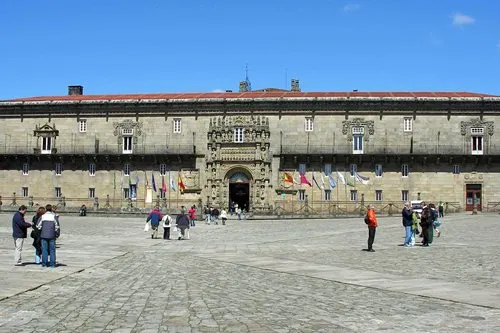
Within the same radius, there are places related to pilgrimage and the Way such as the Benedictine Monastery of San Martín Pinario, the Hospital of the Catholic Monarchs or the Monastery of San Pelayo, located in the same square as the Puerta del Perdón of the cathedral.
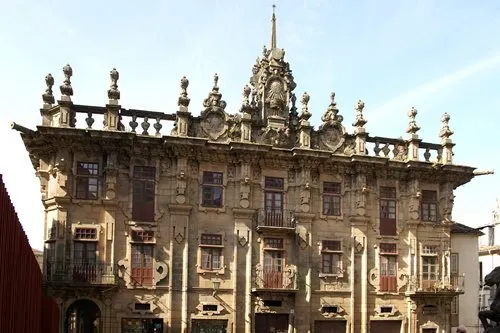
In the Plaza de la Inmaculada is the Azabachería façade, so named for the past presence of workshops dedicated to jet work. In the Plaza de Platerías stands the Casa del Cabildo, which houses the Pilgrimage Museum, and the House of the Dean, an 18th-century palace whose façade is in the Baroque style of Compostela.
The University of Santiago has buildings in the College of San Jerónimo and in the College of Fonseca, the latter a 16th-century building that currently houses the university's library.
On the banks of the Sar River is the collegiate church of Santa María la Real de Sar. It is a Catholic temple built in the 12th century and whose cloister capitals were the work of Master Mateo.
Santiago de Compostela boasts a wide range of museums of different types. The Museum of the Galician People, located in the convent of Santo Domingo de Bonaval, was created to protect the legacy and traditions of the Galician people. The Natural History Museum, with great educational content, and the Sotelo Blanco Ethnographic Museum, which offer plenty of information about the inland areas of the Galicia Region, are also of great interest. Gaiás, City of Culture, is a building designed by architect Peter Eisenman that hosts a series of exhibitions, workshops, conferences, etc.
The Santiago Market is one of the perfect places to enjoy Galician cuisine, as it is possible to buy seafood and have it cooked right in the market. The Tarta de Santiago, made with almonds, is another Galician delicacy.
The Feast of Saint James is celebrated in summer, during the second half of July, to commemorate the day of the city's patron saint. During these days, it is possible to enjoy concerts and various cultural events.
Book your hotel
Things to do
Currently, we do not have any companies with activities in Santiago de Compostela.
Do you have a company that offers guided tours, events, shows, active tourism and outdoor activities or other leisure and tourism activities in Santiago de Compostela? Contact us and we'll explain how to include these services for free.