Cookie settings
We use our own and third-party cookies in order to offer our services, display videos, obtain statistics and offer personalized advertising.
For more information, please read our cookies policy.
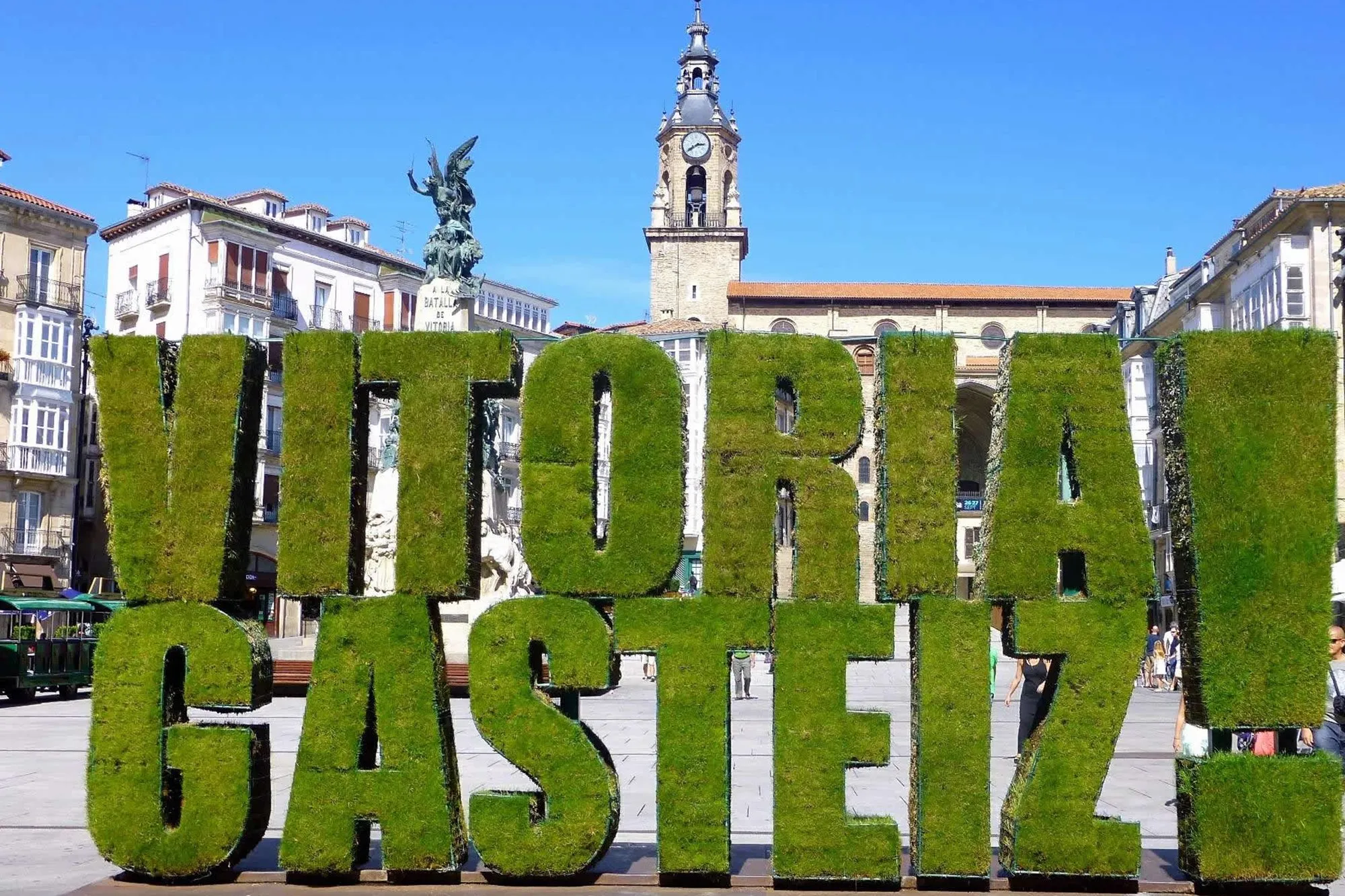
Vitoria is a city founded in the 12th century by King Sancho VI of Navarre. Its creation was strategic in nature because, being at a crossroads, it was an obligatory passage towards Europe and the border of Navarre.
From this medieval period, the city has a beautiful historic quarter where the Plaza de la Virgen Blanca is located, in the centre of which stands a monument in memory of the Battle of Vitoria. In this same spot is the Balconada de San Miguel, an emblematic place of the capital from where Celedón descends during the city's August festivities. Another of the squares in the old town is Plaza de España, a place that has had different names throughout history and where we can visit the Vitoria town hall, in neoclassical style.
The Plaza del Matxete has its origins in an ancient tradition where the general attorney swore to fulfil the agreements on a machete that was located in the square. At the same place, we can visit the Church of San Vicente and the Villa Suso Palace.
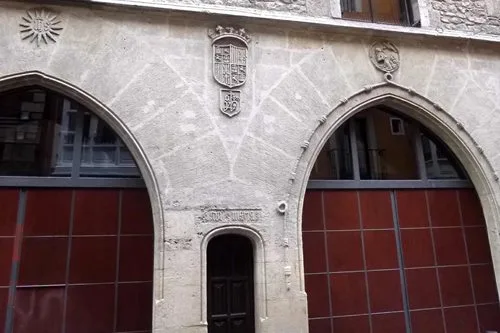
The Gothic Cathedral of Santa María is also within the old quarter area, and traditional streets like Correría or Herrería are located around it. The Escoriaza-Esquivel Palace is a 16th-century building and also one of the city's most emblematic. On the Cuchillería Street, you can visit the Casa del Cordón, a beautiful example of civil Gothic architecture, whose interior boasts a highly ornate star-shaped vault.
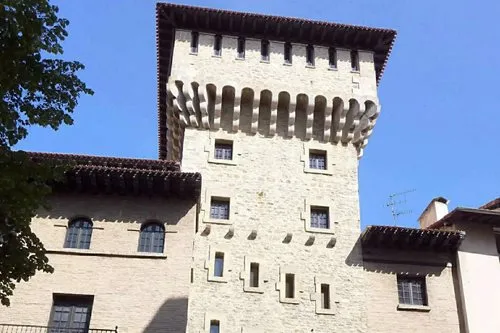
Also in the old quarter is the Torre de Doña Otxanda, a 15th-century house refurbished in the 16th century by a Vitorian couple who named it after their daughter. In the 1970s, it was restored again, and that is the aspect it presents today, housing inside the Museum of Natural Sciences.
In the 19th century, Vitoria found itself in the need to expand beyond its walls. This is when the Ensanche is projected, a new district in typically 19th-century romantic lines. To connect one part with the other, Los Arquillos was built in the 18th century. In the Ensanche lies Plaza de los Fueros, by Chillida and Ganchegui. The Cathedral of María Inmaculada, erected in the 20th century, is also in this new district and was designed following neo-Gothic principles. The Florida Park, of French influence, is one of the city's most beautiful.
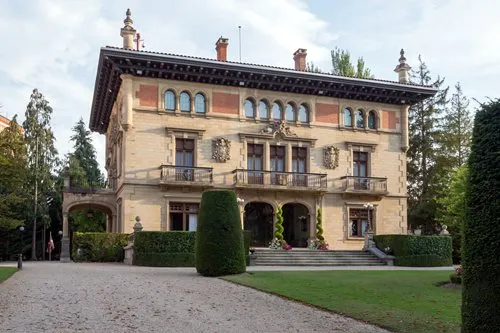
Ajuria-Enea is a 20th-century neo-Basque style palace that serves as the official residence of the Lehendakari. Other places of great interest in Vitoria are the Basilica of San Prudencio and the Romanesque sanctuary of Estíbaliz in the outskirts.
Vitoria offers a wide range of leisure and culture. Museums like the Fournier of Playing Cards, which allows us to learn about the history of playing cards, the Lanterns Museum, or the Fine Arts Museum are some of the most interesting in the city.
Each summer, Vitoria hosts its Jazz Festival, attracting some of the best musicians and voices from the international jazz scene. Also, on August 4, following the "chupinazo" and the descent of Celedón on an umbrella, the Fiestas de la Virgen Blanca begin, lasting five days.

Book your hotel
Things to do
Currently, we do not have any companies with activities in Vitoria - Gasteiz.
Do you have a company that offers guided tours, events, shows, active tourism and outdoor activities or other leisure and tourism activities in Vitoria - Gasteiz? Contact us and we'll explain how to include these services for free.