Cookie settings
We use our own and third-party cookies in order to offer our services, display videos, obtain statistics and offer personalized advertising.
For more information, please read our cookies policy.
The Parish Church of Our Lady of the Annunciation was declared a National Historic-Artistic Monument in 1983. It predominantly features a Mudejar style, an architectural tradition typical of the era in the area.
It is located between Real Street to the South, Molinillo to the East, and Don Juan de Austria to the West. Its layout is a Latin cross with three naves. It was likely constructed between the late 16th century and early 17th century.
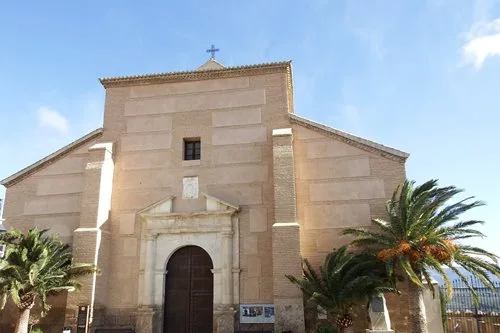
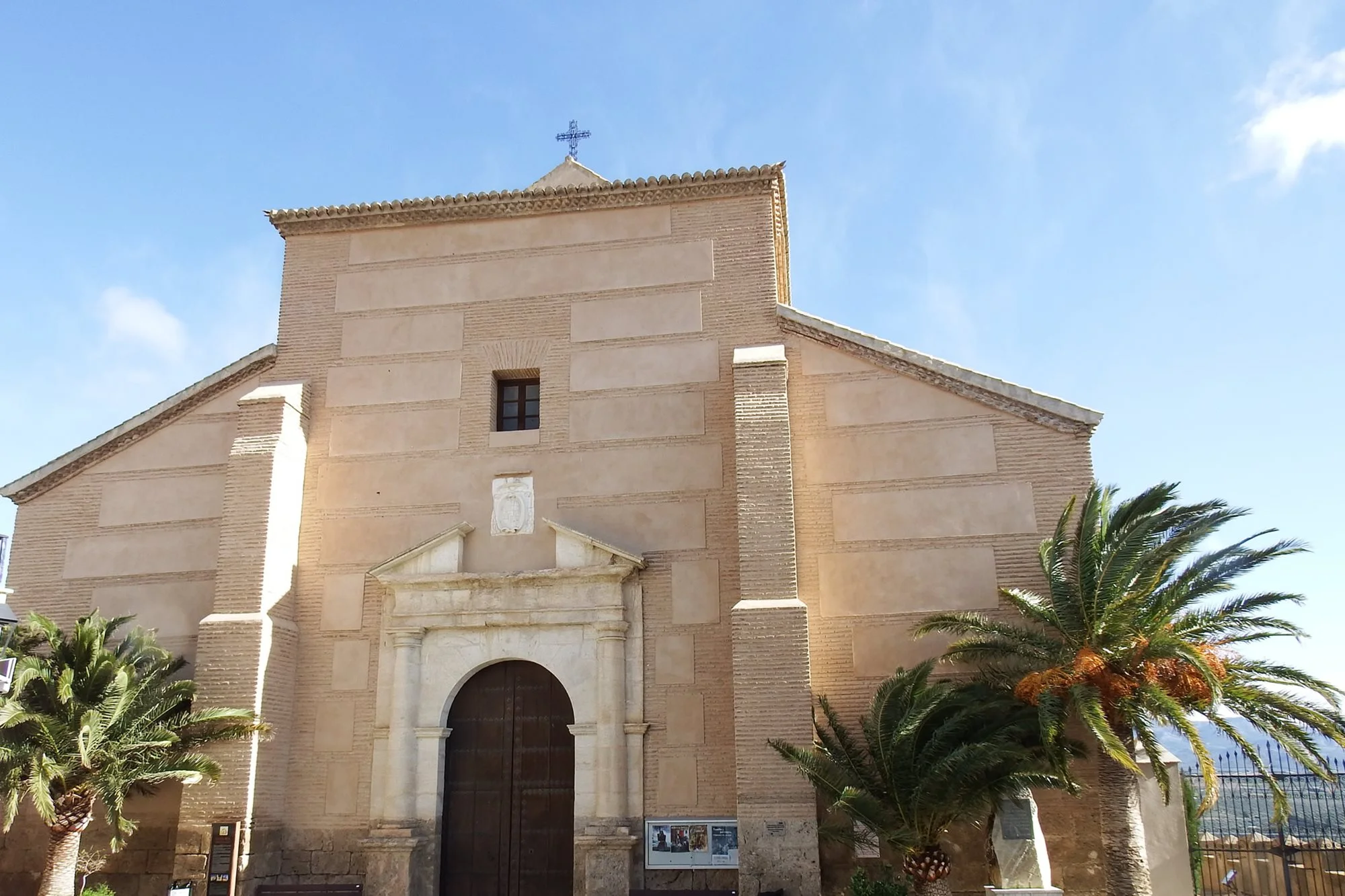
Externally, it presents a brick structure with masonry panels. The prism of the tower stands out, elevated on the left side of the head of the church.
Its portals are noteworthy, with identical design and sober classicism of the early Baroque: made of ashlar, built with limestone from the Chanco quarries and semi-circular archway, framed by Tuscan columns on high plinths. The impost line extends behind these columns. Above the entablature is a pediment, with the main portal being crowned by the coat of arms of Bishop Portocarrero and the side (now blocked) with the coat of arms of the Marquis of Villena and Duke of Escalona, who were closely linked to the construction of this temple.
The interior of the church is clear, with slender pillars supporting and separating the naves. Its Main Chapel is distinct. The arches supported on the pillars are transverse arches. The difference in height was used to create a body of lights, with small semi-circular arched windows.
The central nave preserves a magnificent Mudejar framework of lime border decorated with eight-pointed star and square knot motifs.
The Main Chapel is rectangular in layout and is covered with a groin vault profusely decorated with elaborate geometric tracery. There is a Baptismal Chapel adjoined to the gable wall, and it is open by semi-circular arches on two of its sides. This chapel's roof is vaulted and has abundant stucco decoration.
After suffering damage during the Spanish Civil War, the church began restoration in the early 1950s. The walls were covered with a paint simulating ashlar pattern, grotesques, etc. The heightening of the tower also belongs to this era, adding two additional levels.
Built: 16th - 17th C.
Style: Mudéjar
Category: Religious
Type: Church
Address and telephone
Opening times
During worship hours.
If you see any mistakes or want to add anything to this information, please contact us.