Cookie settings
We use our own and third-party cookies in order to offer our services, display videos, obtain statistics and offer personalized advertising.
For more information, please read our cookies policy.
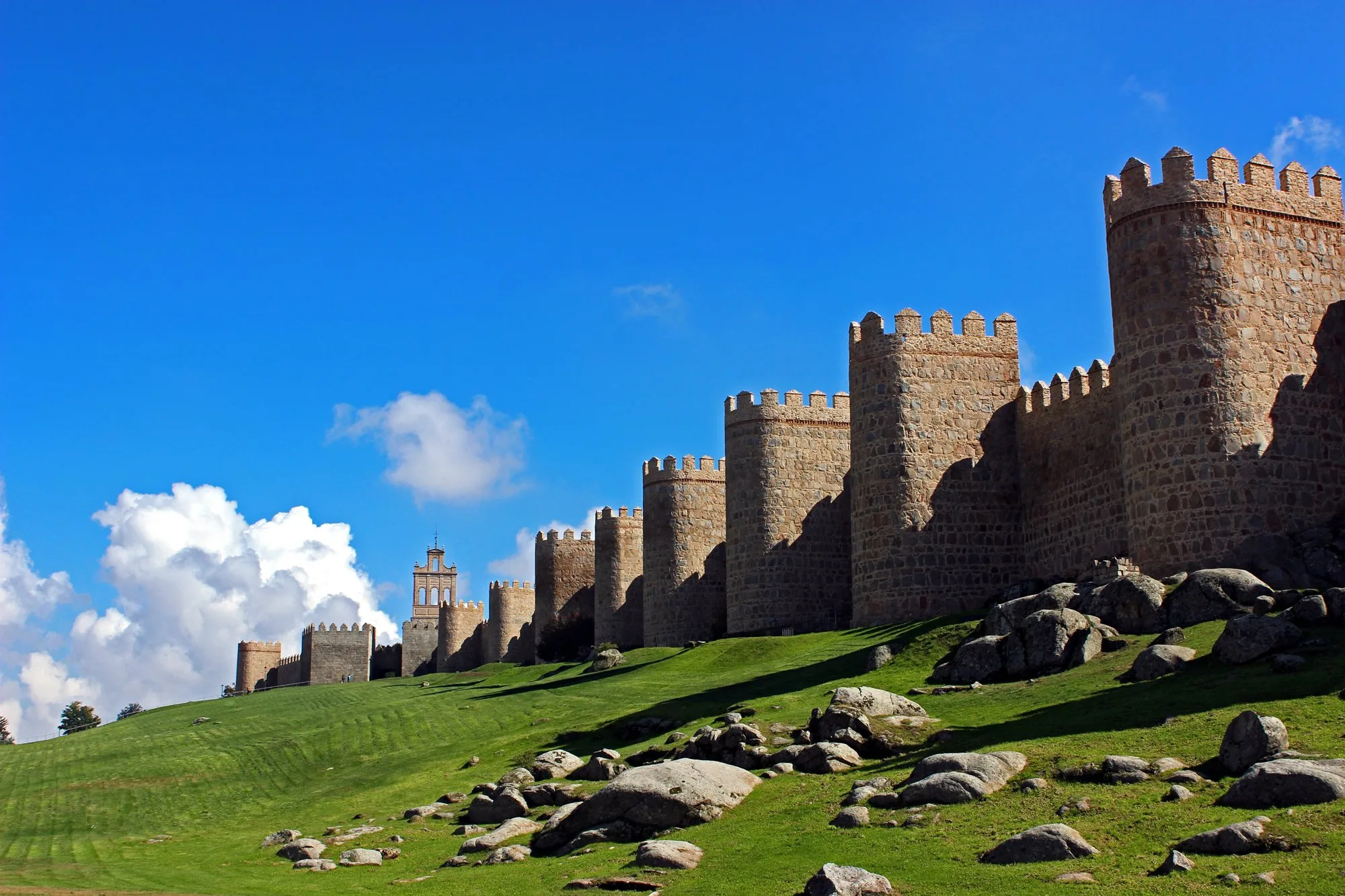
Ávila originates from 'Obilia', one of the fortified settlements of its first inhabitants: the Arevaci and the Vettones. Its wall is famous for being one of the best preserved in the world.
Also noteworthy in its capital is the Cathedral of Christ the Saviour, a transitional Romanesque style; the Episcopal Palace, an excellently preserved Romanesque civil building; the Polentinos Palace, also civil architecture and currently housing a museum; and very important spaces in the life of Saint Teresa of Ávila such as the Monastery of the Incarnation and the convent and museum of the saint from Ávila, in addition to a mystical interpretation centre of her poetry.
On the other hand, the Royal Monastery of Saint Thomas is another attraction of the city. It dates back to the 15th century, is Gothic in style and its design is closely linked to the Catholic Monarchs and the inquisitor Torquemada.
The Los Cuatro Postes Viewpoint is one of the most special places in the capital of Ávila. It is a humilladero from which one can see a beautiful panorama of the walled city.
In the province, Madrigal de las Altas Torres and Arévalo are two municipalities of Ávila with a long historical trajectory, as both were the birthplace and residence of Isabel the Catholic and her family. In Madrigal, the defensive wall of Mudejar style stands out; and in Arévalo the Churches of Santa María la Mayor and San Martín and the castle.
The natural reserve of Sierra de Gredos is one of the most important natural enclaves in the province of Ávila. It houses the Almanzor Peak, which is the highest mountain in the range; and the Galayos, granite needles of great height. Its formation, fauna, and flora make the Sierra de Gredos a must-visit natural space.
Ávila is a Spanish city located in the heart of the Amblés valley, in Castile and León. It is situated next to the Adaja river and stands out for being the provincial capital with the highest altitude in Spain.

Book your hotel