Cookie settings
We use our own and third-party cookies in order to offer our services, display videos, obtain statistics and offer personalized advertising.
For more information, please read our cookies policy.
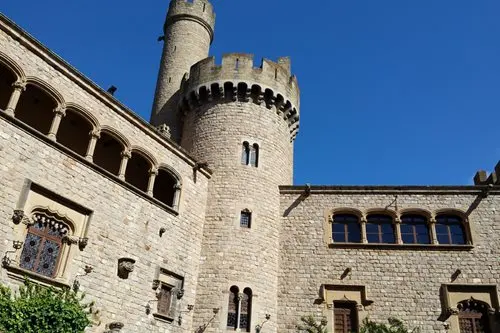
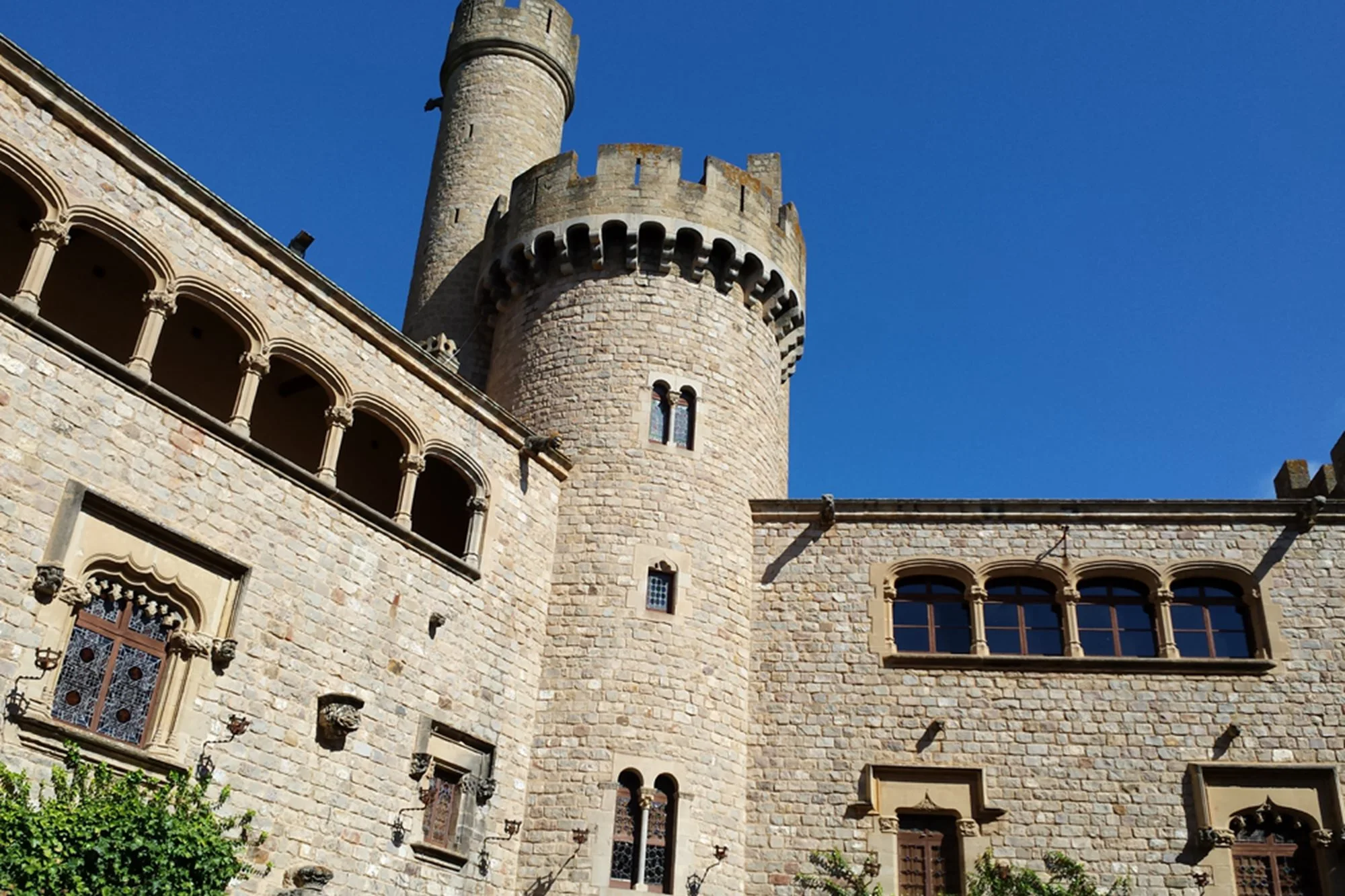
The earliest written records preserved about the owners of the Castle of Santa Florentina, feature Guadamir de Canet (1024), Gilabert de Canet (1041) and Arnaldo de Canet (1168). This attests to the existence of the first dynasty of the Canets. The 11th century is also the period when the Domus of Canet was established as the first core of farmhouses built on the slopes of the valley, under the dedication of San Pedro de Romaguera (studies confirm its location near the Domus).
In the 13th century, the importance of the Domus of Canet was consolidated. A small population centre formed around the Domus, and the Canet family still remained as owners, with Ferrer de Canet -knight and lord of the Canet house-. In 1251, Ferrer de Canet made a will in favour of his daughter Bartomea, who was married to Bernat de Villalba. They later became the parents of the great Ferrer de Canet, who led the expansion and presence of the Domus.
Great Ferrer de Canet was the advisor to Alfonso the Benign and ambassador to the Pope in 1335. Upon the death of Alfonso, he continued to serve the Crown with Peter IV the Ceremonious. He was a counsellor, steward, and the King's representative to the Pope. Thus, for the Domus, it was a period of splendour until 1346, which also saw significant improvements to the house, with the construction of the towers.
In 1347, Great Ferrer de Canet was succeeded by Arnau de Canet, who married the Marquesa de Besora and incorporated the possessions of the lordships of Besara and Montesquieu. In one of the towers, he requested ecclesiastical authorisation to build a chapel in honour of Saint Mary and the Eleven Thousand Virgins.
Already into the 14th century, in 1412, Gilabert de Canet -son of Arnau-, made a will, passing the inheritance to his daughter Antonia de Canet, as he had no male heirs. Antonia married Guillermo de Peguera, and expanded their lands towards the Peguera lineage.
A fire in 1430, caused by the peasant revolt of the "remensas" -a ransom payment that peasants had to give their lord to leave the land-, necessitated the recovery of the Domus.
In the 16th century, a change in ownership of the Domus occurred. Juan de Peguera ceded its rights to the Spano family. This new lineage takes us to the origins of the Montaners at the end of the century: the marriage of Ana Spano and Felipe Dimas de Montaner. Felipe was a lawyer, adviser, and an honoured citizen of Barcelona, and took charge of the administration of the Canet house.
In the 17th century, the Montaner Orlau and Montaner Bosch families gained importance and represented the significance of the Canet "Domus" house, with the incorporation of activities such as navigation and overseas trade.
The following century saw the beginning of a direct succession line from businessman Antonio de Montaner y Bosch, who married Josefa Esteva. Antonio was the architect of the current Castle of Santa Florentina.
His son Ramón Montaner Esteva, married Teresa Vila Misser, and they had a son, Ramón Montaner i Vila; a businessman in the publishing sector, who founded the Montaner y Simón publishing house in the 19th century with Francisco Simón -today the headquarters of the Antoni Tàpies Foundation-. The project for this foundation was entrusted to his nephew, the modernist architect Lluís Domènech i Montaner, who restored the Domus at the end of the century.
It is known from press reports that in 1899 Ramón Montaner purchased architectural elements from the old Priory of Tallar de Rocallaura (Lleida), specifically the cloister and window decorations, to incorporate them into the castle.
Alfonso XIII stayed there in 1908, granting Ramón de Montaner the title of Count of the Canet Valley. Due to his business dedication, this castle became a gathering place for poets, writers, artists, politicians, and friends, who debated various topics. His daughter Julia de Montaner y Malattó married Ricardo de Campany y Roura, an erudite man linked with the art world of Barcelona. This was an important added value in the life of Ramón de Montaner. The involvement of Ramón's son-in-law in the new project for the castle was also decisive for its final outcome.
In 1899, the son of Ricardo and Julia, Ramón de Campany i Montaner, was born. He was the next link in the ownership of the castle. An erudite man, painter, and illustrator. He married on 30 April 1928 in the Santa Florentina chapel, with Mª Teresa Suqué i de Espona. Their heirs were then two daughters, Florentina and Maria Teresa Campany y Suqué.
Years later, in 1949, the Castle of Santa Florentina was declared a National Architectural Monument.
Since its classification as a site of national interest at the end of the past century, this castle offers guided tours in its noble and sumptuous spaces. It is also a venue for events and social activities, hosting the annual Santa Florentina Castle Classical Music Festival.
Address and telephone
Opening times
Visits are guided and with prior reservation.
Saturdays and the third Sunday of each month (except days depending on property availability): at 10:30 a.m.
Prices
If you see any mistakes or want to add anything to this information, please contact us.