Cookie settings
We use our own and third-party cookies in order to offer our services, display videos, obtain statistics and offer personalized advertising.
For more information, please read our cookies policy.
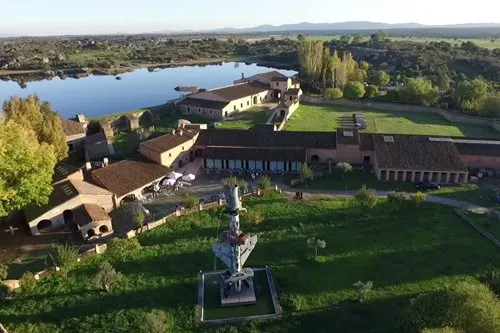
The Vostell Malpartida Museum is located in the Los Barruecos Natural Monument. It is one of the most important contemporary art museums in Europe.
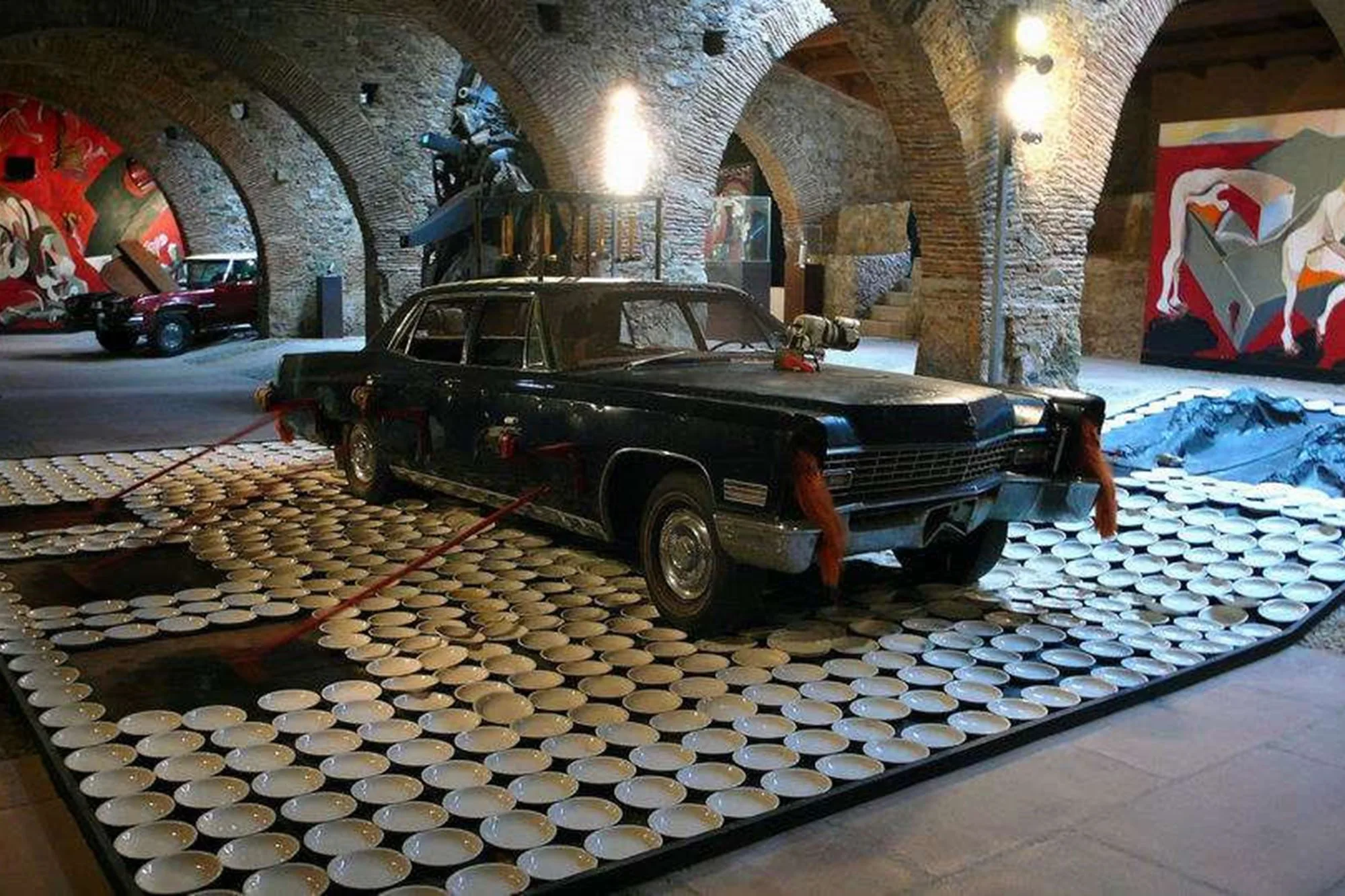
This museum was founded in 1976 by the renowned Spanish-German artist Wolf Vostell (1932-1998). It houses Vostell's works and his Archive, as well as the Fluxus Collection-Di Maggio Donation, with works by artists like Yoko Ono. It also holds a permanent conceptual art collection, featuring up to sixty works by forty-eight Spanish, Polish, and Portuguese artists.
Wolf Vostell was born in Leverkusen, Weimar Republic, on October 14, 1932, and died on April 3, 1998, in Berlin. He discovered the Dé-coll/age technique, was the father of Happening in Europe, and a precursor of the Fluxus movement of the 60s and 70s and video art.
He was closely linked to Extremadura since he married Mercedes Guardado Olivenza. His idea to set up his museum in Malpartida was in 1974, the year he visited Los Barruecos and described this location as a “Work of art of nature.” From that moment, his goal was to create a museum that expressed the most avant-garde art united with nature.
In fact, one of his sculptures can be found in Los Barruecos: his concrete-covered black Opel Admiral car with which he travelled with his family through the Extremadura region. He named this sculpture VOAEX (Concrete (H)Journey through Upper Extremadura). Vostell created this work in 1976, the same year he founded the museum.
Today, it is a cultural institution of significant importance in Extremadura and Spain, one of the most important avant-garde museums in Europe. In 2017, it ranked 10th out of 30 in a must-see museums ranking by National Geographic. Moreover, the following year, it received the Gold Medal for Fine Arts Merit from the Spanish Government.
Besides the exhibition halls of the Vostell Museum, it is interesting to visit the Centre for Grazing Routes Interpretation and the Wool Washing House History.
Built: 1976
Category: Museum
Type: Contemporary Art Museum
Address and telephone
Opening times
Prices
If you see any mistakes or want to add anything to this information, please contact us.