Cookie settings
We use our own and third-party cookies in order to offer our services, display videos, obtain statistics and offer personalized advertising.
For more information, please read our cookies policy.
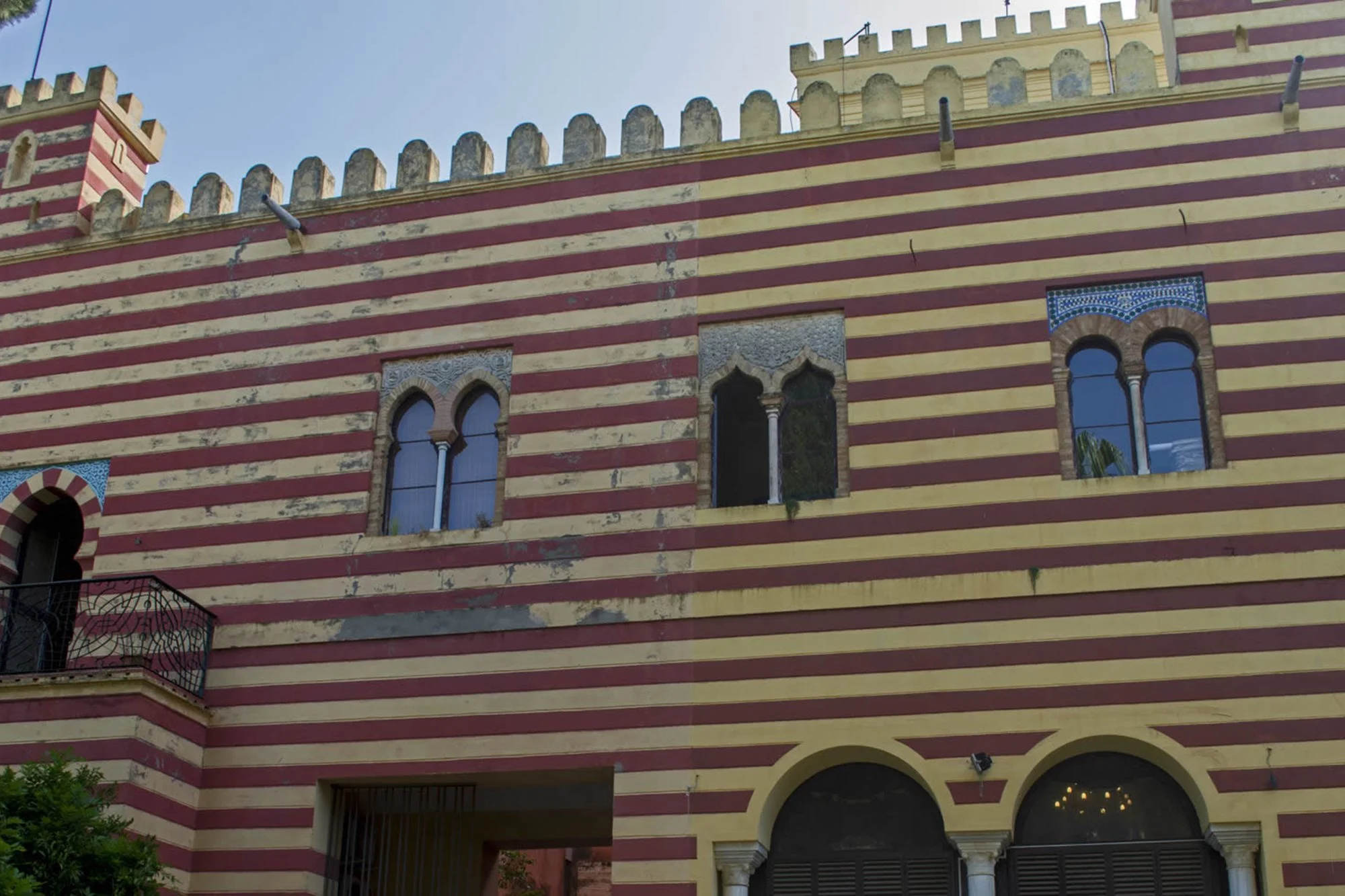
The Orleans and Bourbon Palace in Sanlúcar de Barrameda was built between 1853 and 1870. It served as the summer residence of the Infantes of Spain and the Dukes of Montpensier, Antonio of Orleans and María Luisa Fernanda of Bourbon. They acquired three estates in the Barrio Alto: the conciliar Seminary of San Francisco Javier, the Páez de la Cadena family house, and the ruined cloisters of the Convent of Mercy.
The architects tasked with rehabilitating these estates for the palace were Juan de Talavera and Balbino Marrón. At the end of the 19th century, it was refurbished by Juan Antonio Arévalo Martínez. A true architectural whim of the era, where exquisiteness and elegance were not lacking.
It was inhabited by the Orleans and Bourbon family until 1955. In 1971 it was sold to be demolished, but eight years later, it was acquired and restored by the Sanlúcar de Barrameda City Council.
Today it is the seat of the City Hall of the city.
It consists of two parts: the seminary and the Páez de la Cadena house. Each is organised around a central courtyard. A residential complex formed by a compact three-storey body, detached pavilion-type lodgings, and garden areas around it.
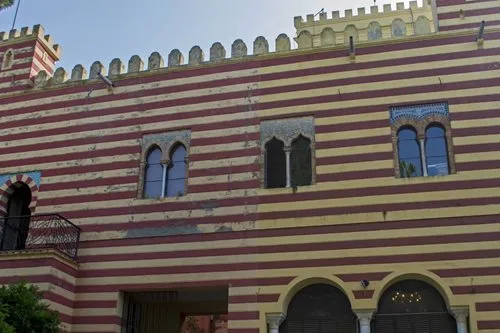
Its colourful and exterior decoration catches the visitor's attention. It features historicist and eclectic styles prominently. Its façade used the neo-Mudéjar style in addition to Italian classicism. Its interior rooms are decorated with a variety of historicist styles, such as neo-Mudéjar, English, Egyptian, Rococo, or Chinese.
The gardens of this palace were designed by the French gardener Lecolant. Originally, it was an English-style garden, aimed at creating a natural and wild appearance. Different tree species and plants are combined, most of them of tropical origin and large size. Notable are the colony of dragon trees, Judas trees, Chinese orange trees, or cypresses.
On December 19, 2007, it was registered in the General Catalogue of Andalusian Historical Heritage.
Built: 1853 - 1870.
Author: J. Talavera de la Vega, B. Marrón y A. A. Martínez
Style: Eclecticism, Historicist, Neo-Mudéjar
Category: Civil
Type: Palace
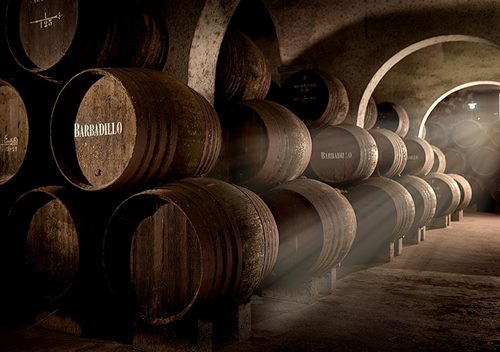
Get to know one of the most renowned wineries, Bodegas Barbadillo and its Manzanilla Museum, unique in the world. Take this guided tour of this symbolic corner of Andalusian wine culture in Sanlúcar de Barrameda.
You will discover how Manzanilla wine is made, the corners and facilities of the winery. You will finish tasting 3 of its delicious wines. Don't miss it and make your reservation!

Address and telephone
Opening times
Prices
Services
Guided Tours.If you see any mistakes or want to add anything to this information, please contact us.
Get to know one of the most renowned wineries, Bodegas Barbadillo and its Manzanilla Museum, unique in the world. Take this guided tour of this symbolic corner of Andalusian wine culture in Sanlúcar de Barrameda.
You will discover how Manzanilla wine is made, the corners and facilities of the winery. You will finish tasting 3 of its delicious wines. Don't miss it and make your reservation!