Cookie settings
We use our own and third-party cookies in order to offer our services, display videos, obtain statistics and offer personalized advertising.
For more information, please read our cookies policy.
The Archaeological Site of Fuente Álamo is one of the most prominent complexes in the province of Córdoba.
It is located 3 km from the urban centre of Puente Genil. Its name is derived from a stream that once existed in this same location, which is why it has been inhabited since ancient times.
Its origins date back to the 1st to the 3rd centuries AD. From these dates comes the Balneum or bath, which is a leisure complex for those who inhabited Ipagrum (Aguilar de la Frontera), Astapa-Ostipo (Estepa) and for those who travelled the main routes off the Via Augusta. The stream's course was utilised to build baths on both banks for leisure and hygiene.
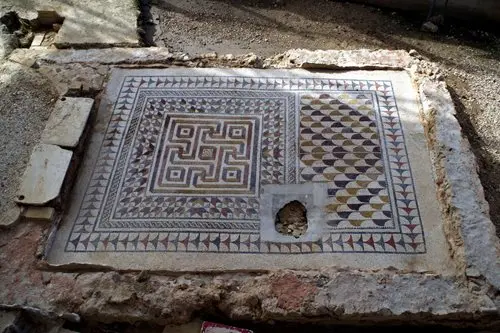
After a brief period of partial abandonment, a Roman villa was constructed (4th to 5th centuries AD), taking advantage of the existing structures. This villa is the main highlight of the site, particularly noted for the mosaics that decorated the pars urbana (the habitable area). The structure of the villa was also influenced by the stream, as it is distributed on both sides of it.
The north part was dedicated to the storage of wine and olive oil. It also had granaries equipped with hot air ventilation channels to prevent the fermentation of wheat. The south area of the villa has a structure in exceptional condition. Mostly, this part is buried beneath the surrounding land. Here lies the only known tetraconch aula or courtyard in Baetica. It is a square space with four semicircular apses forming a cruciform plan.
The floor was paved with a mosaic featuring the river-god Nile as the central figure, surrounded by scenes depicting the battle between a family of pygmies and cranes they wish to hunt. These portrayals have been extensively studied due to their humorous and erotic content, according to the epigraphy accompanying the depicted figures. Next to this space are the baths, whose hypocaustum or heating room is relatively well preserved.
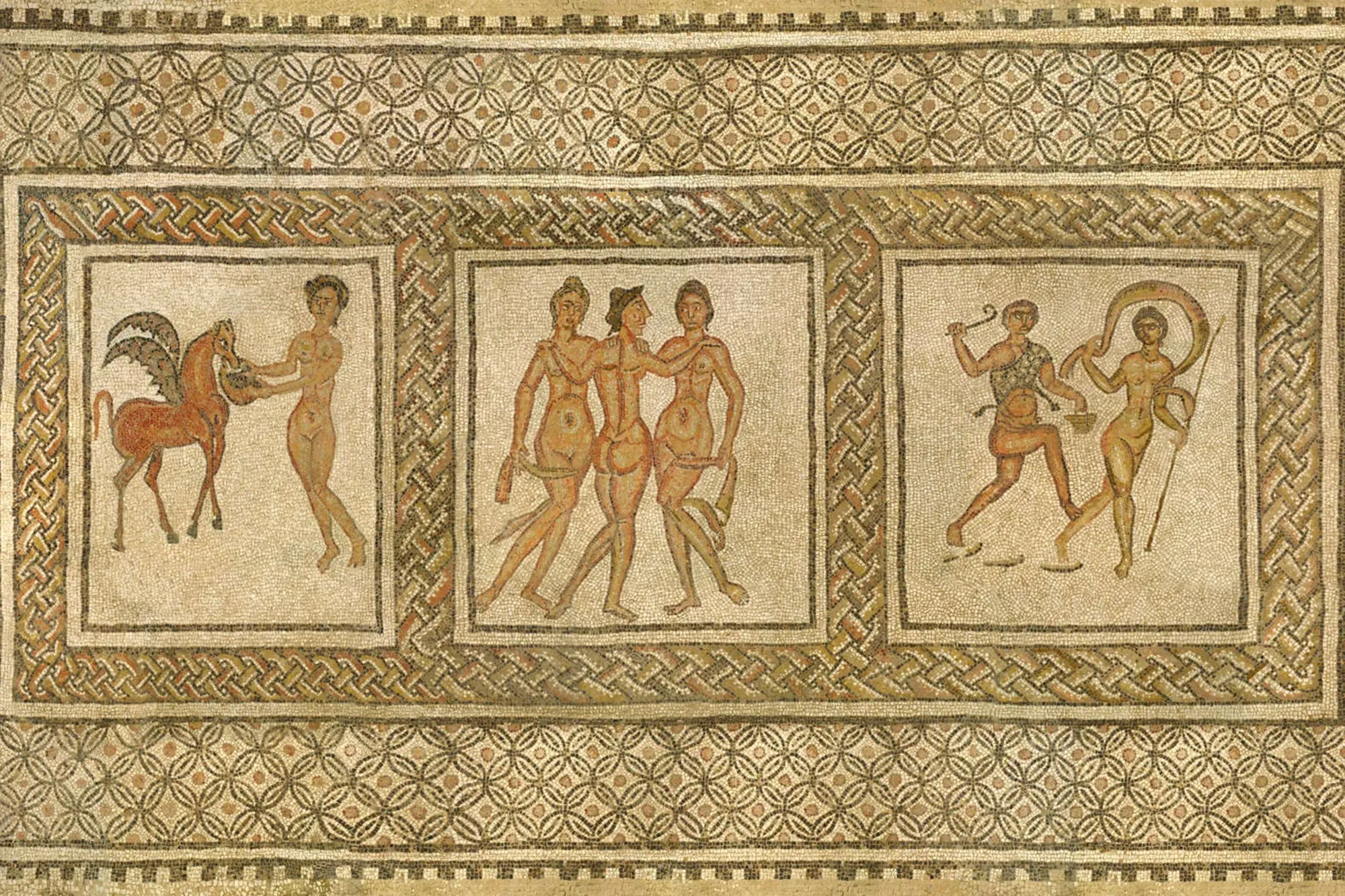
The most noble area of the villa presented a greater number of mosaics, which have been the main focus of archaeological excavations. Exceptional examples are the mosaic of the Triumph of Bacchus or the Three Graces. It has been established that mosaics were considered luxury items and were used to reflect the elevated social status of their residents. These mosaics are regarded as unique examples in Hispania.
After being a rustic villa, this superimposed archaeological complex continued to have other uses during the first Christian millennium. The villa was abandoned by its owners, later occupied by others until the 10th century, deteriorating and looting Roman construction and decorative elements. However, the mark of the Caliphate period is also present in the villa's dependencies, where existing structures were reused, and in others, both these and the mosaics were destroyed.
Such was the case with an olive oil mill built in the northern part of the villa. A beam mill and a necropolis were constructed during this period.
Built: 1st to 5th centuries AD
Style: Roman Classic
Category: Civil
Type: Archaeological Site
Address and telephone
Opening times
Services
Audio guides, Guided Tours.If you see any mistakes or want to add anything to this information, please contact us.