Cookie settings
We use our own and third-party cookies in order to offer our services, display videos, obtain statistics and offer personalized advertising.
For more information, please read our cookies policy.
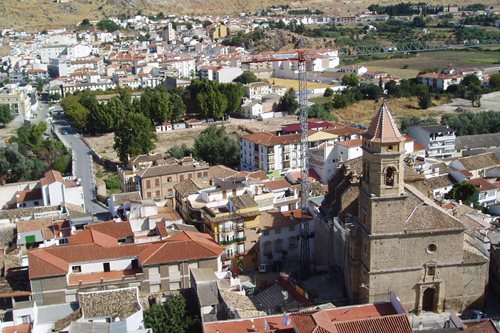
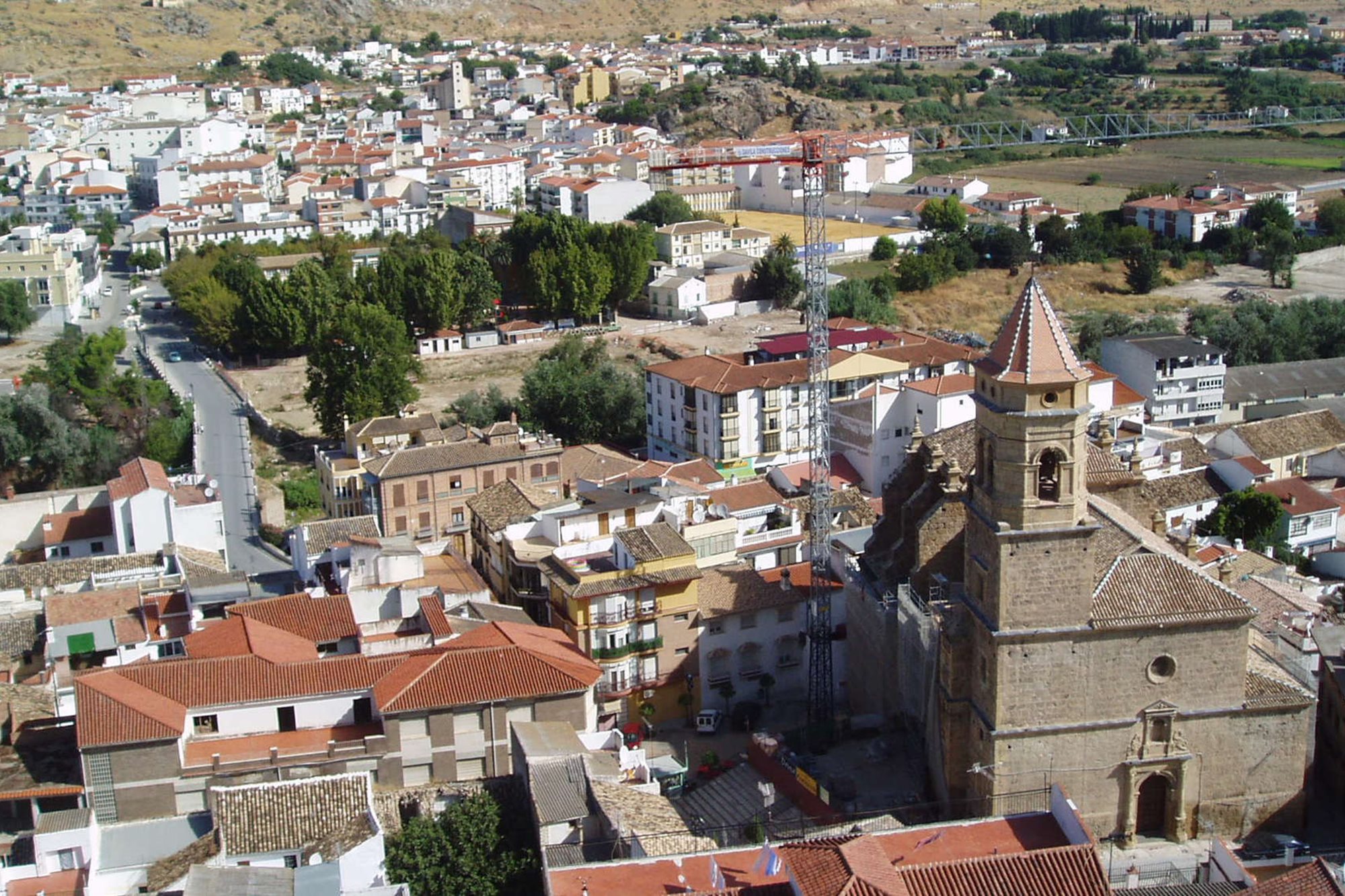
The town of Loja in Granada boasts great monumental and natural attractions, thanks to the quality of its landscape. It is known as the “City of Water”, due to the Genil River running through it, dividing the town in two.
It is located in the Poniente Granadino or the “Sub-Betic Depression” and serves as a crossroads with the province of Córdoba to the north, Alhama de Granada to the south, Seville and Malaga to the west, and the city of Granada to the east, just 53 kilometres away. At an altitude of 448 metres above sea level, Loja represents the last steps of the plateaus connecting Andalusia with the Levante.
Its topography is full of contrasts, with altitudes ranging from 487 metres in the urban core to 1614 metres at Pico de las Cabras in the Sierra de Loja. This feature makes Loja an ideal destination to enjoy spectacular views, with paragliders and deltas often seen in its skies.
Due to its location, the origins of Loja date back to Prehistory. The Phoenicians called it Alfeia, the Romans named it Tricolia, and the Arabs referred to it as Loxa or Medina Lauxa. During Muslim times, Loja became a major commercial hub, especially for spice trade. The city was destroyed in the year 893 AD but was rebuilt by Abdallah ben Mohammad. Christian rule in Loja was established in 1486 by the Catholic Monarchs, following several earlier vicissitudes.
Among its notable events is the birth in 1799 of Ramón María Narváez, known as the “Espadón de Loja”. Narváez was Prime Minister of Isabella II and a prominent military figure in the Carlist Wars. Loja's historical importance is also reflected in sharing its name with a city and province in Ecuador, founded in 1553 by the Spanish captain Alonso de Mercadillo.
Owing to its history, Loja maintains a notable heritage legacy, being declared a Historic-Artistic Site. Important sites of interest include the Alcazaba, the Main Church of the Encarnación (with the status of a collegiate church and seat of the archpriesthood of Loja), the Church of San Gabriel, the Municipal Historical Museum of the Alcazaba, and the Loja Historical Interpretation Centre. Not to forget the dolmens of Sierra Martilla or the Palace of General Narváez, among other religious monuments and spots to discover.
As mentioned earlier, Loja is known as the “City of Water”, located in the narrow valley carved by the Genil River as it passes between the Sierra de Loja and Monte Hacho. Its landscape is so rich and beautiful, full of contrasts, that it attracts active tourism enthusiasts. Here, you can engage in sports such as hiking, sport fishing, hang gliding, and climbing in the Cueva Horá via ferrata route.
Among its various natural resources, picturesque spots like the Natural Monument of Los Infiernos de Loja, the Natural Monument of the Nacimiento of Riofrío, Monte Hacho, the Fuente Camacho Salt Flats, Las Chorreras, Albarracín, and Nacimiento El Frontil stand out.
The gastronomy of Loja stands out for its high-quality products, such as the Lamb of Sierra de Loja (its own designation), charcuterie, ham, green asparagus, olive oil, and the delicious Loja rings. Its Riofrío Caviar was awarded the Best Caviar in the World in 2005.
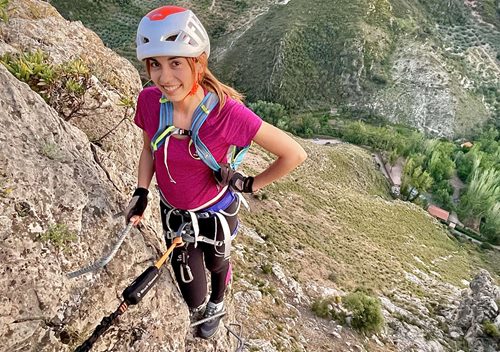
K4-level climbers have the perfect spot in Loja (Granada) at the Cueva Horá via ferrata. With a 1-kilometer course and a height of 50 meters, if you're a climber of this level, don't hesitate to sign up for this activity.
You'll experience an exciting adventure featuring two monkey bridges, two rappels, and two zip lines. Plus, you'll enjoy breathtaking views of the "city of water" and landmarks like the Alcazaba of Loja.
Don't wait any longer and book now!

Book your hotel