We use our own and third-party cookies in order to offer our services, display videos, obtain statistics and offer personalized advertising. You can accept all cookies by clicking "Accept". If you want to refuse all or some of them, click "Cookie settings". For more information, please read our cookies policy.

Cookie settings
×

Cookie settings

We use our own and third-party cookies in order to offer our services, display videos, obtain statistics and offer personalized advertising.

Technical Cookies
These cookies allow the user to navigate the website and use the different options and services offered. InSpain.org uses its own and third-party technical cookies. Our website needs some technical cookies to work properly. These cookies cannot be disabled.
Analytical cookies
These cookies allow the tracking and the analysis of the behavior of website visitors. The gathered information is used for measuring the website activity and to develop statistics to further improve the website. InSpain.org uses third-party analytical cookies.
Behavioural advertising cookies
These cookies collect information about your browsing habits in order to make advertising relevant to you and your interests. InSpain.org uses its own and third-party behavioural advertising cookies.

For more information, please read our cookies policy.

Home / Provinces of Spain / Granada /

Montefrío

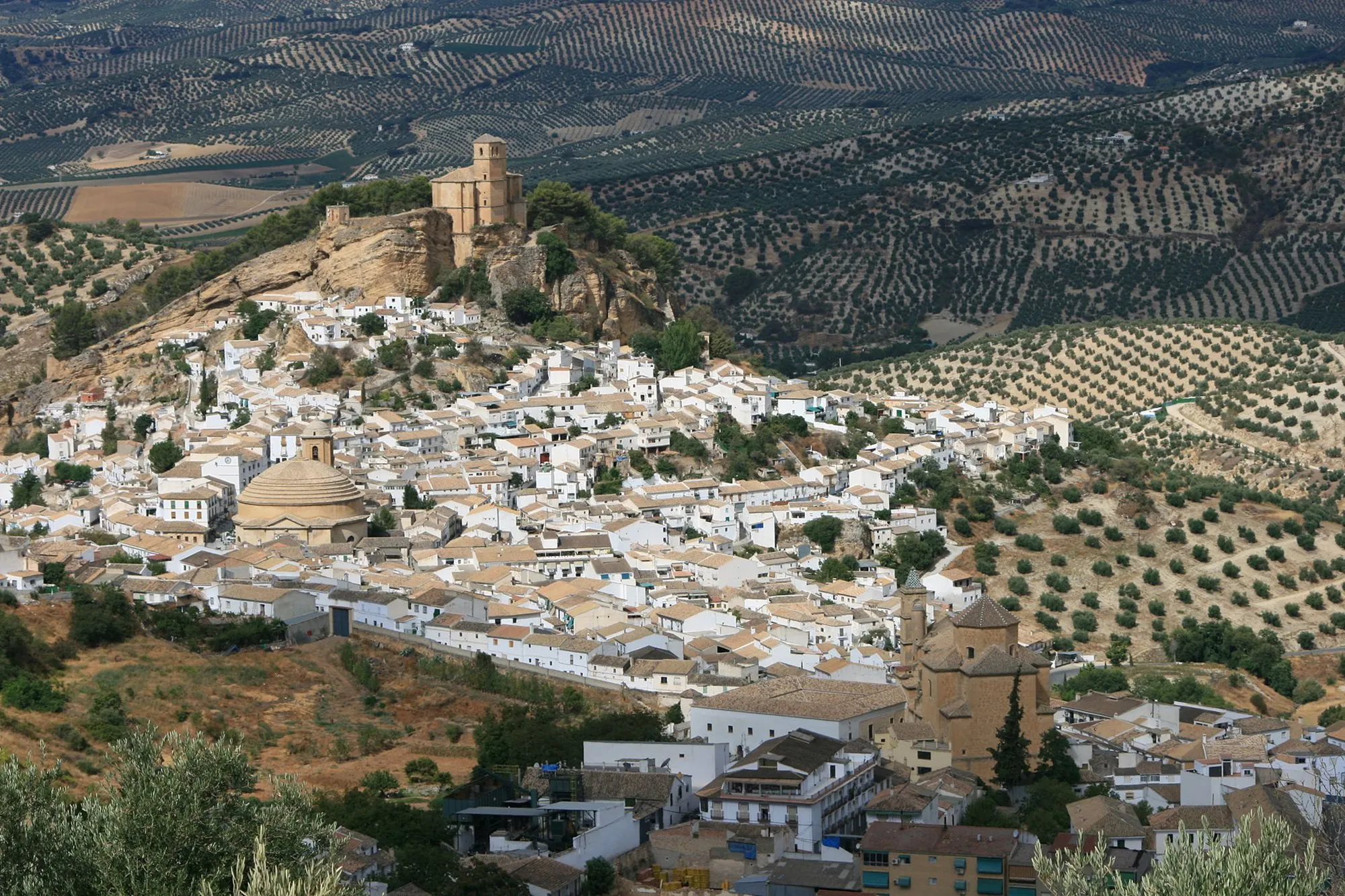
Located in the northern part of the Loja region, Montefrío is one of the most iconic localities of Granada. In 1982 it was declared a National Historic-Artistic Site and in 2015 it was recognised by National Geographic as one of the world's ten villages with the best views.


The municipality has its origins in prehistoric times, with findings ranging from megalithic tombs to Iberian-Roman and medieval remains. The Peña de los Gitanos area is the most notable, where all the key heritage and archaeological sites of interest can be found. Its narrow, winding streets, whitewashed houses, and urban architecture remind us of its Arab past, making it a truly unique place. 


As for its monumental complex, it is known for its castle and the so-called church of the Villa. In both cases, remains of the Andalusian past and of the Castilian conquest and subsequent repopulation.