Cookie settings
We use our own and third-party cookies in order to offer our services, display videos, obtain statistics and offer personalized advertising.
For more information, please read our cookies policy.
Its Celtiberian origin is attributed to the discovery of ceramic remains, which confidently suggests that this rocky watchtower was held by that civilisation. It is also known that the Romans used this stronghold over the Molina moorlands. According to the excavator and owner's findings, it has been confirmed that both the Visigoths and the Arabs occupied the fortress. The latter constructed part of what later became a genuine castle. The Moors from Molina resided here, their kings being subjects of the Taifa of Toledo, during the final days of their dominion over this territory.
With the conquest of the Molina-Alto Tajo region by the northern Christian kingdoms in 1129, Zafra first came under the power of the King of Aragon. He placed the fortress within the boundaries of the Comune of the town and land of Daroca, with the Zafra tower being one of the most effective defensive points of the southern territory against the still imminent threat posed by the Arabs from Cuenca. However, Count Don Manrique de Lara, lord of Molina, who was consolidating his territory, reclaimed the fortress from Ramón Berenguer, who handed it over without any difficulty. Thus, in the description of the Molina territory in the charter promulgated by its lord in 1154, the Zafra castle is named as the most important and cherished in the entire Lordship, after the capital's fortress.
The most significant historical event that occurred in Zafra is closely related to the fate of the Lara dynasty. In 1222, Fernando III punished them by seizing Zafra. For this, he mobilised his army to besiege the fortress, where the Count took refuge with his family, court, and household armies. The Molina Count resisted in this impregnable building for several weeks, during which the Castilian King waged his war.
Eventually, as their supplies ran out, the Count surrendered, and both parties agreed upon a resolution to the conflict, known in the annals of history as the Concord of Zafra. In this concord, it was established that the heir to the lordship, Don Gonzalo’s firstborn - Pedro González de Lara - would be disinherited, with his daughter Doña Mafalda proclaimed as the heir. She married Don Alonso, the King's brother. This made the intervention of the Crown of Castile over the Lordship of Molina more effective.
During the 15th-century civil wars, the Zafra fortress continued to hold great strategic importance in controlling the territories surrounding Molina, as they were natural routes between Castile and Aragon. Enrique IV granted Molina as a lordship to his favourite, Beltrán de la Cueva. This again provoked an uprising from those living in the region against this imposed lord.
In the 16th century, Zafra remained one of the strongest castles in the Kingdom of Castile despite its small size. It was remarkable at the time for its difficult access, ingenious entrance, and its capacity to house over five hundred men in a specific space - today it is still not known, perhaps inside the rock itself.
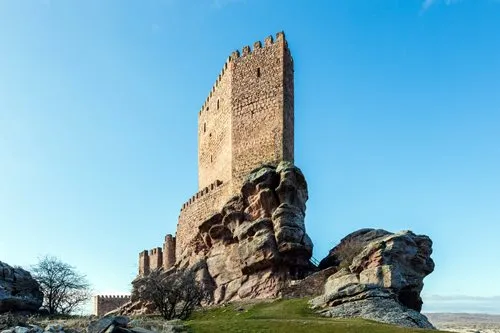
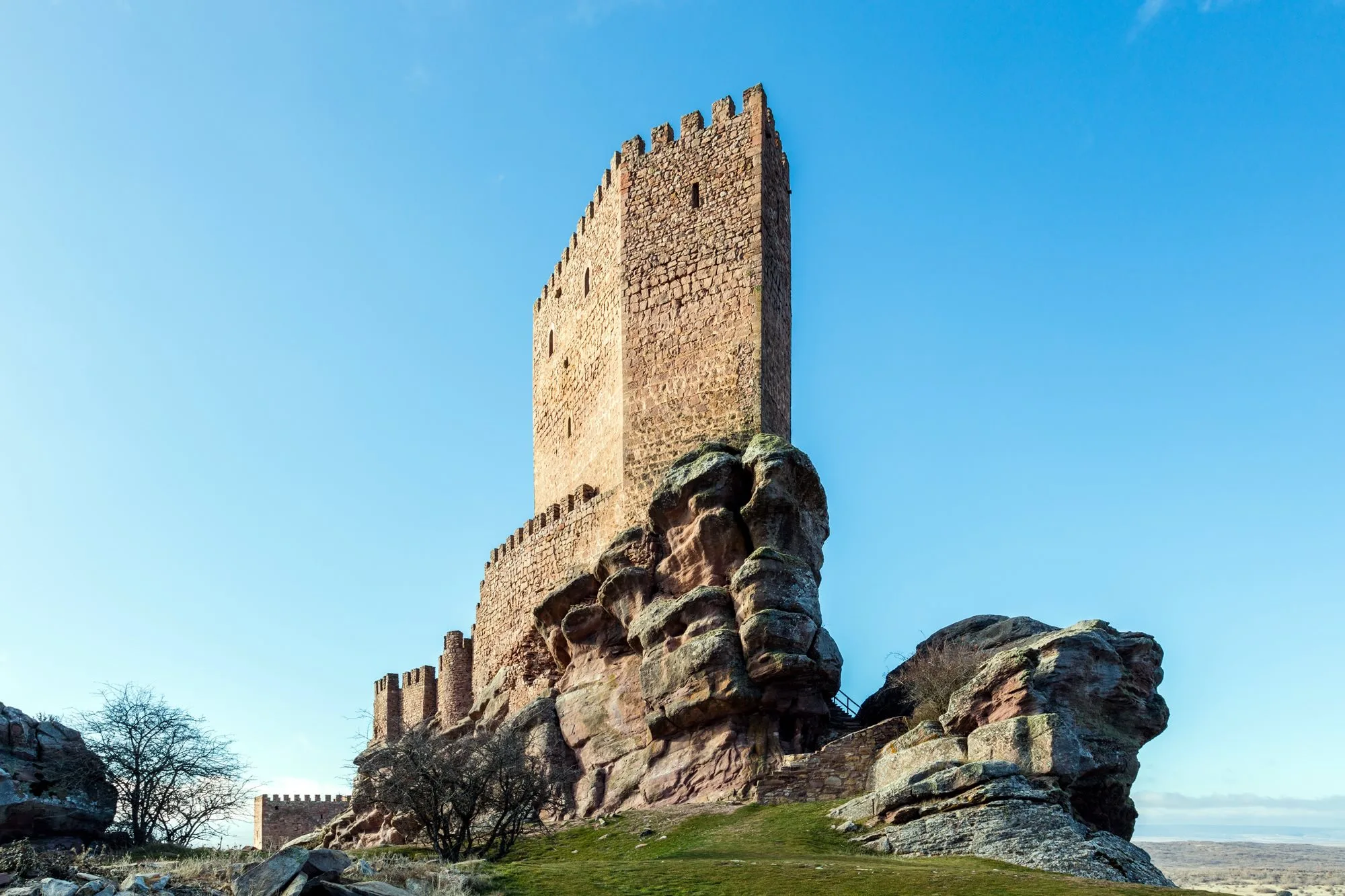
It still retains a singular silhouette. Today, it can be reached during the dry season via rough tracks from the municipality of Hombrados, Campillo de Dueñas, or from Castellar de la Muela.
Address
19360 Campillo de Dueñas (Guadalajara)Opening times
If you see any mistakes or want to add anything to this information, please contact us.

Book your hotel