Cookie settings
We use our own and third-party cookies in order to offer our services, display videos, obtain statistics and offer personalized advertising.
For more information, please read our cookies policy.
Capital of the province of the same name, the city of Huelva lies at the confluence of the Tinto and Odiel rivers, on the banks of the estuary bearing its name. It is an area of great natural and heritage interest, unique in Andalusia and of enormous value worldwide.
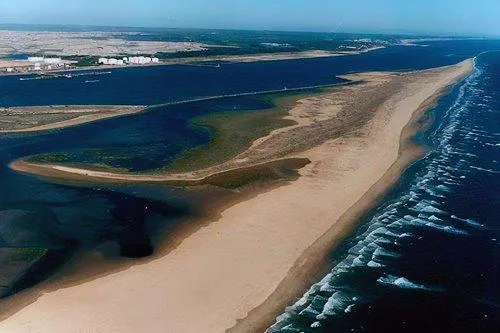
In its surroundings are a number of places of great ecological interest. We speak of the Natural Area of Marismas del Odiel (UNESCO biosphere reserve), the Natural Area of Los Enebrales de Punta Umbría (a dune enclave of great relevance) or the Natural Area of the Lagunas de Palos y Las Madres. Also noteworthy is the Nature Reserve of Laguna de El Portil and the Natural Area of Estero de Domingo Rubio, wetlands of great value for their fauna and flora.
Due to its mining value, the area of the current city was occupied since the Neolithic era. It was really during the Bronze Age when the mythical and popular Tartessian culture appeared in the area. The arrival of the Phoenicians and contacts with the Greeks were vital for the development of a space of strategic importance due to its commercial position and silver deposits. Around the year 194 B.C., the city was taken by the Romans, who called it "Onuba".
In the Andalusian period, Huelva was key for trade with Málaga, Algeciras or Seville and Africa. Everything changed with the Christian conquest in 1262 by Alfonso X.
The greatest splendour of Huelva was experienced from 1492. The first expedition of Christopher Columbus set sail towards the "New World" from its port. The port of Palos de la Frontera was chosen as the departure point and the capital of Huelva as the return place. In reality, with the centralisation of trade with the Indies in Seville, the splendour of the area was somewhat diminished. The city regained some economic and political power and prestige from the 19th century onwards when foreign capital was attracted by the mining possibilities of the surroundings.
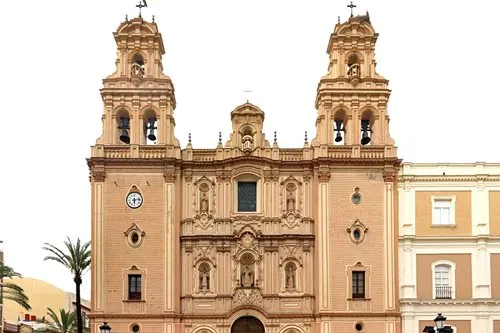
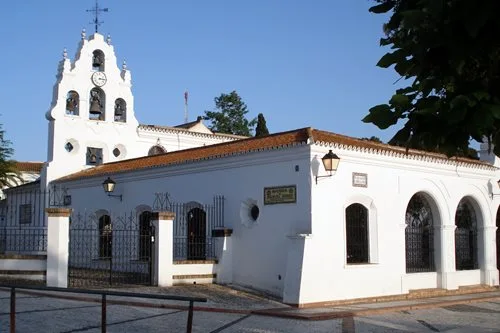
From this whole history we have a series of quite outstanding heritage elements. First of all, we must mention the Cathedral of La Merced, which despite its construction process beginning in 1605 was not declared a Cathedral until 1953. A jewel that mixes Renaissance with Baroque. It is also worth mentioning the Church of San Pedro, the Hermitage of La Soledad, the Church of La Concepción and the Church of La Milagrosa. It is worth mentioning the Sanctuary of Our Lady of La Cinta, a building dating from the 15th century that stands out for its Gothic-Mudejar style.
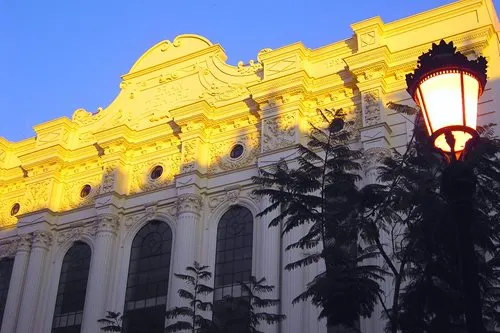
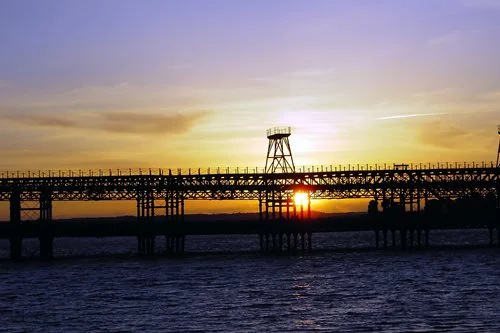
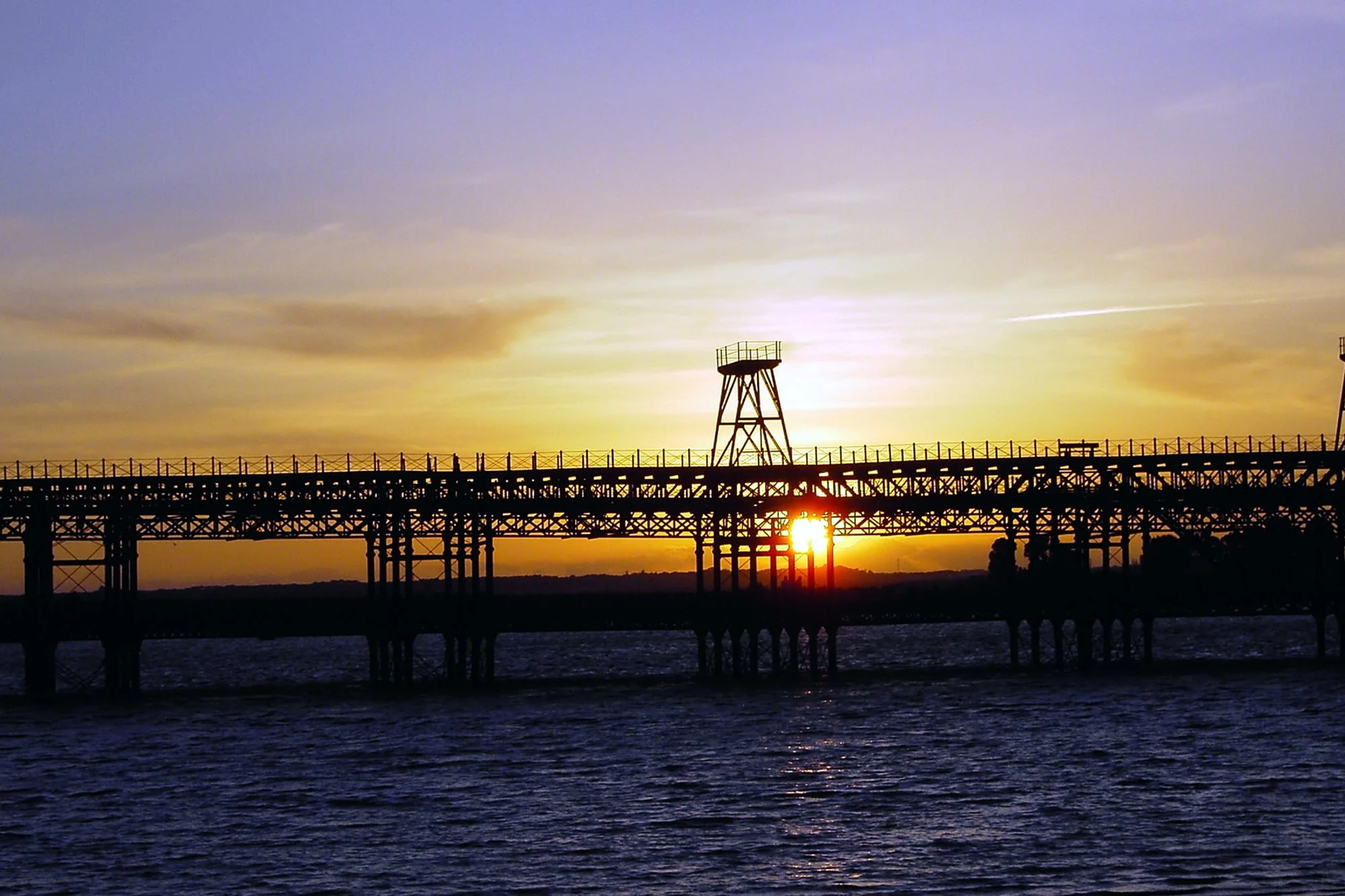
In the 20th century, the construction of the Grand Theatre took place. An iconic place in the city designed by Pedro Sánchez and Núñez. It is a stately building, in a classical style, as a result of the economic development experienced in the area since the late 19th century. Precisely, with the arrival of capital at the end of the 19th century, an important industrial heritage was developed, of which the popular Tinto wharf-jetty stands out.
Huelva is also prominent for its gastronomy. Ham, seafood, particularly white prawns and fried fish or strawberries are undoubtedly representative foods of the area.
It is also worth mentioning a series of festivities, such as Holy Week or the Fiestas de la Cinta, celebrated on 8th September. It is also an important point for departures to the romería village of El Rocío.

Book your hotel
Things to do
Currently, we do not have any companies with activities in Huelva.
Do you have a company that offers guided tours, events, shows, active tourism and outdoor activities or other leisure and tourism activities in Huelva? Contact us and we'll explain how to include these services for free.