Cookie settings
We use our own and third-party cookies in order to offer our services, display videos, obtain statistics and offer personalized advertising.
For more information, please read our cookies policy.
The name Baeza is always linked to its neighbouring Úbeda, with which it shares the distinction of being a World Heritage city due to its outstanding monumental heritage.
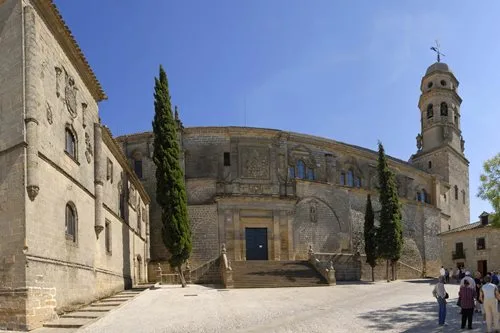
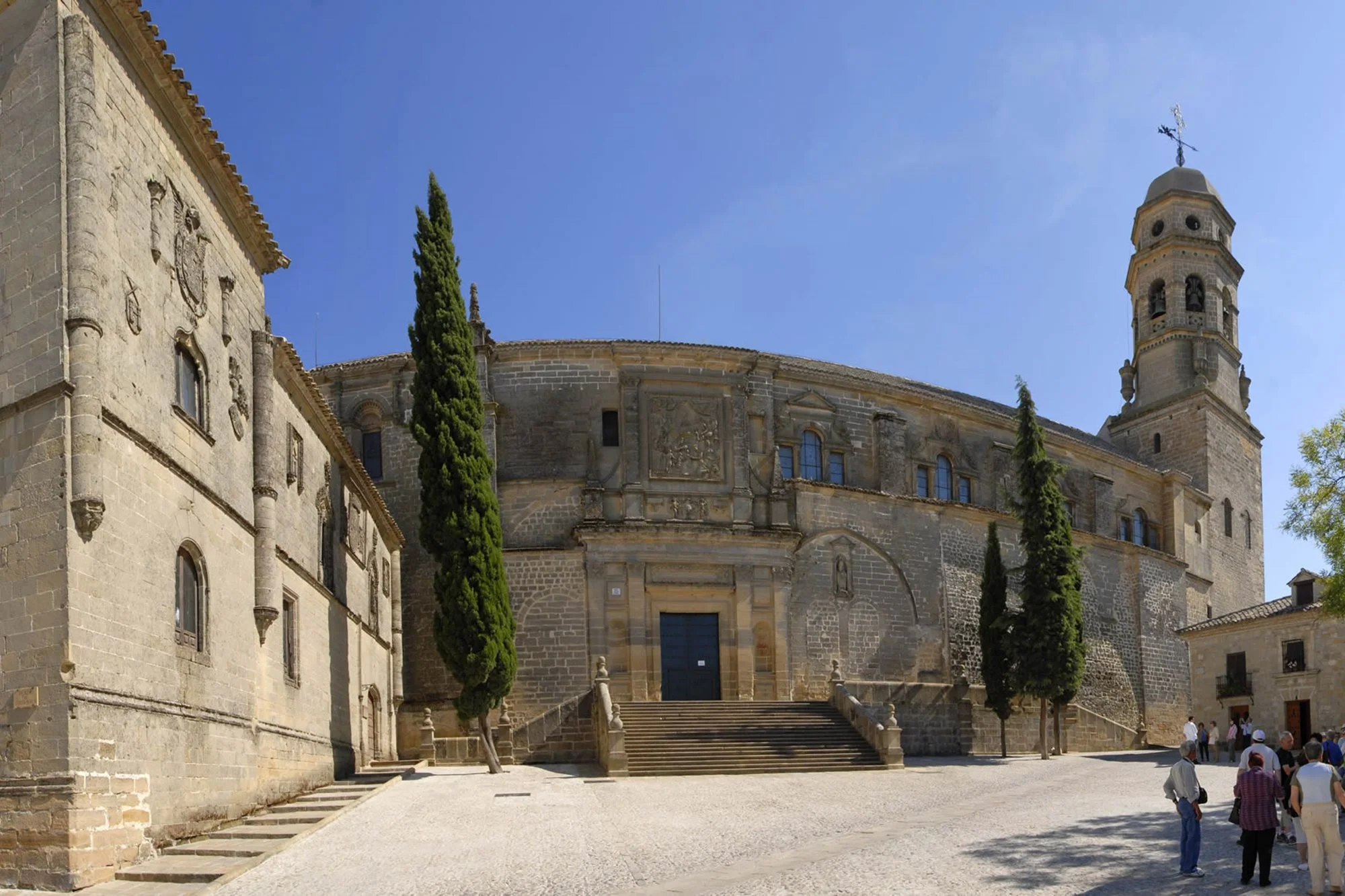
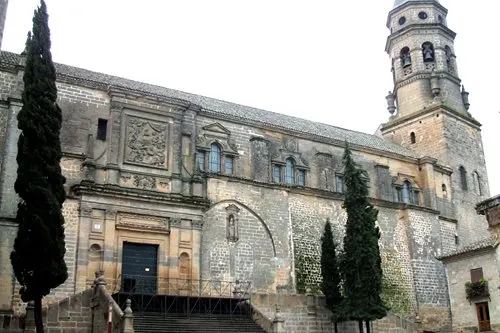
The Plaza de Santa María in Baeza is notable, where the Cathedral of the Nativity of Our Lady, a temple first pagan and then Christian whose current design was projected by the Renaissance architect most connected to Úbeda and Baeza: Andrés de Vandelvira, is found. Also located in this square are the High Town Halls, the old seat of the Baeza Council; and the Santa María Fountain, one of the city's landmarks.
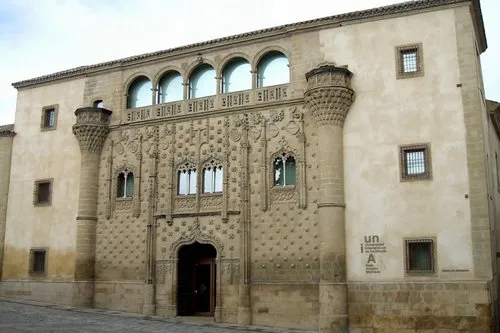
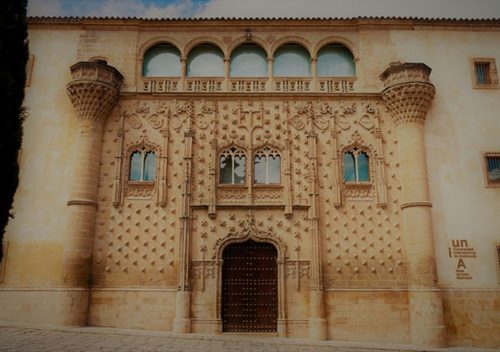
Additionally, the Church of Santa Cruz, of late Romanesque style, and the Jabalquinto Palace are other important monuments in the city. The Plaza del Pópulo or the Lions is another emblematic square in Baeza where the Casa del Pópulo (Civil Court and Public Notaries) is located, of Plateresque style. The Puerta de Jaén is situated at one end of the square and represents a remnant of what was Baeza's wall. On the other hand, the Villalar Arch was commissioned in 1521 to celebrate the victory at the Battle of Villalar by the troops of Charles V and is also located in the Plaza del Pópulo.
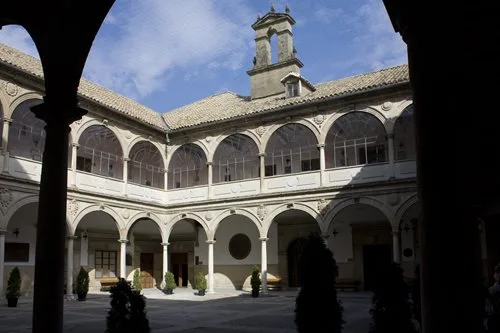
The Old University of Baeza, founded in 1538, was a significant cultural hub during the Renaissance where the Generation of '98 poet Antonio Machado, also closely connected to the city of Baeza, taught. The university building is located very close to the Jabalquinto Palace and the Church of Santa Cruz.
In Baeza there is also the Museum of the Olive Culture (La Laguna Hacienda Museum), a perfect place to learn about olive oil production and for all olive tourism enthusiasts.

Book your hotel
Baeza is the city of which Antonio Machado wrote ‘Campo de Baeza, I'll dream of you when I don't see you’. With this guided tour you will understand why the illustrious poet expressed his longing for Baeza, a city declared a World Heritage Site together with Úbeda, thanks to its great monumental and historical heritage of its splendid Andalusian Renaissance.
Cobbled streets, a Cathedral of Romanesque origin and later transformed into Renaissance, palaces with beautiful ‘altarpiece-doors’ in honour of the nobles who lived there. It will seem as if you are walking through a Castilian city but in the middle of the olive groves of Jaén. You will also be able to taste the local olive grove's ‘green gold’. A perfect visit to get to know the culture and tradition of Baeza to the full.