Cookie settings
We use our own and third-party cookies in order to offer our services, display videos, obtain statistics and offer personalized advertising.
For more information, please read our cookies policy.
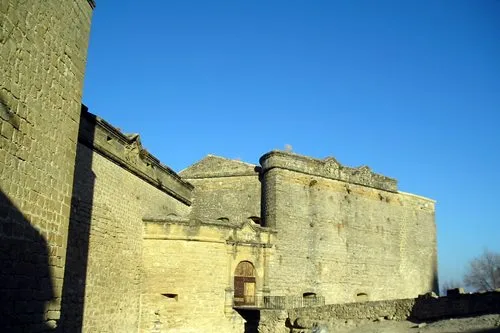
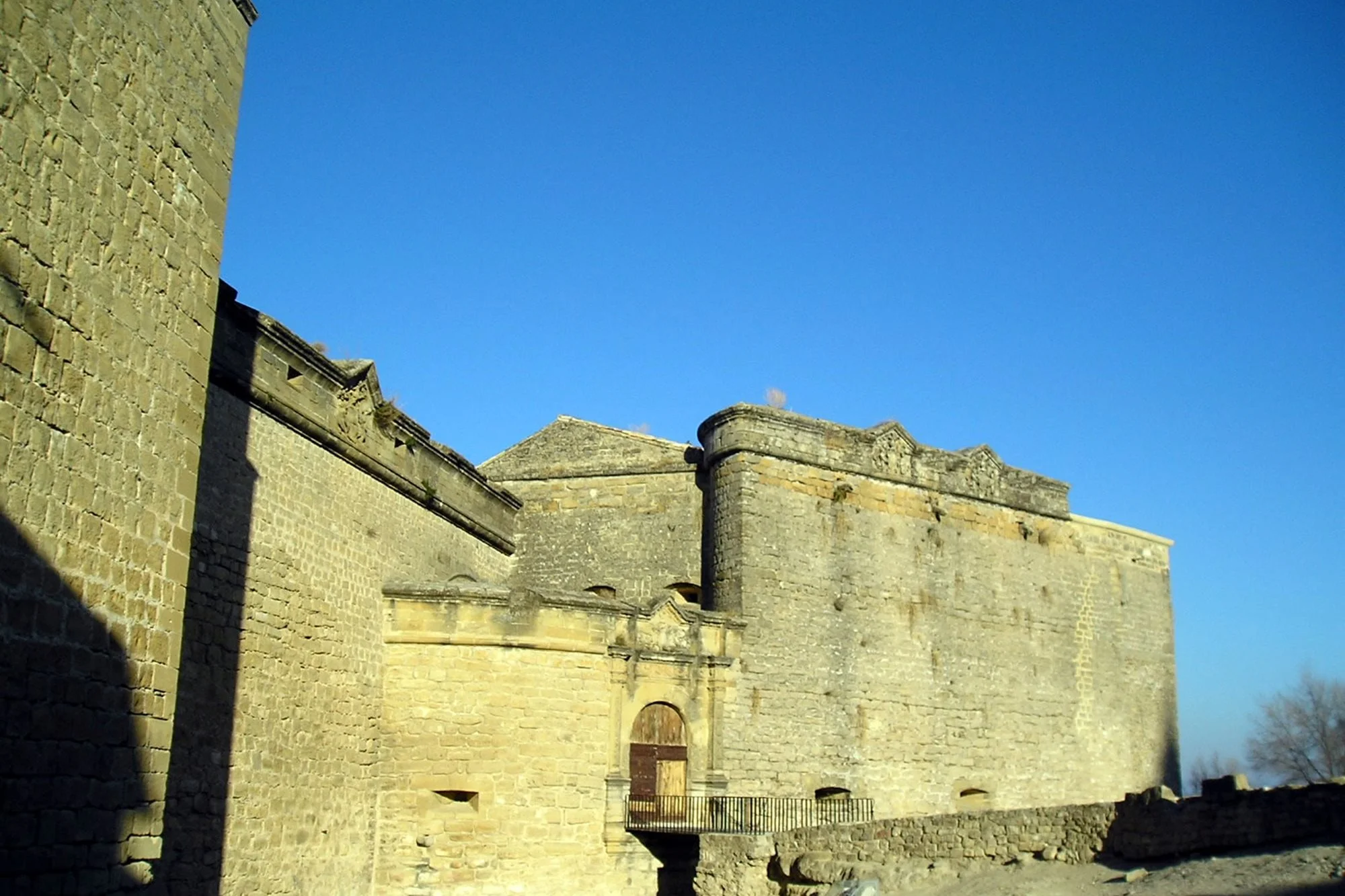
The Castle of Sabiote (Sabiyut in Arabic) was built facing the Guadalimar valley. An interesting monument to understand the Andalucian Renaissance Triangle, along with Úbeda and Baeza.
It is considered the most outstanding military construction of the 16th century in Jaén. At the same time, it is the oldest example of a Renaissance bastion-castle.
Its origins date back to between 1227 and 1229. During those years, King Fernando III captured Sabiote after conquering Baeza. It was an operation aimed at isolating the Muslim stronghold of Úbeda and thus controlling the route to Levante.
Fernando III (the Holy King) repopulated the town of Sabiote, granting it the Fuero of Cuenca. He remodelled the castle, which was an old Hispanic-Muslim alcazaba, reinforcing it with a walled enclosure.
Fernando IV decided in 1309 to repair it again due to its poor condition. For this work, he renounced the tithes of wine, livestock, and cereals of Sabiote.
By the 16th century, between the years 1533 and 1535, the castle was thoroughly remodelled before it became the property of Francisco de los Cobos (secretary of Charles V).
Francisco de los Cobos was a great connoisseur of Renaissance architecture. A style he followed to adorn his towns with beautiful constructions, loaded with humanist and political symbolism. He was familiar with how bastion systems were built in 16th century Italy.
Thanks to his patronage and knowledge, Francisco de los Cobos embarked on a bold project to reconstruct the castle, following the model of Italian Renaissance fortifications. He commissioned this task to master Andrés de Vandelvira, an architect with whom he worked on his projects in Úbeda and Baeza, such as the emblematic Chapel of El Salvador.
Unfortunately today, the interior of this castle is very deteriorated, due to its Napoleonic occupation. In its day, it was an outstanding work of art.
It preserved for years the Banner of the Order of Calatrava and a large number of artworks, which were later moved to the aforementioned Chapel of El Salvador.
The Renaissance reconstruction is the castle we see today, featuring strong walls and serving as an imposing yet elegant bastion. In 1931 it was declared a Historical Monument, and its walled site was declared a Historic-Artistic Complex in 1972.
Built: 13th, 14th and 16th centuries.
Author: Andrés de Vandelvira
Style: Medieval, Renaissance
Category: Military
Type: Castle
Address and telephone
Opening times
Services
Guided Tours.If you see any mistakes or want to add anything to this information, please contact us.