Cookie settings
We use our own and third-party cookies in order to offer our services, display videos, obtain statistics and offer personalized advertising.
For more information, please read our cookies policy.
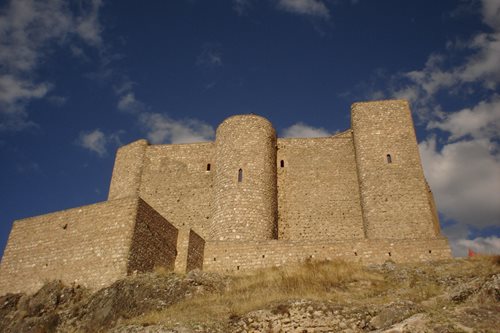
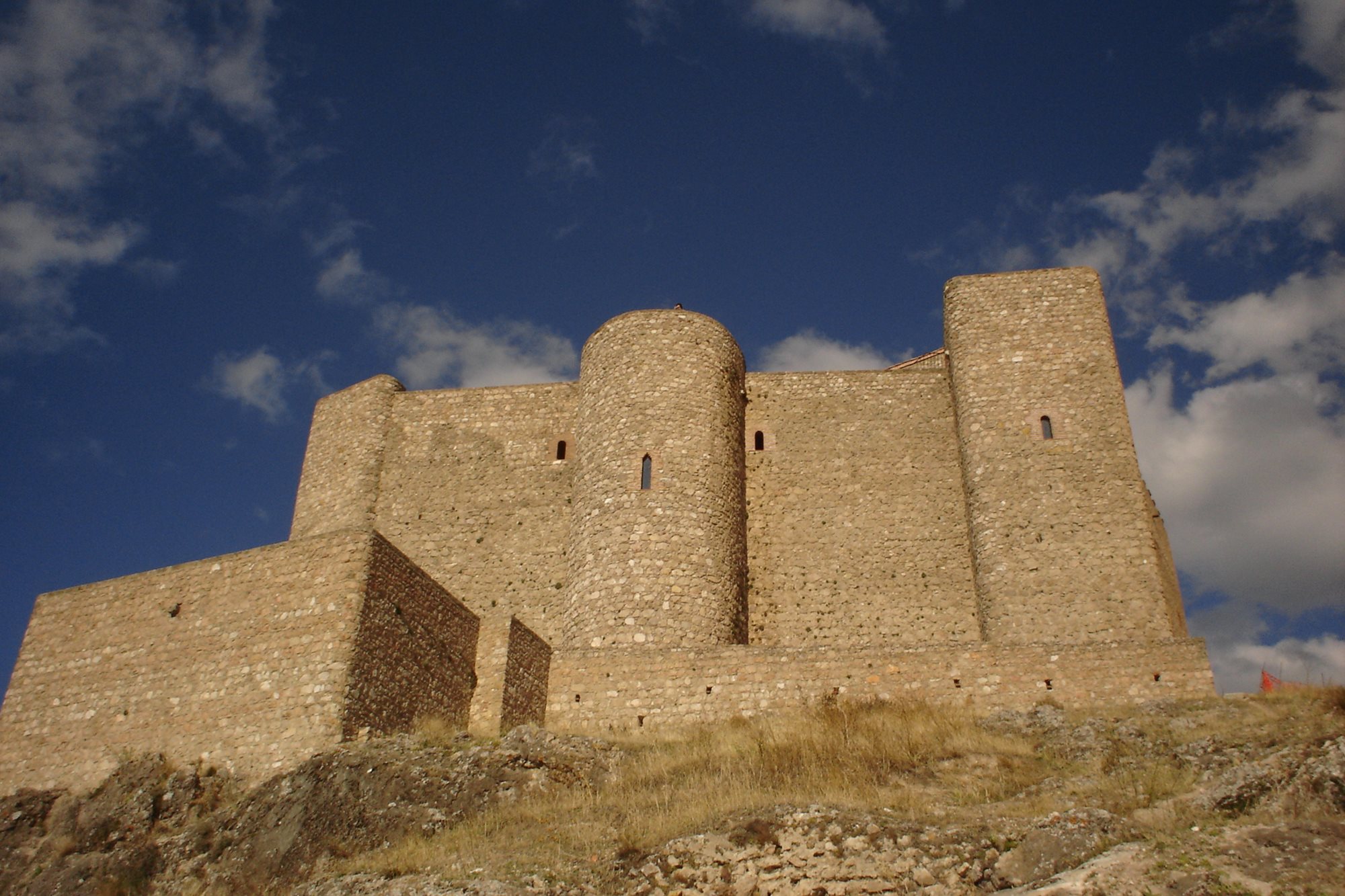
The Castillo de Segura de la Sierra is the highest in the province of Jaén, erected at an altitude of 1,200 metres. It offers visitors a fantastic journey back in time, to the medieval lifestyle of the Order of Santiago, with incredible panoramic views.
It was built by the military Order of Santiago on a previous fortress of Hispano-Muslim origin. The oldest defensive structure would correspond (according to the provisional attribution by experts V. Salvatierra, J.C. Castillo, F. Gómez, and A. Visedo) to Ibrahim b. Ahmad b. Hamusk. This figure took control of this territory in the year 1147, extending his domain over much of the Upper Guadalquivir (along with Ibn Mardanis of Murcia), until surrendering to the Almohads in 1169.
Later, the Order of Santiago positioned Segura de la Sierra as the capital of the Castilian Commandery. Additionally, the Grand Master of the order lived here (15th century). Due to its strategic location, this castle was very important for the defence of the Kingdom of Castile on the border with the Kingdom of Granada.
Its layout is irregular, almost pentagonal, although the previous Andalusian fortification had a more trapezoidal layout with a tower at each vertex.
Over the centuries, the castle underwent significant alterations. However, it can be visited today, thanks to its restoration in the 1960s and its musealization at the end of the last century and the beginning of the 21st century.
Its entrance is through the bent access tower (forcing enemies to make a turn and open two doors, making them easier to capture). It is known that the space was utilised with an upper wooden structure, for a kind of dormitory and other rooms.
Beyond this access, you arrive at the Parade Ground, where troops were trained. There were arcades here, used for workshops, ovens, food storages or for animals. They were covered with a sloped roof so that rainwater was stored in the cistern. The cistern preserved today is from the Santiago period.
On one side of the Parade Ground, we can see the Chapel, a regular feature in castles of chivalric orders. Its floor plan is of a single nave, with an apse-like chancel in Mudejar style. Here, a long list of knights of the order were also appointed.
The Keep is located between the Arab Baths and the Chapel, in a corner of the castle. Its floor plan is square, with two floors and its terrace with battlements preserved, but it is documented that a third floor existed that gave access to the old battlemented area. Inside, there were various rooms, such as an armoury, salt storage or a hand mill, among others. These have vaulted roofs. One of them is dedicated to Rodrigo Manrique, one of the commanders and the father of the poet Jorge Manrique.
On the sides of the Keep, we see the parapets or Round Paths that encircle the castle. These reinforced the protection of the entire defensive complex, with soldiers sheltering here in case of attack. The parapet was covered with wood and a gable roof, and there was a chamber in each tower, with one used for “sleeping candles” or staying overnight without sleeping.
Built: 12th - 15th centuries.
Style: Medieval
Category: Military
Type: Castle
Address and telephone
Opening times
From Tuesday to Sunday, from 10:30 am to 2:00 pm and from 5:30 pm to 9:00 pm.
Prices
Services
Guided Tours.If you see any mistakes or want to add anything to this information, please contact us.