Cookie settings
We use our own and third-party cookies in order to offer our services, display videos, obtain statistics and offer personalized advertising.
For more information, please read our cookies policy.
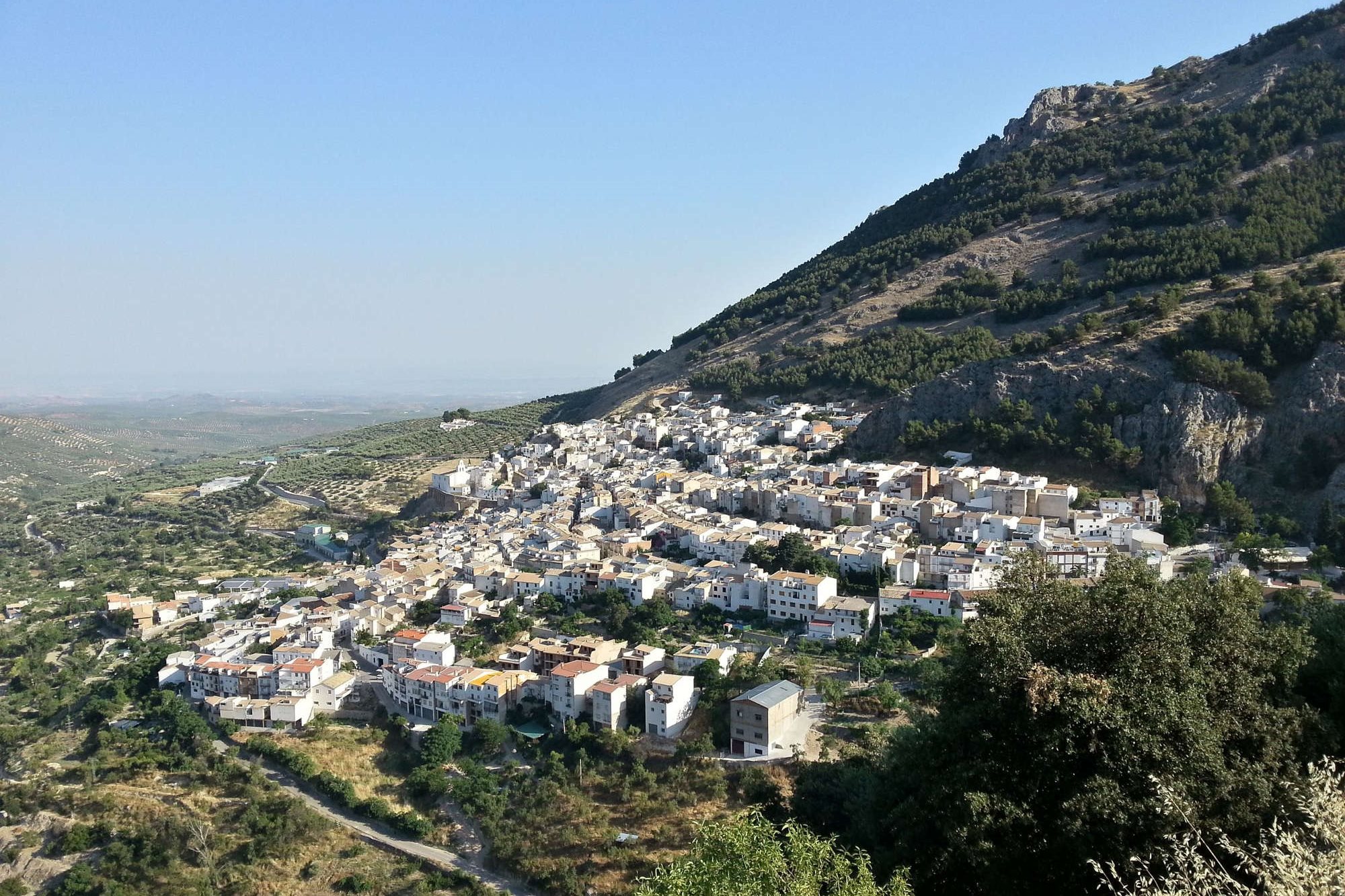
Torres is located in the Sierra Mágina region (right within the Sierra Mágina Natural Park), at more than 800 metres of altitude. It is surrounded by a spectacular landscape, especially during the spring cherry blossom. Its hamlet rises on the slopes of the hills that ascend to the emblematic Aznaitín mountain. Its municipal area stretches far and wide across the valley of the Torres river, with the olive grove occupying its lower slopes. All this makes the panoramic view of Torres an enchanting scene.
The economy of Torres stands out for its olive cultivation, offering travellers interesting Oleotourism experiences: from getting to know the olive grove and the production process of Extra Virgin Olive Oil up close, to tasting it in a sample.
In addition to olive cultivation, cherry trees are also grown. . The extensive planting area of this fruit tree makes Torres one of the most prominent cherry producers.
The urban core of Torres is characterised, besides its pretty steep streets and white houses, by being split in two by the picturesque San Gil Stream. This stream is a charming tree and flowerbed-lined path connecting the lower neighbourhood with the upper.
Historically, the village of Torres was owned by the nobility. Some monuments erected and still preserved today remind us of that era. Its Renaissance monuments stand out, like the Church of Santo Domingo de Guzmán (16th – 17th centuries) or the Palace of Los Cobos (also called of the Marquis of Camarasa) from the 16th century. This palace is a testament to the splendour Torres experienced at that time when Emperor Charles V sold the property to his secretary, D. Francisco de los Cobos.
Other places of interest in Torres include the Church of Santo (20th century), housing a 17th-century oil painting of Ecce Homo, and the Cueva del Morrón, a great Palaeolithic rock sanctuary. Not to forget that on the outskirts of the village remains “La Puente”, as the bridge commissioned by Andrés de Vandelvira in 1565 is popularly known.
The surroundings of Torres boast beautiful spots to enjoy nature tourism. On the one hand, there is the Recreational Area of Fuenmayor for camping and as a picnic site. There is also the aforementioned Monte Aznaitín, which stands at about 1720 metres and is where the Cueva del Morrón is located. Monteagudo stands at 1683 metres, offering an incredible natural viewpoint. At a resting place along a livestock trail is the Hondacabras Camping Area, with facilities accommodating up to 100 people.