Cookie settings
We use our own and third-party cookies in order to offer our services, display videos, obtain statistics and offer personalized advertising.
For more information, please read our cookies policy.
The Basilica and Royal Collegiate Church of Santa María de los Alcázares is the main church of this city and the third in the diocese of Jaén.
It is located in Vázquez de Molina Square. It is declared a National Monument and part of the World Heritage Site.
This basilica is the clearest example in Úbeda of the overlapping of styles, as a result of its long history: Gothic, Mudéjar, Renaissance, Baroque, and Neo-Gothic.
It was built over the original Great Mosque that was located within the Alcázar. Therefore, it was isolated from the rest of the city until the beginning of the 16th century, except for a postern gate, which is still preserved in the cloister. Through this postern gate, it is said that King Ferdinand III the Saint entered to consecrate the mosque for Christian worship, after conquering the city in 1233.
Remains of the defensive barbican of the Alcazaba are still preserved, including an Almohad tower that can be seen outside the Chapel of the Holy Burial.
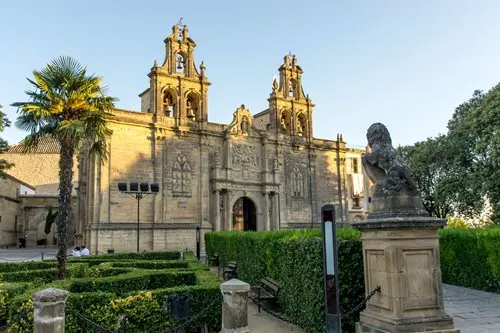
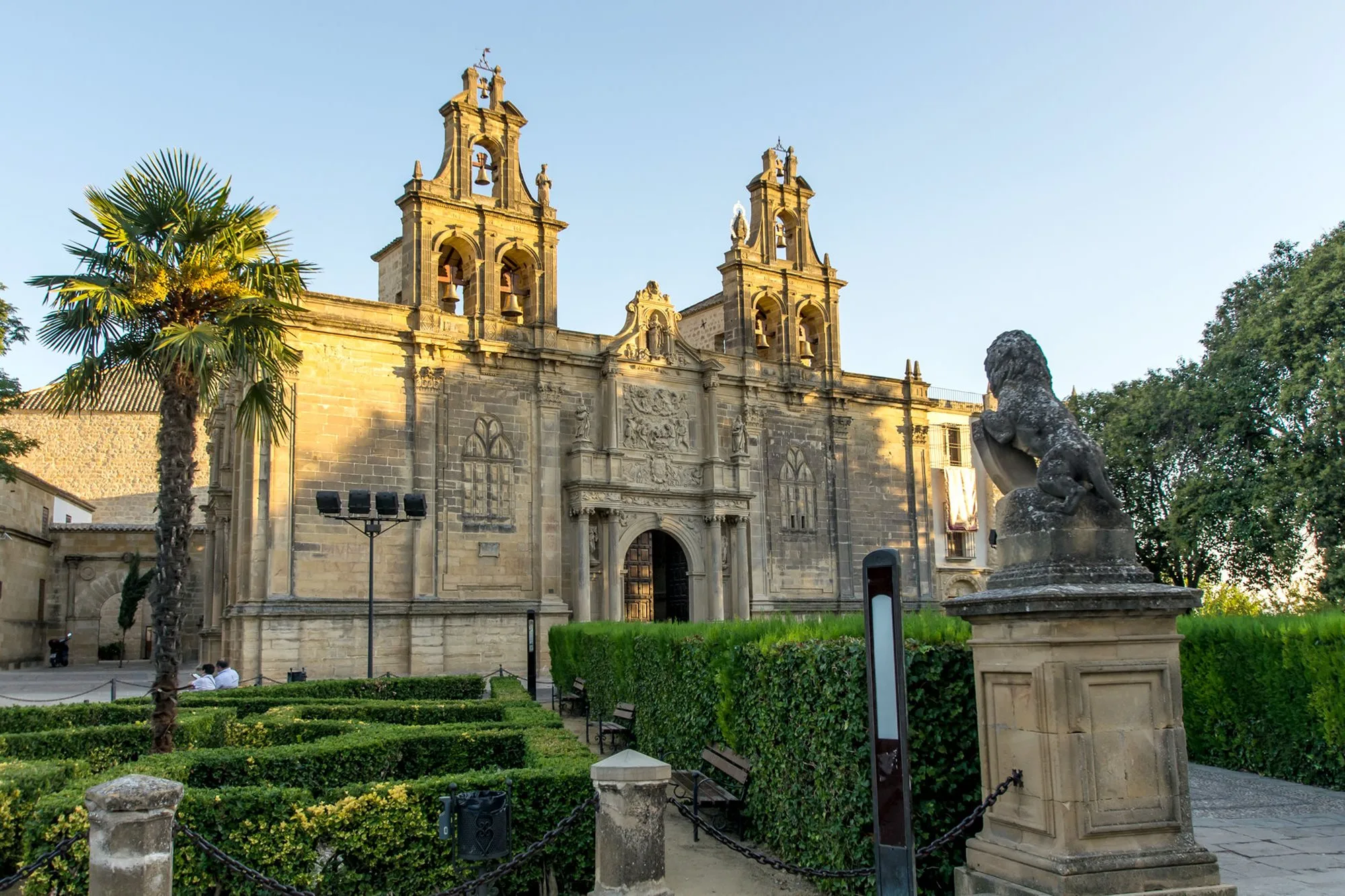
Its monumental Renaissance façade framed by two outstanding bell gables - made in the 19th century - was started in 1510 and completed in 1645, following the design of Pedro de Vera. The relief of the Adoration of the Shepherds is the work of Luis de Zayas.
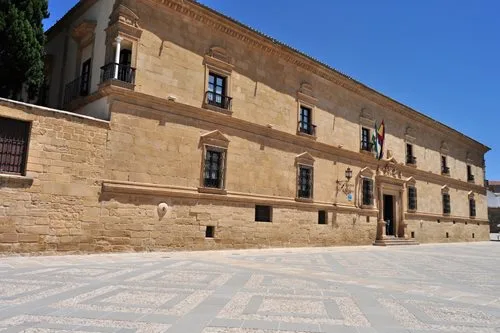
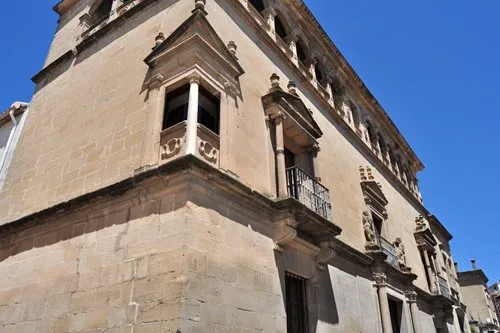
Of the same Renaissance style is its lateral façade, better known as “La Consolada”. This was made by Pedro de Cobo, also with images by Luis de Zayas.
Both façades preserve the episcopal coats of arms of Don Sancho Dávila, Bishop of Jaén.
The interior of the church is in the Gothic-Mudéjar style and has five naves on quadrangular columns.
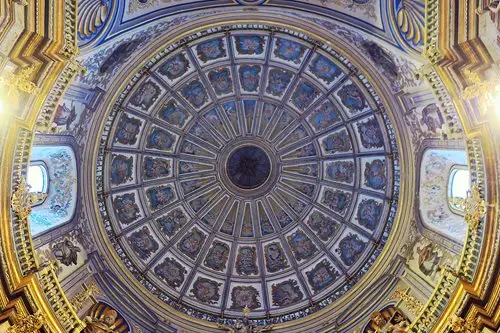
Inside we can find Gothic chapels with wrought-iron grilles by Master Bartolomé, a native of Jaén. The old wooden coffered ceiling was replaced in the 17th century by a barrel vault. In this vault can be seen the coats of arms of the first bishops of Jaén and of Don Diego de los Cobos, Bishop of Úbeda.
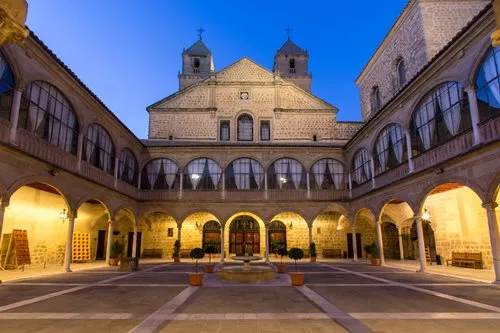
The foundations of the old mosque were used for the construction of the irregularly shaped cloister. Its Gothic arcade is from the late 14th century, while the traceried vaults resting on these arches date from 1512.
In 1983, the basilica was closed to worship for restoration, due to the threat of collapse of its pillars. This restoration was first carried out by Ilsicio Ruiz Albusac, and later by Enrique Venegas.
Today, the image of the patron saint of Úbeda, Our Lady of Guadalupe and del Gavellar, brought from her hermitage, is venerated in this basilica. In its chapels, there are processional images for Holy Week, made by Mariano Benlliure, Francisco Palma Burgos, Jacinto Higueras, and other contemporary sculptors.
In 2014, it was declared a Minor Basilica of Úbeda in the diocese of Jaén.
Built: 13th – 19th centuries.
Author: Pedro de Vera, Pedro de Cobo y Luis de Zayas
Style: Baroque, Gothic, Mudéjar, Neoclassical, Renaissance
Category: Religious
Type: Collegiate Church, Minor Basilica
Address and telephone
Opening times
Prices
If you see any mistakes or want to add anything to this information, please contact us.