Cookie settings
We use our own and third-party cookies in order to offer our services, display videos, obtain statistics and offer personalized advertising.
For more information, please read our cookies policy.
Villacarrillo is located in the regions of La Loma and Las Cuatro Villas, in the northeast of the province of Jaén and at an altitude of 794 metres. This municipality is situated on the hill with a “sea of olive trees” surrounding it and encircled by the Sierra de las Villas (part of the Natural Park of Cazorla, Segura and Las Villas), it is a true international reference in terms of Olive Oil production.
The rivers that irrigate the territory of Villacarrillo are the Guadalimar (natural border with the El Condado region); the Guadalquivir (which separates the Countryside from the mountains) with its two tributaries, the Aguascebas Grande and the Aguascebas Chico. Due to this geographical situation, Villacarrillo has always been a strategic place throughout history since Antiquity; specifically since Roman times.
Villacarrillo today has a total population of more than 10,000 inhabitants. It is distributed in its main core, Villacarrillo, and the annexes of Mogón, Agrupación de Mogón, Arroturas, la Caleruela and the scattered Sierra de las Villas.
Its economy is mainly based on the cultivation of olives, with Villacarrillo being today the municipality with the highest Olive Oil production in the world. Here you can enjoy interesting Oleotourism activities, such as oil tasting workshops, accompanied by local products.
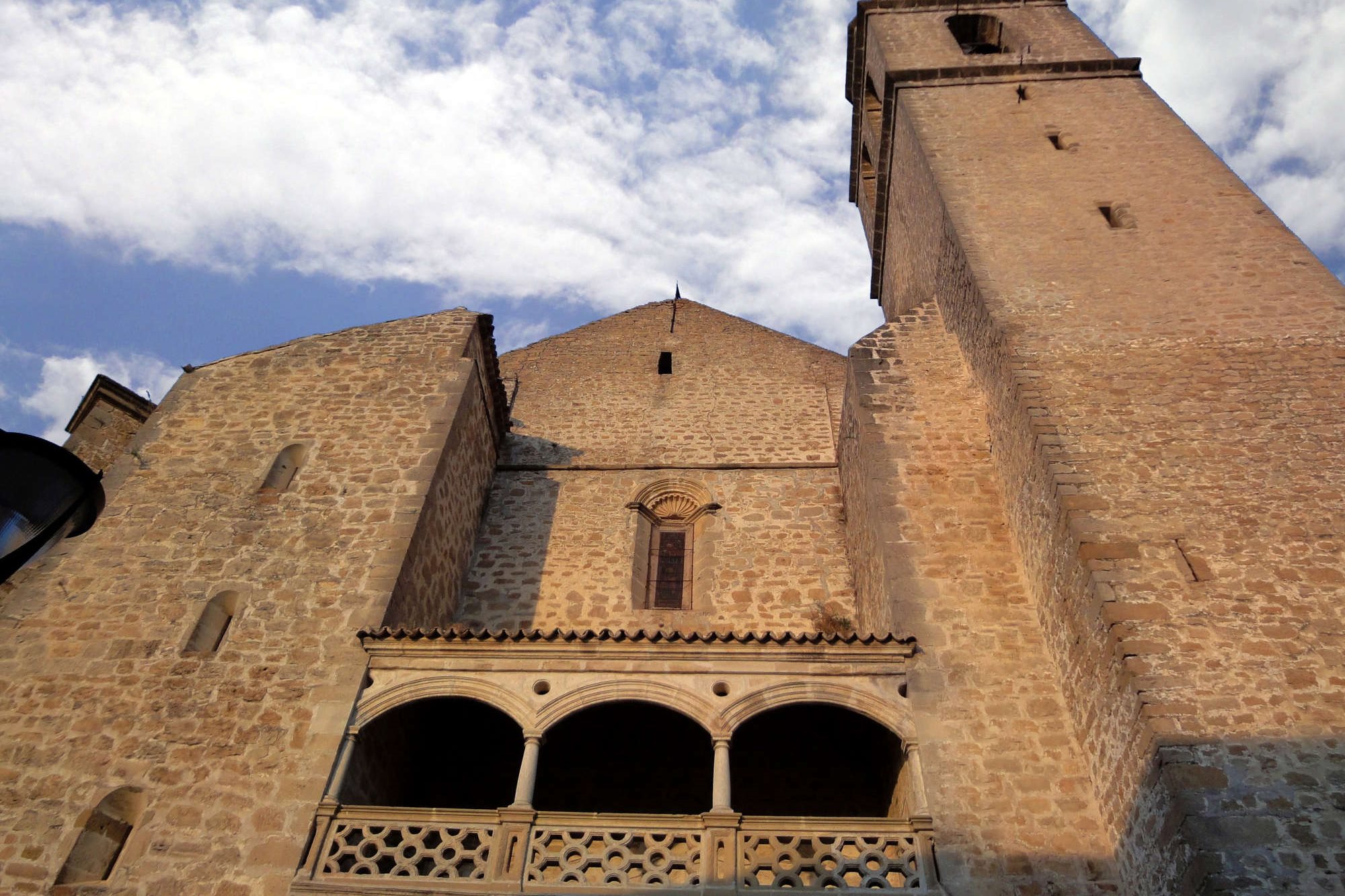
You can also admire its extensive historical-artistic heritage, highlighting the Church of the Assumption, the Church of Santa Isabel de los Ángeles, the House of the Inquisition, the Town Hall, the Air-Raid Shelters, in addition to several manor houses and palaces of great artistic interest. One of these houses, from the 16th century, was where the famous architect of the “Andalusian Renaissance Triangle” (Úbeda, Baeza and Sabiote), Andrés de Vandelvira, lived. For this reason, Villacarrillo is culturally framed within the Renaissance Route “Andrés de Vandelvira”.