Cookie settings
We use our own and third-party cookies in order to offer our services, display videos, obtain statistics and offer personalized advertising.
For more information, please read our cookies policy.
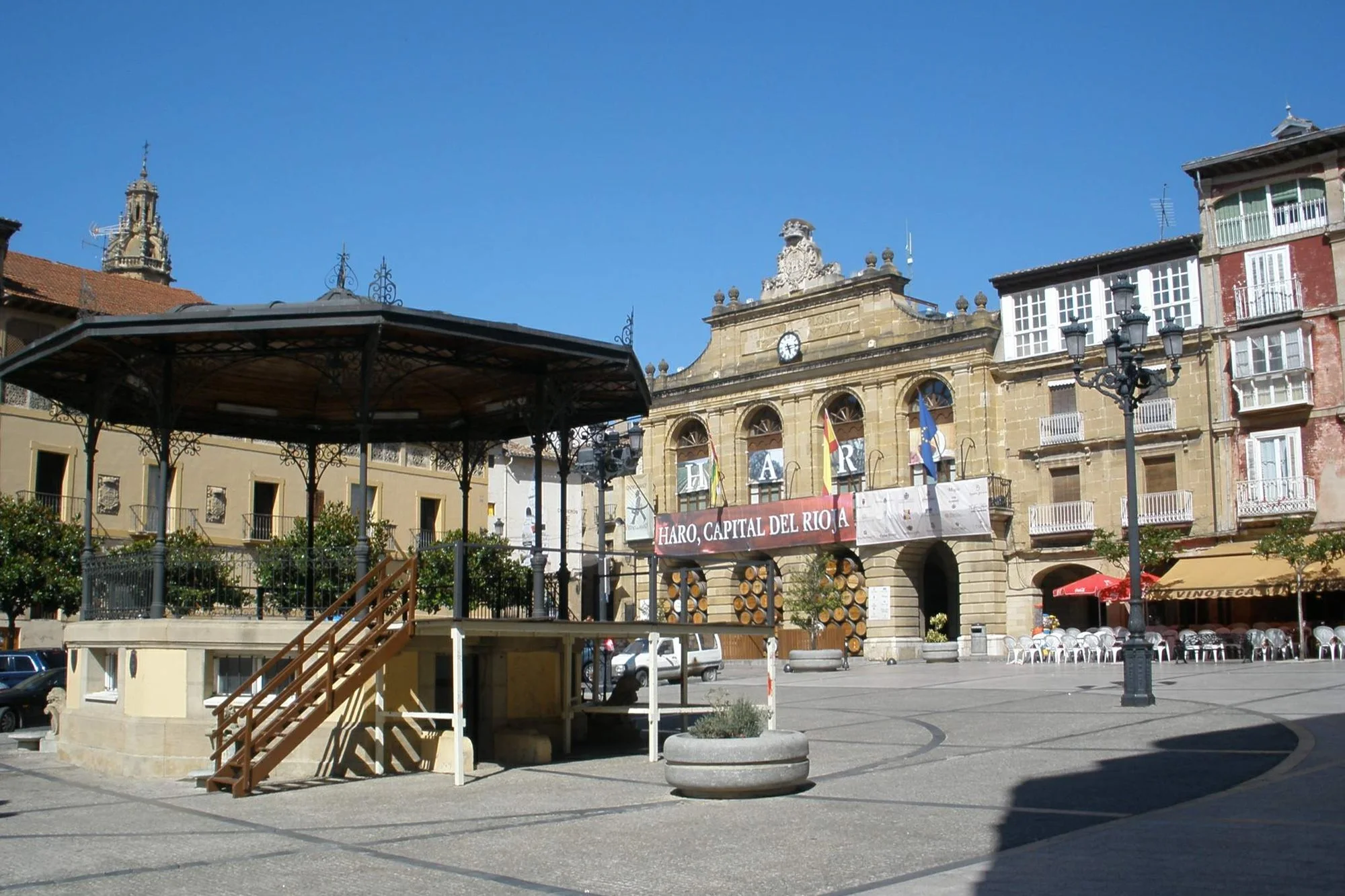
The town of Haro, famous for the excellence of its wines, boasts an important cultural heritage.
In ancient times, Haro was fortified. Of that wall that surrounded the municipality, only the Gate of Santa Bárbara remains, which dates from approximately the 14th century. Next to this gate are the remains of an ancient tower. In the old town of the "capital of Rioja" there are numerous palaces, among which the palace of Bendaña stands out, with a Plateresque style and where Mozarabic elements from the 15th century can be found. The palace of Bezaras is a large and important Baroque building that holds some secrets, such as the existence of a medieval cellar in its basement. Another palace in Haro is the Tejada, very interesting from an artistic point of view because its construction received influences from three different styles, making it one of the most beautiful palaces in the locality.
Also famous in Haro are the palaces of Salazar and the Counts of Haro. The first was designed in a transition style between the Plateresque and Herrerian styles; it is famous for its semicircular arches, which form the gallery of its second floor. The palace of the Counts of Haro does not adhere to a single architectural style, but instead mixes Renaissance and Baroque styles. It is located next to the parish church of Saint Thomas the Apostle, situated in the oldest part of Haro. The parish is notable for its large tower and its altarpiece, the largest in all of La Rioja. The Basilica of Our Lady of Vega is another of Haro's religious temples. The church, in Baroque style, houses the image of the Virgin of Vega, highly revered in Haro.
On the other hand, the hermitage of San Felices, situated in the Riscos de Bilibio, offers a beautiful panoramic view of the Riojan locality.
Haro also boasts museums. The Torreón Museum, whose building is part of the old wall of Haro, houses a collection of contemporary art. Moreover, another major attraction of Haro is its open-air museum, made up of a series of sculptures that can be found in any corner of the city and serve as a tribute to the trades performed by the inhabitants of Haro for centuries.
Wine is the trademark of the municipality. There are many routes designed for wine tourism enthusiasts. These involve visits to vineyards and cellars, uncovering all the secrets of the production of these wines with some of the best designations of origin in Spain.