Cookie settings
We use our own and third-party cookies in order to offer our services, display videos, obtain statistics and offer personalized advertising.
For more information, please read our cookies policy.
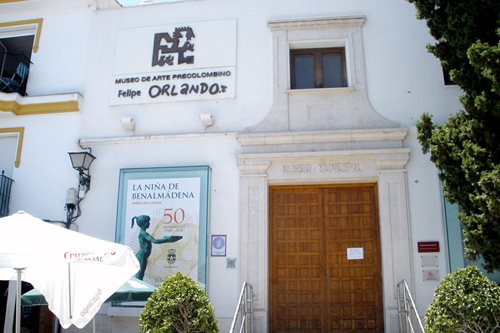
Below are details of the different rooms in which the Felipe Orlando Museum of Pre-Columbian Art in Benalmádena is distributed.
Rooms I and II: Mesoamerica. Ancient Mexico
Rooms I and II, dedicated to pieces belonging to Ancient Mexico, start their tour with the figurines of Pretty Women from the Preclassic period. Some are in the Tlatilco style (1500 BC – 500 AD) from Central Mexico. Others, on the other hand, are in the Chupícuaro style, likely accompanying the Pretty Women. Also on display are figures and later vessels from Nayarit, Jalisco, Colima, and Guerrero, as well as several musical instruments.
Next, ancient art from the Gulf of Mexico (200 – 900 AD) is represented, corresponding to the area of El Tajín and Remojadas. This exhibition area concludes with the display of the Aztec culture of the late Postclassic period (900 – 1500 AD).
Rooms V and VI: Central Andes. Ancient Peru
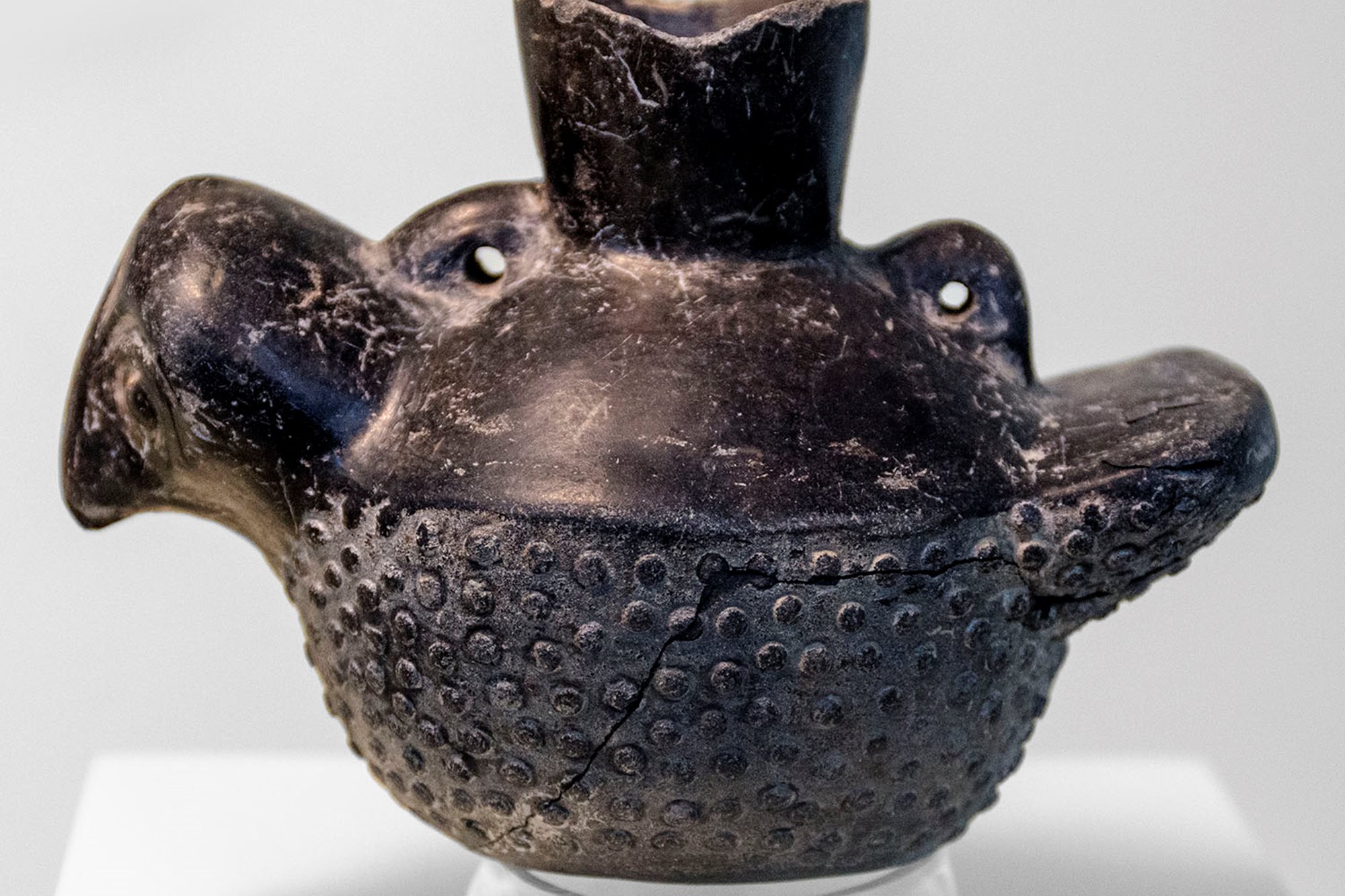
Rooms V and VI exhibit pieces from ancient Peru (today Peru, Bolivia, and northern Chile). Here, the cultures of Moche, Lambayeque, and Chimú (north coast); Nasca (100 – 600 AD), Wari (600 – 1000 AD), Ica-Chincha (1100 – 1500 AD on the south coast); and Chancay (1000 – 1500 AD on the central coast) are represented.
In addition to showcasing the cultural diversity in ancient Peruvian civilization, the way of life (agriculture, trade, textile industry, personal adornments, and other objects related to funerary and religious customs) is also presented in these rooms.
Intermediate Area. Present-day Colombia, Ecuador, and Nicaragua
The Lower Central America section is represented by pieces from Nicaragua and Costa Rica. Most of the Nicaraguan collection is the work of the Chorotega and Nicarao people. These were originally from ancient Mexico and settled on the Pacific coast of Nicaragua and the northwest of Costa Rica.
From the Northern Andes (present-day Ecuador and Colombia), several schematic female figurines that date back to the Valdivia culture (Ecuador) are displayed. These date from the period between 3200 to 1800 BC.
Local Archaeology
This area, dedicated to the archaeological finds of Benalmádena, is divided into three sections: prehistory, the pre-Roman period, and the Roman period.
- Prehistory in Benalmádena is linked to the Cueva del Toro, a sanctuary where cave paintings from the Solutrean period of the Upper Palaeolithic (18,000 years ago) are preserved. In the Neolithic (5th millennium), the population increased, and agriculture and livestock farming developed significantly. During this time, caves continued to be the usual dwellings, primarily the caves of the Botijos and the Zorrera.
- Around 1000 BC, the pre-Roman period began, with settlement in the valleys of the streams near the coastline. This occupation would continue continuously until the Roman period. From this period, pieces belonging to one of the most prominent settlements, the Cerro de la Era (9th – 8th centuries BC), are shown.
- Roman period. This historical era is the most well-known in Benalmádena, as fishing activities began to spread from the 1st century BC. Therefore, extensive settlements existed along the entire coastline. Examples represented here include the villa and salting factory of Torremuelle, Benalroma, and the oil and salting factory of Los Molinillos.
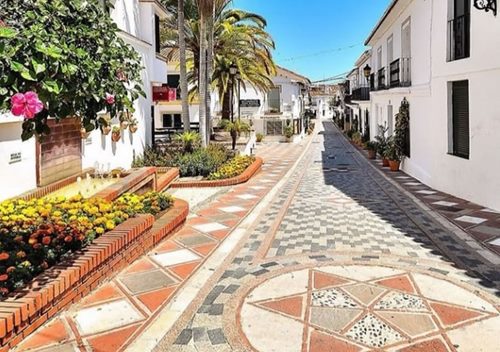
Get to know a white jewel of the Costa del Sol such as Benalmádena Pueblo. On this guided free tour you will visit the interesting Felipe Orlando Pre-Columbian Museum, where the archaeological remains of this enclave were found. You will continue to discover the history as you stroll through the charming typical streets.
You will find out who the Niña de Benalmádena was. You will continue to the area of the viewpoints where you will see the Benalmádena Costa and the guide will tell you the history of the Church of Santo Domingo de Guzmán. You will finish with a pleasant walk through the Jardines del Muro. An essential tour on your holiday on the Costa del Sol.
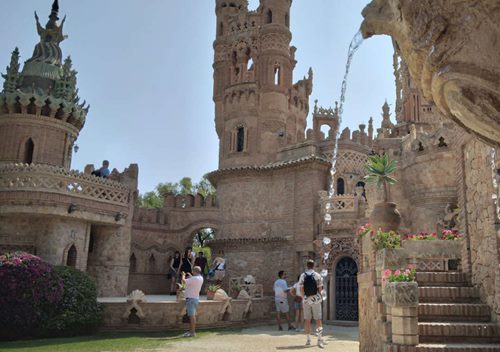
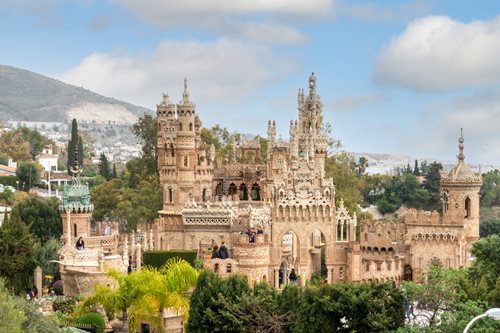
You can find a unique and original monument in Benalmádena. This is the Colomares Castle, which was built as a tribute to the arrival of Christopher Columbus to America. It is a real book carved in stone, where each of its shapes and details tells us something about this important chapter in history.
Get to know it in detail with the company of a guide and let yourself be surprised by this special architectural whim.
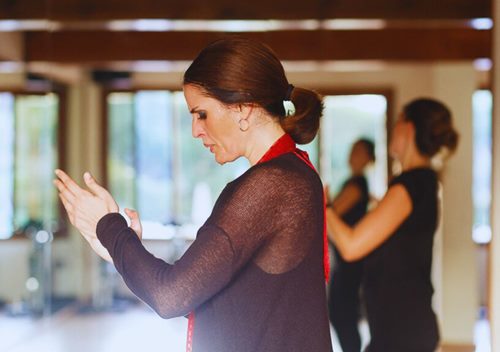
Feel the thrill of flamenco with a private 1-hour class where you’ll learn a lively rumba flamenca choreography, a joyful and festive dance.
The experience is fully adaptable: join solo, as a couple, or with a group. It’s perfect for hen parties, birthdays, anniversaries, or even team-building activities.
No previous experience is required—the class is designed for beginners with an easy-to-follow method that guarantees fun. More than just a lesson, it’s an authentic and unforgettable activity, ideal for both international and local travelers.
Simply choose your preferred location—Málaga, Marbella, or Mijas—to enjoy your private flamenco class.

Address and telephone
Opening times
Prices
Free entry.
If you see any mistakes or want to add anything to this information, please contact us.
Get to know a white jewel of the Costa del Sol such as Benalmádena Pueblo. On this guided free tour you will visit the interesting Felipe Orlando Pre-Columbian Museum, where the archaeological remains of this enclave were found. You will continue to discover the history as you stroll through the charming typical streets.
You will find out who the Niña de Benalmádena was. You will continue to the area of the viewpoints where you will see the Benalmádena Costa and the guide will tell you the history of the Church of Santo Domingo de Guzmán. You will finish with a pleasant walk through the Jardines del Muro. An essential tour on your holiday on the Costa del Sol.
You can find a unique and original monument in Benalmádena. This is the Colomares Castle, which was built as a tribute to the arrival of Christopher Columbus to America. It is a real book carved in stone, where each of its shapes and details tells us something about this important chapter in history.
Get to know it in detail with the company of a guide and let yourself be surprised by this special architectural whim.
Feel the thrill of flamenco with a private 1-hour class where you’ll learn a lively rumba flamenca choreography, a joyful and festive dance.
The experience is fully adaptable: join solo, as a couple, or with a group. It’s perfect for hen parties, birthdays, anniversaries, or even team-building activities.
No previous experience is required—the class is designed for beginners with an easy-to-follow method that guarantees fun. More than just a lesson, it’s an authentic and unforgettable activity, ideal for both international and local travelers.
Simply choose your preferred location—Málaga, Marbella, or Mijas—to enjoy your private flamenco class.

Book your hotel