Cookie settings
We use our own and third-party cookies in order to offer our services, display videos, obtain statistics and offer personalized advertising.
For more information, please read our cookies policy.
Queen Isabel of Farnese (the second wife of King Philip V) desired that her son Charles ascended to the throne of Spain. But according to the dynastic order, the succession was first due to the two eldest sons the king had with his first wife, Luis and Ferdinand. However, Isabel of Farnese was not resigned to losing her political influence and had a significant interference in the affairs of state.
Luis I ascended to the throne in the year 1724 after the king had abdicated. However, seven months later he died, and Philip V had to reassume the throne and wore his crown again until he died in July 1746.
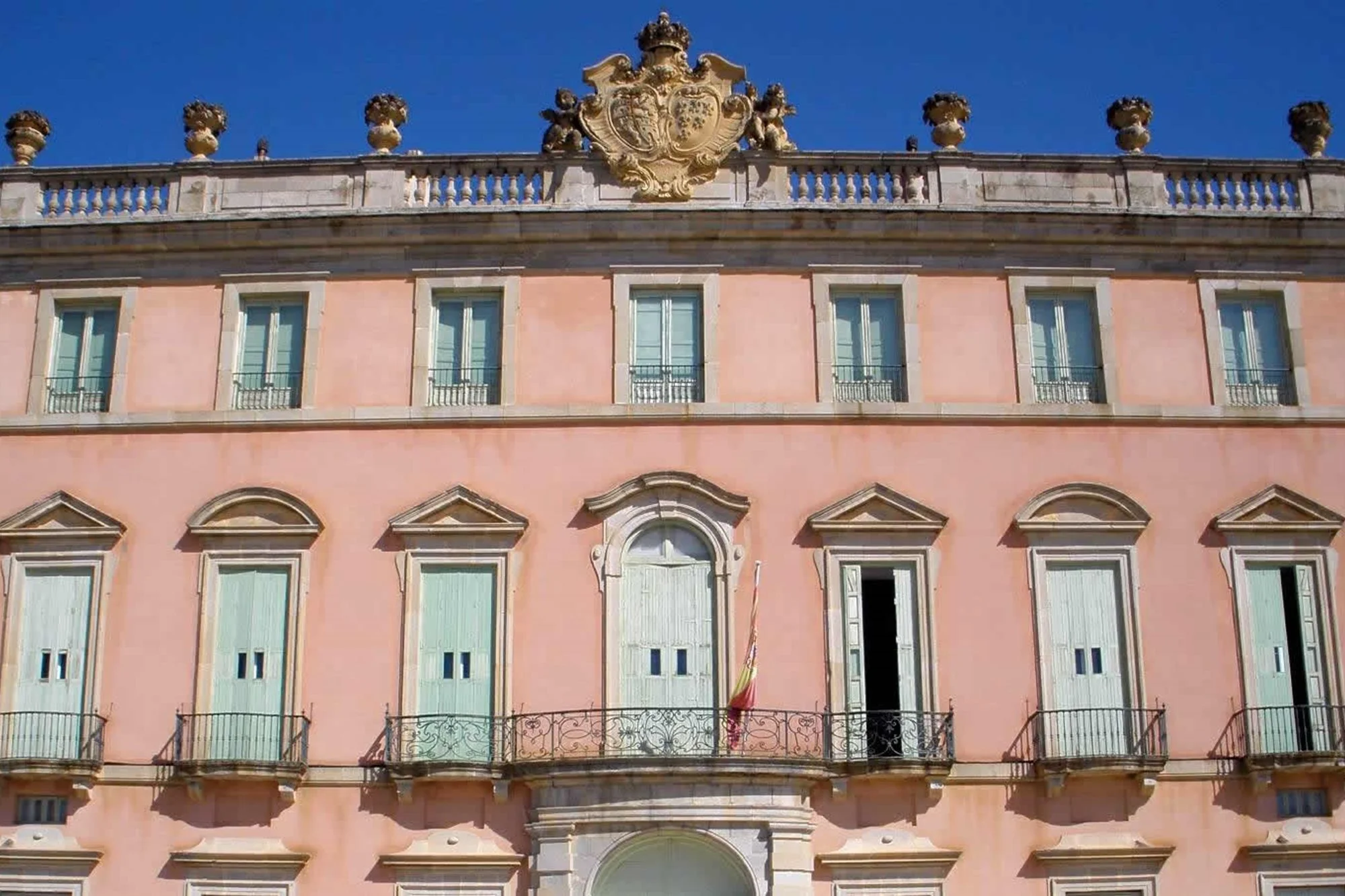
After his death, Ferdinand VI succeeded the throne. Fed up with Isabel of Farnese's interferences in state affairs, he granted her permission to build a palace, thus keeping her away from the Court (which remained in the Granja de San Ildefonso). Then, Isabel of Farnese ordered the construction of the Royal Palace of Riofrío in 1751, in the area of an old hunting ground in the province of Segovia. The project was drawn by architect Virgilio Rabaglio, with the exterior decoration entrusted to Pedro Sermini.
However, before the palace works were completed, a turn of historical events occurred: King Ferdinand VI died without leaving an heir. Then Queen Isabel of Farnese fulfilled her wish and her son Charles III (who was then the King of Naples) assumed the Crown of Spain. Therefore, the need to live in Riofrío vanished. The palace was not completed in its entirety and was never inhabited by the queen. Therefore, from the initial project which included gardens, fountains, stables, service houses, a Franciscan convent, and even a theatre, only the palace and a large square (which was also never completed) remained. Charles III incorporated the palace into the Royal Estate after his mother's death in 1766.
Later, the palace was used by successive kings on their hunting trips to the Riofrío forests. It was regularly inhabited by Francisco de Asís de Borbón (consort king and husband of Isabel II), who retreated to Riofrío tired of the queen's infidelities. Alfonso XII also lived in this palace during his mourning for the death of his wife, María de las Mercedes.
In the era of Queen Isabel II, some rooms were decorated, particularly highlighting the bedroom used by Alfonso XII and the dining room, as well as an original system of “callers” for the servants.
The public could not visit it until it was opened for the first time on 14th July 1965. From then until 2015, it was possible to visit the Royal Chapel, the Staircase, the Entrance Hall, the First Room with paintings of the “Life of Christ”, the Second Room with paintings of the “Life of Christ”, the Room of Snyders or Chamber, the Little Hall or “tram”, the Billiard Room, the Tram of the Callers, the Official Chamber, the Salon, the Office of Alfonso XII, the Antechapel and Oratory, the Music Room, the Memory Room, the Bedroom of Alfonso XII, the Tapestry Room, and the Chamber and Rooms of “Don Francisco de Asís”.
In the 1960s, the Hunting Museum was installed in the east wing of the palace, to be an example of the history of hunting art.
Between September 2015 and December 2016, several rooms were closed by National Heritage for restoration. These tasks aimed to recover the original function of the Billiard Room (formerly Snyder's Room), the Bedroom of King Francisco de Asís (formerly Music Room), and the Oratory (formerly Memory Room).
During that period, the aim was also to enhance the historical identity of the palace rooms with the figures of Francisco de Asís and Alfonso XII; furthermore, the contents of the Hunting Museum were updated. At that time, the visitable itinerary was enriched with an increase of about five hundred works of art, mostly from the storerooms of other Royal Sites.
Address and telephone
Opening times
* Ticket office opening and palace access until one hour before closing.
Prices
If you see any mistakes or want to add anything to this information, please contact us.