Cookie settings
We use our own and third-party cookies in order to offer our services, display videos, obtain statistics and offer personalized advertising.
For more information, please read our cookies policy.
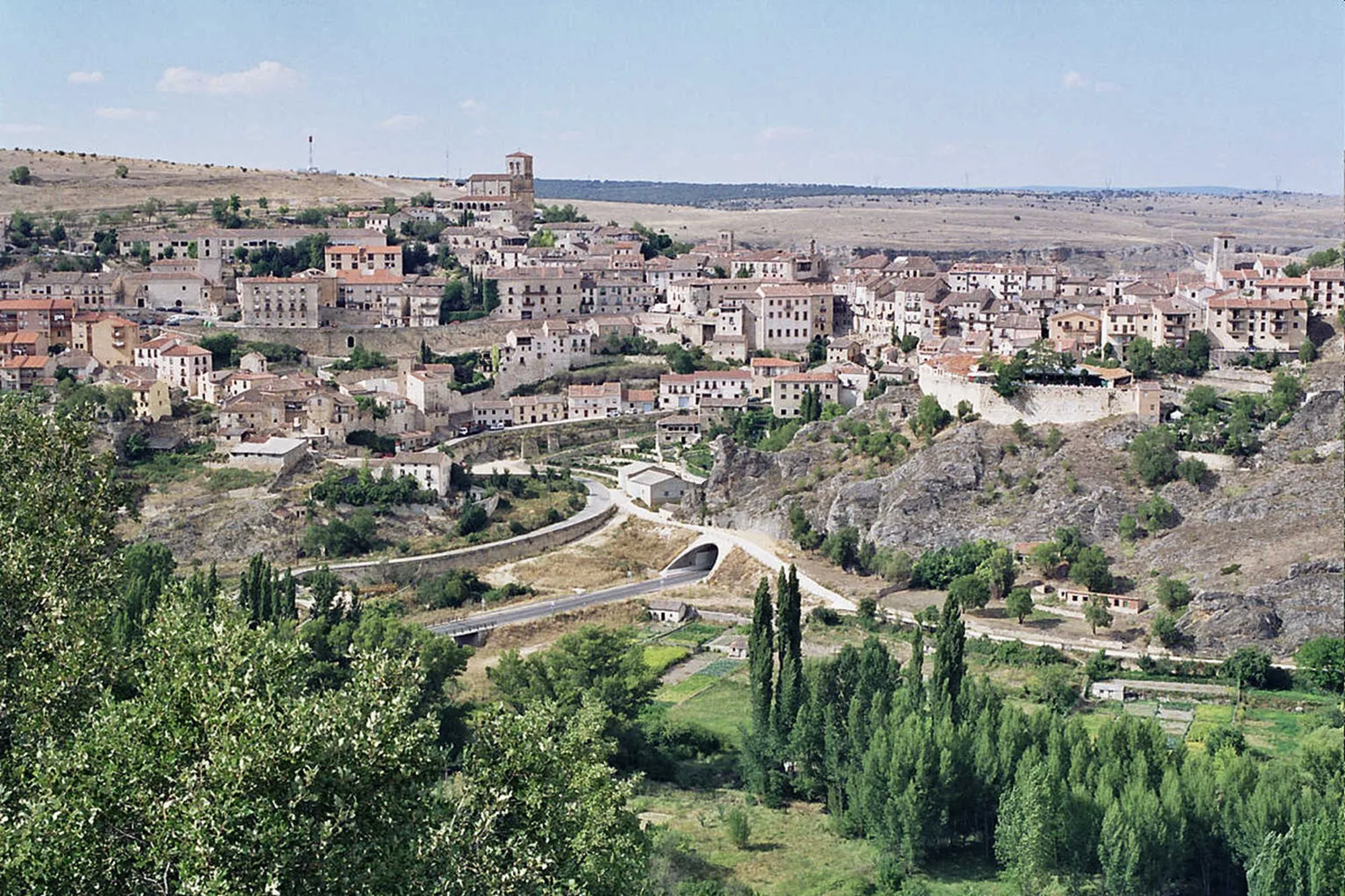
Sepúlveda is a small Castilian-Leonese municipality located in the province of Segovia. It is a place that has been declared a historic-artistic site since 1951 and is part of the Network of the Most Beautiful Villages in Spain. As if that were not enough, within its municipal area is the Natural Park of the Gorges of the Duratón River.
The history of Sepúlveda has always been linked to its geographical location. We speak of the Duratón Valley, a unique landscape on the peninsula. The occupation of the Sepúlveda area dates back to the Iron Age (around the 5th century BC), when an Arevaci settlement was documented. Later, the area was passed through by Romans, Visigoths, and Arabs. As a result of these centuries, remains such as those found in the Market's archaeological site or the Cave of the Seven Altars are left.
It would be in the 11th century when Sepúlveda was established as a political entity of importance. All this was thanks to King Alfonso VI confirming the Charter that had been granted to it previously. From that moment, the population would grow significantly and experience moments of splendour that would make it one of the most important places on the peninsula. From these moments, a total of seven Romanesque churches have endured. Examples of this are the Church of the Virgin of the Rock, the Church of San Salvador, the Church of San Justo, or the Church of San Bartolomé. From these moments, the Castle of Fernán González also stands out. Later on (16th century), the so-called Old Prison of Sepúlveda was built. As a result of its history, nowadays Sepúlveda is one of the places on the peninsula where you can best appreciate what Romanesque art was in its maximum splendour.
In addition to its incredible historical and artistic heritage, Sepúlveda is integrated into the natural park of the Gorges of the Duratón River. A protected area resulting from the gorges that the Duratón River (a tributary of the Ebro) has in its middle section. It is home to the largest colony of griffon vultures in Europe. This is why the park is classified as a Special Protection Area for Birds (SPA), which protects these species by facilitating their conservation. Observing these birds and other species ranging from other birds of prey to foxes or various mammals is one of the area's main tourist attractions. Different activities are also carried out in the river environment, such as canoeing.
In essence, as we can see, Sepúlveda is an impressive combination of natural spaces, history, and heritage. This is complemented by a unique gastronomy and events such as the Festival of the Charters. All this merges to create one of the most interesting municipalities in Spain, which has seen its interest grow among national and international tourism.