Cookie settings
We use our own and third-party cookies in order to offer our services, display videos, obtain statistics and offer personalized advertising.
For more information, please read our cookies policy.
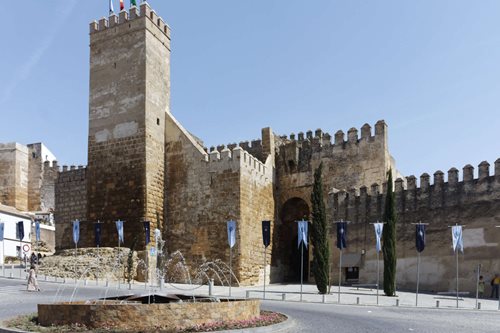
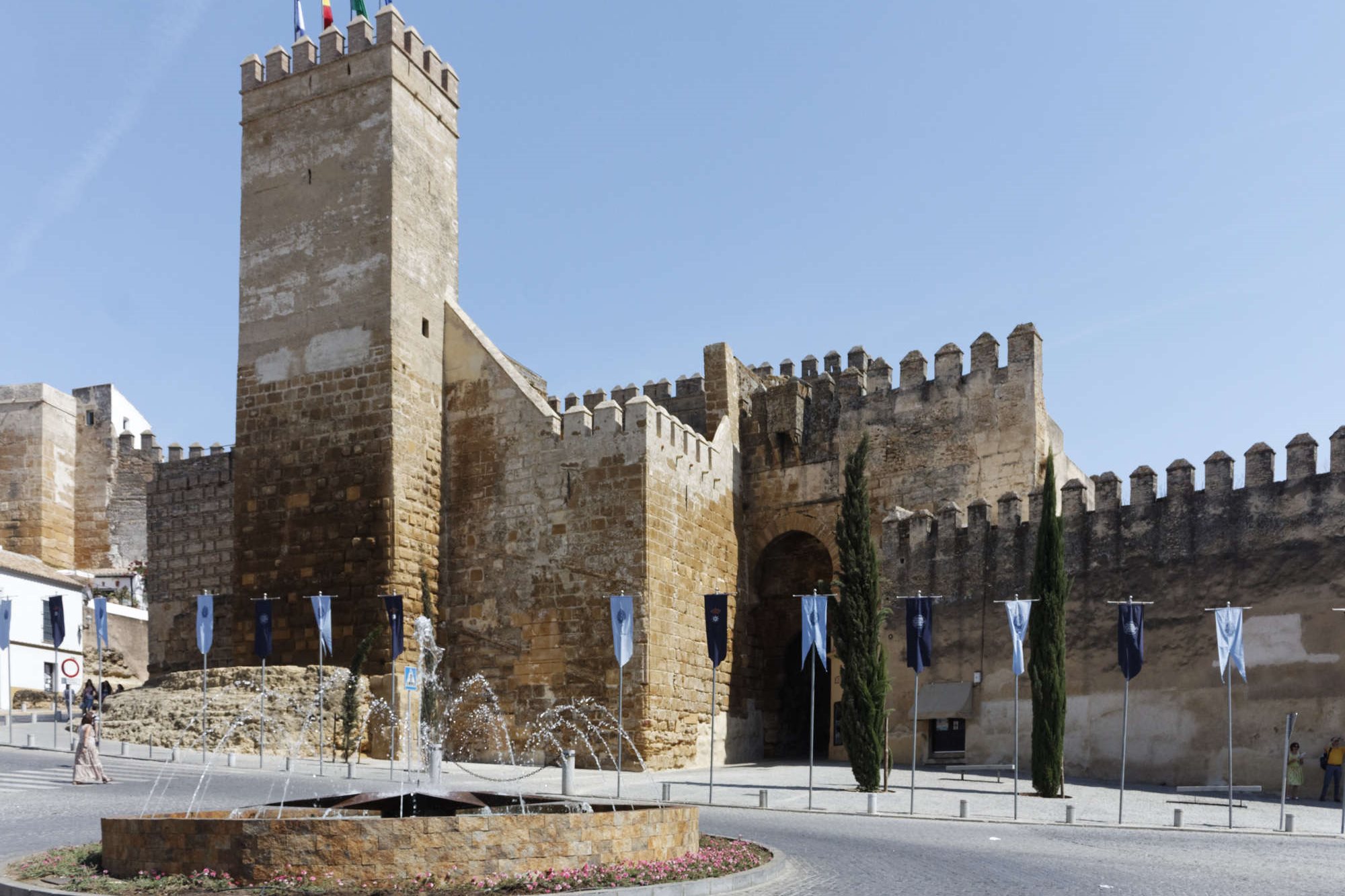
The Alcázar of the Puerta de Sevilla, also known as the Lower Alcázar in Carmona, is named after the Puerta de Sevilla. It is a defensive bastion located in the western part of the city.
Archaeological remains were found dating from the period between the 14th and 12th centuries BC, but its origin is from the 9th century BC. This monument preserves the mark of the history of Carmona and the West, in which this city has been a participant. The stones of the Puerta de Sevilla bear the legacy of the Phoenicians, Carthaginians, Romans, Muslims, and Christians.
In the original tower of the 8th century BC, the Carthaginians designed their first quadrangular floor plans, of robustness and firmness to face the Romans. In Roman times, with Augustus, the structure was reinforced and reformed with several doors that still stand today. A temple was even built, of which part of its platform or podium remains today. The Romans continued interventions in this place, especially in the 1st century AD, until making Carmo "the strongest city of Baetica during antiquity," according to Caesar.
With the arrival of the Muslims, this complex also underwent some reforms. A caliphate horseshoe arch was opened in the 10th century and a more external Almohad pointed horseshoe arch in the 12th century. In the 14th century, with the reign of Peter I, the interior of the complex was reformed.
During the second half of the last century, the complex underwent several rehabilitations. In the sixties, it was stripped of the houses that were attached. The last time it was reformed was in 1973, enabling the Lower and Upper Prison Hall, the Tower of Gold, and the Patio of the Cisterns. From the Tower of Gold, incredible panoramic views of the Carmona urban landscape can be contemplated.
Built: Centuries X, XII and XIV.
Style: Almohad, Roman Classic
Category: Military
Type: Wall gates
Address and telephone
Opening times
Prices
If you see any mistakes or want to add anything to this information, please contact us.
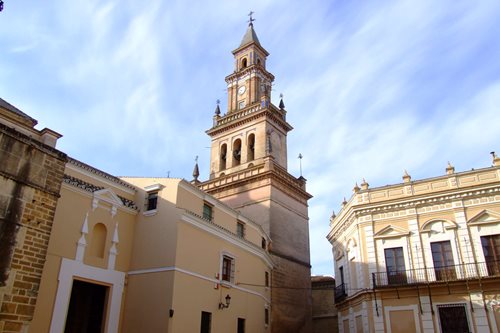
The Church of Santa María is located in the heart of the historic centre of Carmona. It is the largest temple in the city and occupies one of the most important blocks in the town centre. Together with the Convent of Agustinas Descalzas, the Church of San Teodomiro (del Salvador), the Aguilar House, and the palaces of Marqués de las Torres and the Rueda family, it forms a historic complex of great interest.
It is a beautiful hall church with three naves, built on an old Almohad mosque, demolished in 1424 to construct the current church.
Externally, its Gothic construction volumes stand out: the dome with a four-sided roof, its buttresses, flying buttresses, pinnacles, and the flat terraces of its vaults. Of course, its monumental tower with its spire.
Construction masters from Seville Cathedral were involved, such as Alonso Rodríguez and Antón Gallego. Even Diego de Riaño had the important task of vaulting the dome.
Different styles from various eras merge: Gothic, Renaissance, Mudejar, and Baroque. The different Gothic ribbed vaults inside stand out, with the central dome being more elaborate.
Among the sculptures housed within, notable carvings include San Teodomiro, patron saint of Carmona, created by Juan de Arce and painted by Juan Valdés Leal. Special mention should go to the Nativity altarpiece, the work of Gaspar del Águila.
Book your hotel