Cookie settings
We use our own and third-party cookies in order to offer our services, display videos, obtain statistics and offer personalized advertising.
For more information, please read our cookies policy.
The archaeological site Plaza de Armas (or Alcázar of Écija) is located on one of the highest parts of the city. Its area covers 5,480 square metres. It represents the history of Écija, as different levels can be observed according to its successive occupations from its origins to the present day.
The oldest remains documented date from the Late Bronze Age, whose foundations would have had oval and circular huts, as well as some rectangular structure.
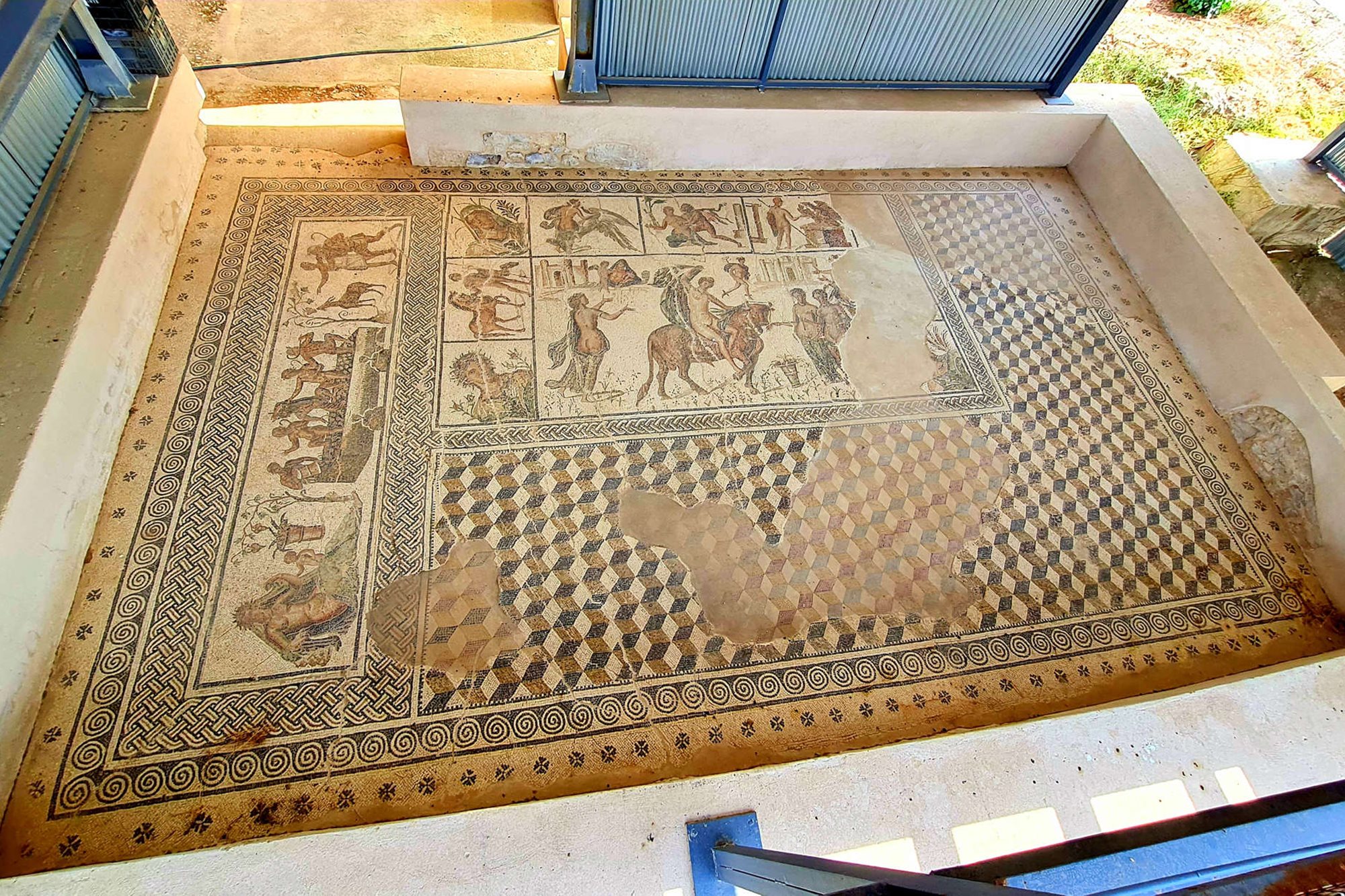
Subsequently, came the occupation by the Turdetani, whose urban planning at that time consisted of paved streets. It wasn't until the Roman era that Écija was reoccupied. During this period, the Iberian structures were demolished and the materials reused for the new city. Several domestic structures with Roman mosaics of great value were documented in the plaza de armas.
In the 11th century, the Almoravids demolished what had been built to erect the alcázar of Istiya. Two centuries later, the alcázar passed into Christian hands following the conquest of the city in 1240, and the plaza was restructured. In the 16th and 17th centuries, it was abandoned. It became a horse riding school in the 18th century, colloquially known among the people of Écija as the Picadero neighbourhood.
The local Town Hall undertook recovery works in 1999 with various excavations, which continue today.
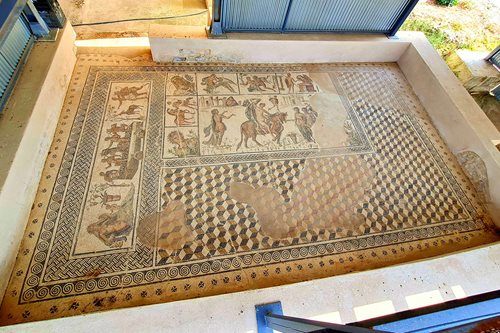
Notable within its interior is a Turdetani building that was used for worship. It houses several Roman rooms with rich mosaic decoration, mural painting, and marble flooring. Standing out is the mosaic of The Loves of Zeus, which measures 40 square metres and is in excellent condition. Its discovery was listed as one of the top ten discoveries of 2015 by National Geographic The remains of the Muslim alcázar's wall are also preserved, from which the entire city of Écija can be viewed.
Built: 9th century BC, 4th - 5th centuries BC, 11th century AD
Style: Bronze Age, Iron Age - Turdetani, Medieval, Roman Classic
Category: Military
Type: Fortress
Address and telephone
Services
Guided Tours.If you see any mistakes or want to add anything to this information, please contact us.