Cookie settings
We use our own and third-party cookies in order to offer our services, display videos, obtain statistics and offer personalized advertising.
For more information, please read our cookies policy.
Administrative capital of Castile and León, the city of Valladolid stands out for a past in which it was the capital of an empire and a global reference point.
Crossed by the rivers Pisuerga and Esgueva, Valladolid has been occupied since prehistoric times. In various areas of the city, mainly in the old town, Roman remains have been found ranging from mosaics to ceramics. In the surrounding area of the city, several villas have been found where various remains have also been discovered, such as the famous Mosaico de los cantharus. The reality is there wasn't a stable settlement until the Middle Ages.
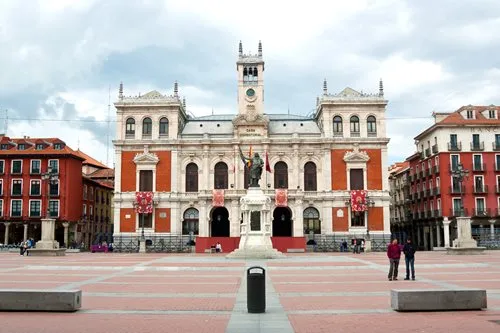
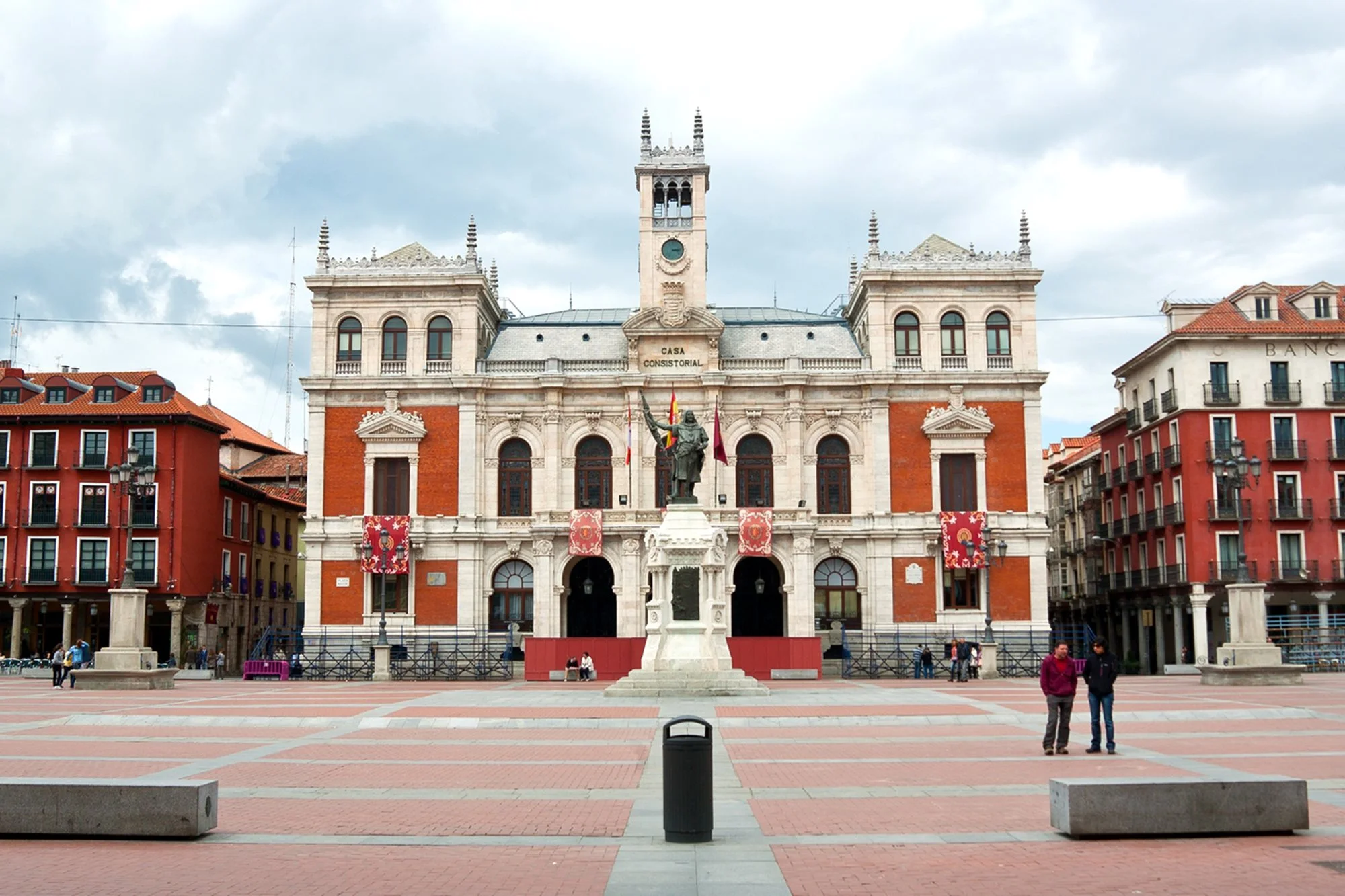
After a brief period of Muslim control, the area of Valladolid and the Duero Valley were conquered by Alfonso I. From the 10th century, a sparsely populated area began to be repopulated. From the 11th century, Valladolid began to become significantly active, being designated as a court city by Alfonso VIII in the 13th century. From this moment on, the city would frequently host the itinerant royal court. The Plaza Mayor would witness the proclamation of King Ferdinand III or the trial of Álvaro de Luna, the favourite of John II, condemned for treason. In 1489, the Chancery court was established in the city, and in 1500 the Inquisition.
Between 1527 and 1559, Valladolid was the political capital of the Spanish Monarchy. After the court's move to Madrid, Philip III restored the city's capital status for 5 years, between 1601 and 1606. During the 19th century, with the French occupation, the city regained strategic value as a centre of operations for the Napoleonic troops.
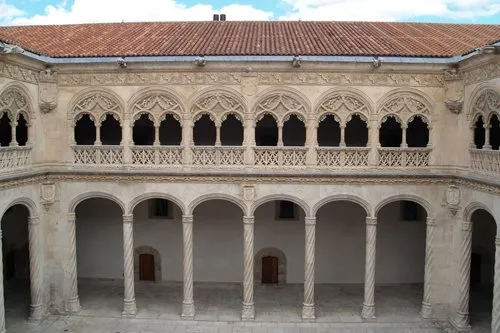
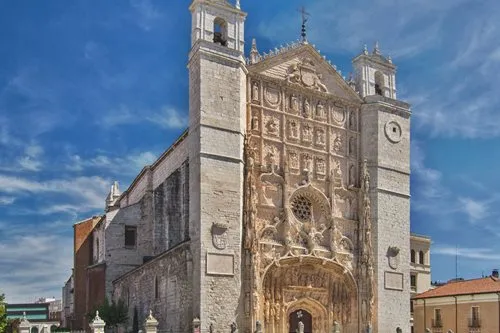
As a consequence of this complex history, the city of Valladolid preserves some truly interesting heritage remains. Highlights include the Church of San Pablo or the Cathedral. Also noteworthy are the National Sculpture Museum and the Palace of Santa Cruz.
All of this is complemented by a varied leisure and gastronomic offer, making Valladolid one of the most visited cities in Spain. In fact, it is the venue for the International Inland Tourism Fair (INTUR).

Book your hotel
Things to do
Currently, we do not have any companies with activities in Valladolid.
Do you have a company that offers guided tours, events, shows, active tourism and outdoor activities or other leisure and tourism activities in Valladolid? Contact us and we'll explain how to include these services for free.