Cookie settings
We use our own and third-party cookies in order to offer our services, display videos, obtain statistics and offer personalized advertising.
For more information, please read our cookies policy.
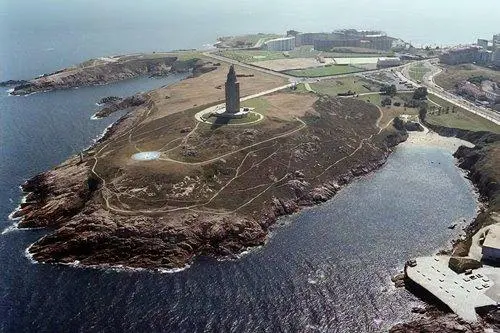
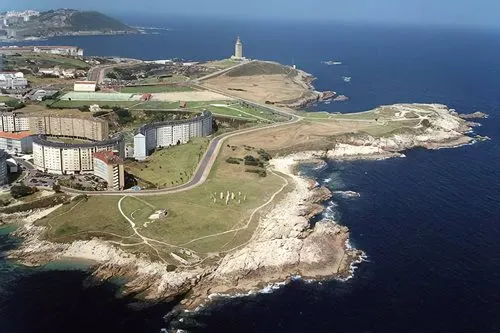
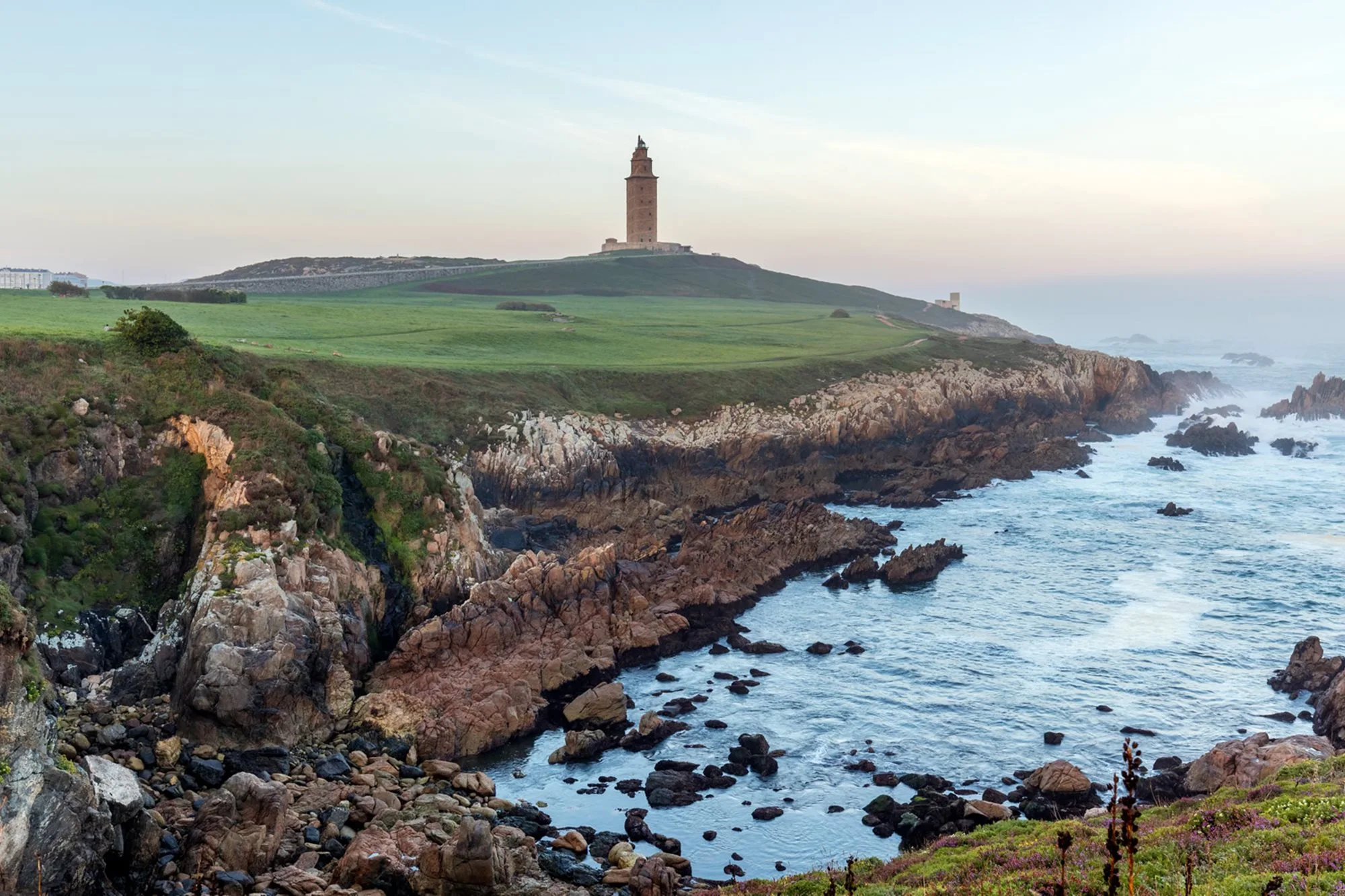
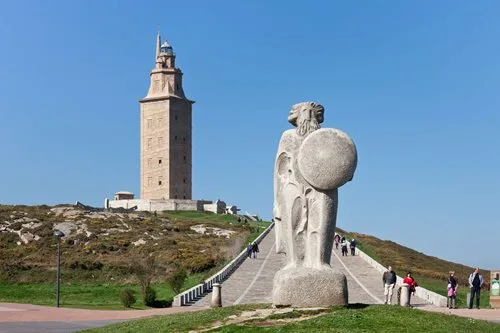
The city of A Coruña has been inhabited since prehistoric times and during the Roman era, it was already an important commercial and fishing port. When Julius Caesar arrived on its coast, he named it 'Brigantium'; and during the reign of Trajan, a great lighthouse was constructed, the Tower of Hercules, the oldest still in operation.
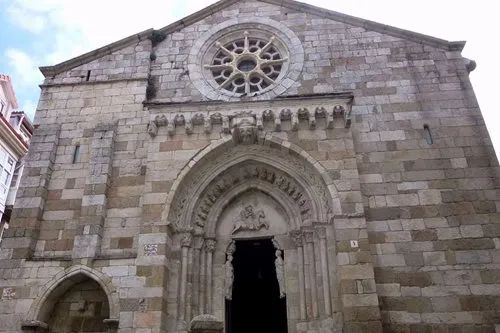
A Coruña boasts a beautiful and important Romanesque legacy. The collegiate church of Santa María del Campo was built in 1150 by the mariners' guild and was established as a collegiate church in the 15th century due to the great devotion that existed towards the Virgin of Santa María by the people of Coruña. The church of Santiago, also from the 12th century, is considered the oldest building in the city and served as the meeting place for the Council during the Middle Ages.
For its part, the convent of Santo Domingo is a magnificent example of Baroque architecture in A Coruña, as is the church of the Capuchins.
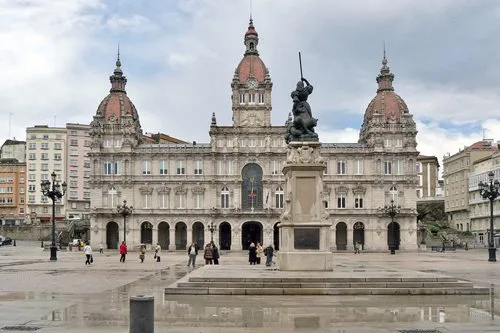
The nerve centre of the city is the Plaza de María Pita, a heroine who prevented the invasion of A Coruña by English troops in 1589.
Just a few minutes' walk from the plaza, you'll find another of the city's important monuments: the San Antón Castle, an old fortress built to defend the city from maritime attacks and now home to the Archaeological and Historical Museum of A Coruña. Also close to the castle, you can visit the house-museum of Emilia Pardo Bazán, one of the most distinguished writers in Spanish literature of the 19th century.
The San Carlos garden, which once formed part of a castle of which no remains exist, is a small but beautiful green space with viewpoints offering views of the port. Also, one of the most beautiful parts of A Coruña is the 19th-century Marina Avenue, whose glass-fronted buildings have led to the city being known as the 'City of Glass'.
If you visit A Coruña, you must see the Riazor Beach, in the heart of the city, with clean waters and fine sand.
A Coruña offers a wide range of cultural and leisure activities. Thus, visiting the Aquarium, the Domus, and the Museum of Science or Fine Arts, among others, proves to be excellent plans.
As for its gastronomy, enjoy a rich Galician stew, octopus 'a feira', or a seafood platter in Coruña's restaurants.

Book your hotel
Things to do
Currently, we do not have any companies with activities in A Coruña.
Do you have a company that offers guided tours, events, shows, active tourism and outdoor activities or other leisure and tourism activities in A Coruña? Contact us and we'll explain how to include these services for free.